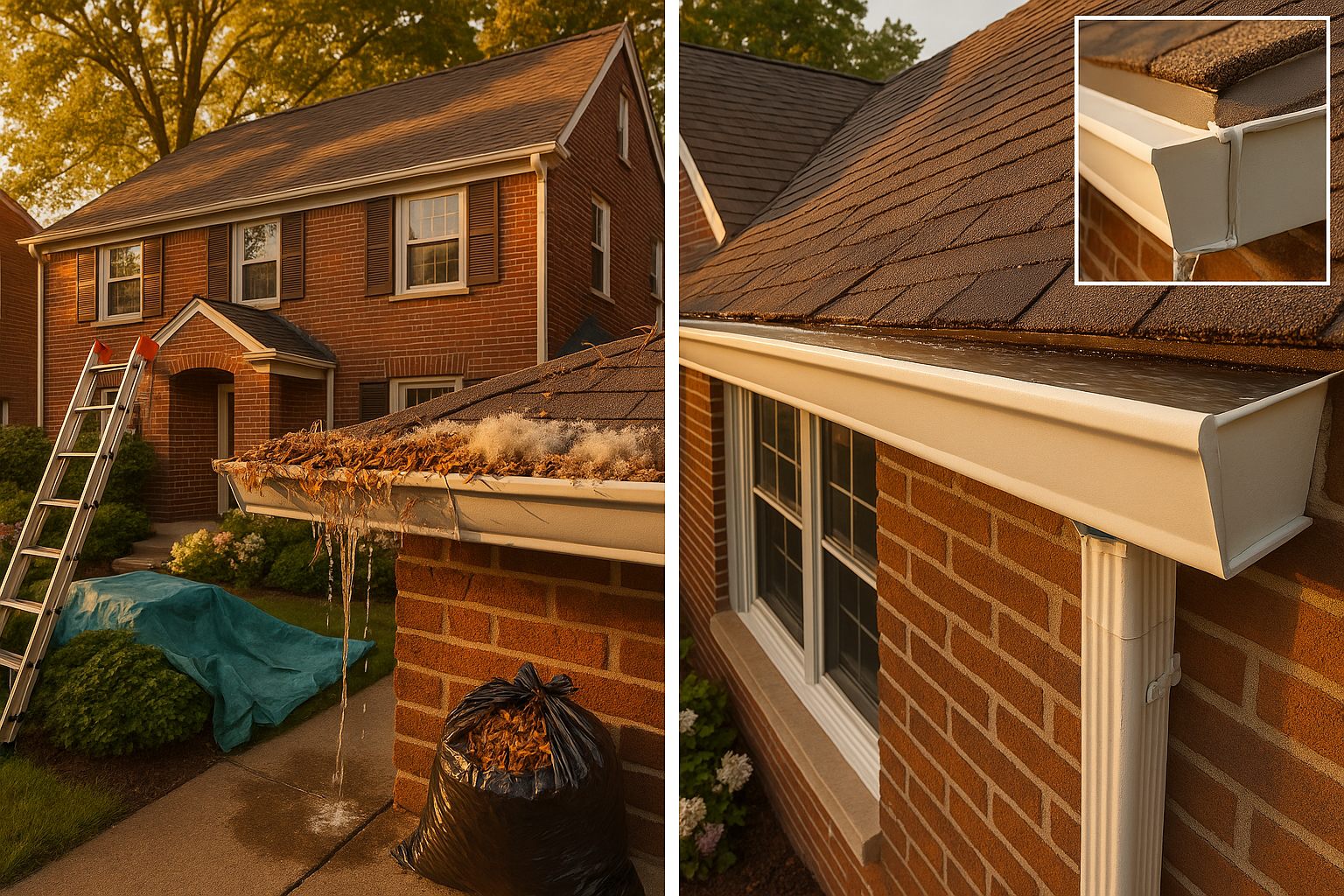
A few springs back, we got a call from a guy in Broad Ripple. He said his front walk was turning into a waterfall. Every time it rained hard, water just poured over the edge of his gutters and soaked his flower beds. When we climbed up, the downspout was jammed solid with maple seeds—those little whirlybirds from the big tree in his yard. One elbow was completely blocked. The gutter itself wasn't even that dirty, but that single clog made the whole system useless. We pulled out the seeds, flushed the line, and added a downspout extension to push water away from the foundation. Problem solved. No waterfall.
That's the thing about gutters in Indianapolis. They don't have to be overflowing with leaves to fail. Sometimes it's one tiny clog in the wrong spot. Or a seam that's quietly leaking behind the fascia. Or a downspout that dumps water right next to the basement wall. HandyPros has seen it all, and we treat every gutter job like our own house is on the line.
Why Indy Gutters Plug Up Faster Than You Think
We live in a city with big, beautiful trees. That's great for shade, but rough on gutters. Spring brings maple seeds by the bucketful. Late spring brings cottonwood fluff that mats together like felt. Fall drops oak leaves and maple leaves that turn into sludge after the first rain. Then winter comes with freeze-thaw cycles that crack old sealant and loosen hangers.
Neighborhoods like Meridian-Kessler, Broad Ripple, and Irvington have mature canopies that dump a ton of debris every year. A lot of these homes still have 5-inch K-style aluminum gutters held up with old spike-and-ferrule mounts. Those spikes work loose over time, and the gutters start to sag or pull away from the house. Water pools in the low spots, gets heavy, and then spills over. Or it seeps behind the gutter and rots the fascia board.
And it's not just leaves. Downspout elbows are a favorite hiding spot for seeds and small sticks. One clogged elbow means water backs up the entire downspout and overflows at the top. If you've got clay-heavy soil around your foundation—common in Indy—that overflow can cause real basement leak problems. That's why we make downspout flushing and water-flow testing a standard part of every cleaning.
What Actually Happens When We Clean Your Gutters
We don't just show up with a ladder and a bucket. Here's how a typical visit goes.
First, we walk the property and look at the roofline, gutter pitch, hangers, seams, and downspouts. We check how water flows away from the house. Then we give you a clear scope of work and a flat price before anything gets touched. No mystery line items, no upsell pressure.
Then we get to work. We hand-remove debris—leaves, seeds, twigs, shingle grit, whatever's in there—and bag it up. We don't leave piles of gunk on your lawn or deck. All of it gets hauled away. We flush every downspout with water to make sure it's clear all the way through, then run a water-flow test at key points to see how the system handles runoff.
For two-story homes or steep sections, our techs are trained and equipped for that. We use ladder standoffs and roof-safe methods so we don't damage shingles or siding. We lay tarps over shrubs and flower beds when we're working above them. When we're done, we sweep up and do a final check. You shouldn't even know we were there except the gutters are clean.
Repairs We Do On the Spot (Because Gutters Rarely Just Need Cleaning)
Half the time, cleaning reveals a repair need. We don't make you schedule a second visit for that. We can fix most issues right then and there.
Common repairs we handle: - Resealing leaking seams and miters with high-performance sealant built for Midwest temperature swings. - Replacing broken or missing end caps. - Resetting gutter pitch so water actually flows toward the downspout. - Installing hidden hangers to replace old spikes or loose hangers. - Swapping out crushed or clogged elbows. - Adding downspout extensions or splash blocks to push water away from the foundation. - Tightening sagging sections and reattaching gutters that have pulled away from the fascia.
If the fascia board behind the gutter is rotten—common on older homes in Irvington or Butler-Tarkington—we can replace that section and re-hang the gutter properly. We don't replace whole gutter systems unless it's truly necessary. Usually, a few hidden hangers and some sealant buy you several more years.
The Gutter Guard Question (Especially If You Have Maples or Cottonwoods)
We get asked about gutter guards all the time. The answer isn't simple—it depends on your trees. Maple seeds, cottonwood fluff, and small oak leaves behave differently.
Mesh guards work okay for large leaves but can let tiny maple seeds through. Those seeds then sprout in the gutter. Micro-mesh guards do a better job with seeds and fluff, but they can get clogged on top if you have a heavy cottonwood season. No guard is zero-maintenance. If someone tells you that, they're selling you something.
Our honest take: gutter guards reduce how often you need cleaning, but they don't eliminate it. If you've got a cottonwood nearby, you'll still want an annual cleaning to clear the fluff off the guards. If you've got maples, you'll want a spring cleaning after seed drop. We'll explain the pros and cons of each type for your specific tree situation and install whatever you choose. No pressure, no scare tactics.
Why Homeowners Call Us Instead of Doing It Themselves
Look, you can clean your own gutters. Plenty of people do. But we get calls from homeowners who tried it once and realized three things:
- Ladders are sketchy, especially on a two-story or on uneven ground.
- Gutter gunk is nastier than it looks, and it takes forever to bag and haul away.
- They found a leak or a sagging section and didn't know how to fix it properly.
One guy in Fishers told us he spent an entire Saturday cleaning his gutters only to have them clog again three weeks later because he missed a downspout elbow. We found it packed with maple seeds. Another homeowner in Zionsville slipped on a ladder and sprained his wrist. He called us the next year.
We're fully insured, and we'll show you proof if you ask. Our pricing is straightforward—usually by linear foot and story height, but condition matters. If your gutters are packed with wet debris or haven't been cleaned in years, that takes longer. We'll be upfront about that before we start. And yes, we service all of Marion County plus Carmel, Fishers, Geist, Westfield, Zionsville, Brownsburg, Avon, Plainfield, and Greenwood.
How To Get Your Gutters Checked (And What It Costs)
The fastest way to get a clear price is to request a quote online. We'll come out, do a quick assessment, and give you a number. No obligation. If you'd rather talk to a person, just call. We work around the weather, and we can usually get you scheduled within a few days—sooner if there's been a storm.
After the first cleaning, we recommend a seasonal plan: one visit in late spring after the maple seeds and cottonwood are done, and another in late fall once the leaves are down. That keeps your gutters working year-round and helps prevent ice dams in winter. If you have questions about fascia repair, downspout extensions, or gutter guards, we're happy to answer them. This stuff matters for your foundation, your basement, and your siding. A little maintenance now beats a flooded basement later.
Ready to stop worrying about the next big rain? Get your gutter assessment started. Or check out our other handyman services if you've got a longer to-do list.
Ready for a free estimate?
Send us the list, and we'll quote a flat price before we schedule — no pressure, no obligation.