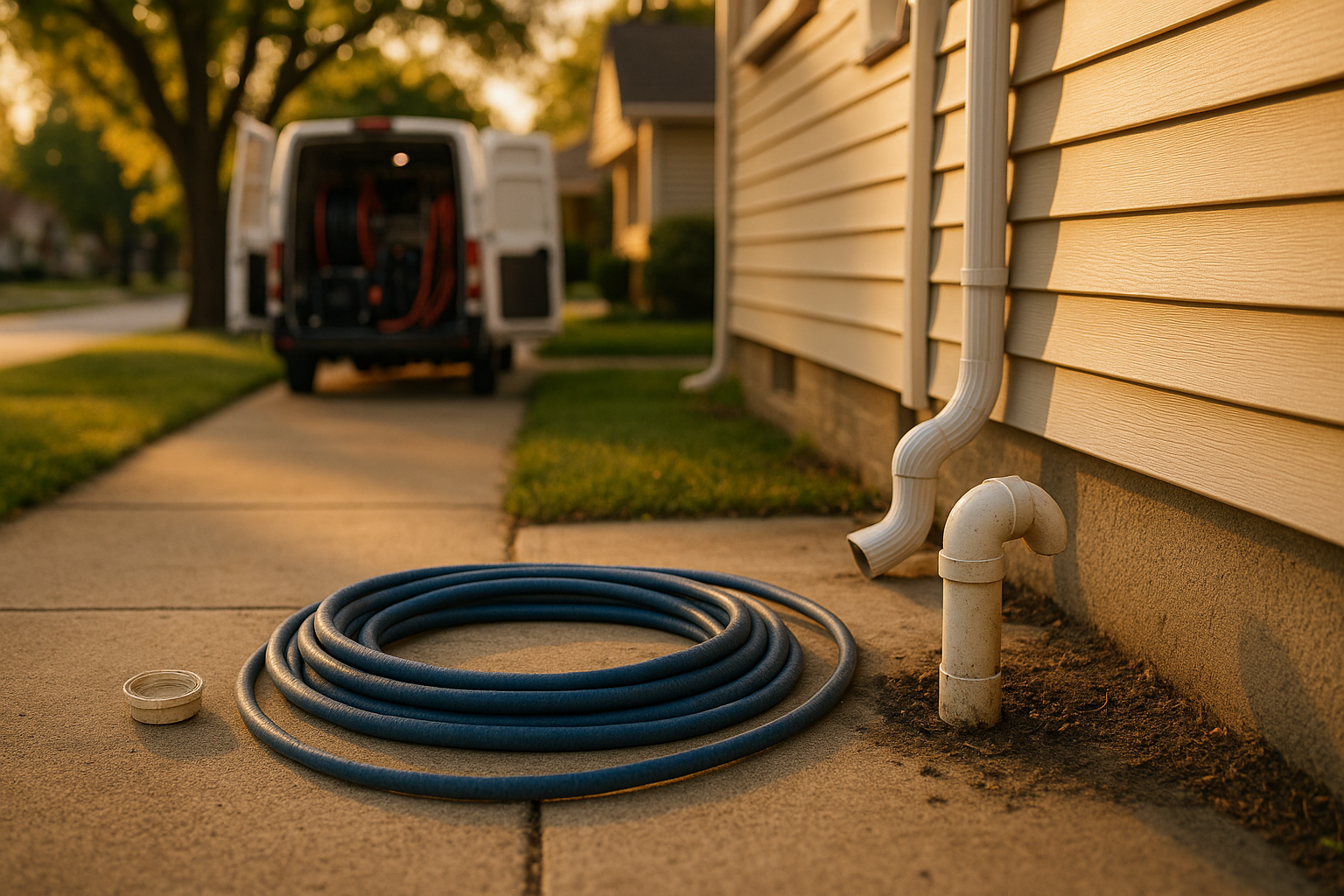
Last spring, a guy in Broad Ripple called about his basement floor drain backing up after a heavy rain. The whole lower level smelled like a wet basement mixed with old coffee grounds. He'd already tried a plunger and a bottle of chemical cleaner from the hardware store, but the water just sat there. When we ran a camera down the line, we saw the real story: tree roots had pushed into an old clay pipe joint, and years of kitchen grease had glued itself to those roots like concrete. That's drain cleaning in Indianapolis—it's rarely just a simple clog. It's usually a story about old pipes, tree roots, and what folks have been pouring down the sink for decades.
At HandyPros, we clear drains all over the metro—from Fountain Square to Fishers, Zionsville to Greenwood. And we do it without tearing up your basement or leaving a mess. This page walks you through how we think about drain problems, the right tool for each job, and what you can expect when you call us.
What's Actually Clogging Your Drain?
In Indy, the answer often depends on where you live. In older neighborhoods like Meridian-Kessler, Irvington, or Fountain Square, many homes still have cast iron or clay sewer laterals. Those pipes get brittle over time, and the joints crack open just enough for tree roots to sneak in. Roots love the moisture and nutrients inside a sewer line, so they grow into a thick, hairy mat that catches everything else—toilet paper, grease, food scraps. Once that happens, you've got a clogged drain in Indianapolis that keeps coming back no matter how many times you plunge.
Over in newer suburbs like Carmel, Fishers, or Westfield, the pipes might be PVC, but the problems still show up. Hard water scale builds up over the years, especially in long runs to the street or alley. That scale narrows the pipe diameter, making it easier for hair and soap scum to snag. And don't forget the freeze-thaw cycle in central Indiana—clay-heavy soils shift during winter, which can create low spots (we call them bellies) where water pools and debris settles.
Kitchen sink clogs are their own beast. Grease and oil go down as liquid, but once they hit the cool pipe, they solidify into a waxy coating. In rental properties near downtown or Speedway, we see this constantly during turnovers. Tenants rinse pans in the sink, and within a few months, the line narrows to the size of a straw. That's why we recommend preventive drain maintenance for landlords and property managers—it's cheaper than an emergency call on a Friday night.
How We Actually Clear a Drain (Without Making a Mess)
Here's our process, no mystery involved. First, we ask you what's been going on—what drains are slow, when it happens, if you've tried anything. Then we get eyes on the situation. If you have a cleanout outside, great. If not, we can pull a toilet or go through a basement stack (older bungalows often don't have exterior cleanouts). We protect your floors with drop cloths before we even bring equipment in.
For most clogs, a motorized auger (you might call it a snake) does the job. The cable spins through the pipe and chews through hair, paper, and small roots. It's quick, it's clean, and it's usually enough for a toilet or tub drain that's just backed up from everyday use.
But sometimes a snake isn't enough. If the clog is a thick layer of grease or a full root ball, hydro jetting is the better call. Hydro jetting Indianapolis is basically pressure washing the inside of your pipes. We run a hose with a special nozzle down the line and blast water at up to 4,000 PSI. It strips away grease, scale, and roots down to the pipe wall. And because we can control the pressure, we don't damage older cast iron or clay pipes. That's a common worry—people ask if aggressive cleaning will crack their old lines. The answer is no, as long as the pipe isn't already broken. And that's where a drain camera inspection steps in.
Before we jet, we almost always run a camera down the line. It shows us exactly what we're dealing with—roots, scale, a collapsed section, or just years of sludge. After we clear it, we can run the camera again to show you the result. You get the video file if you want it, which is great for property managers who need documentation for owners or insurance.
When a Simple Snake Isn't Enough
I remember a job in Meridian-Kessler where the homeowner had called another company twice in six months for a main sewer line cleaning. Each time, they snaked it, got it flowing, and left. The clog kept coming back because the roots were still in there—the snake just poked a hole through them. We came in with a camera, saw a massive root mass from a silver maple in the front yard, and recommended hydro jetting with a root-cutting nozzle. We also did a descaling pass to knock off hard water scale. That was three years ago, and the line still flows fine. The key was addressing the root intrusion removal, not just clearing the symptom.
Now, if the camera shows a broken or bellied pipe, we'll tell you straight. We won't keep jetting a line that's collapsed—you'd just be throwing money at it. Instead, we give you the video footage and a clear explanation of what needs to happen next, whether that's a spot repair or a full replacement. You can take that to a plumber or excavation contractor. We don't do major sewer line replacement, but we'll help you understand the problem so you can make a smart decision.
Basement Floor Drains and Other Problem Spots
Basement floor drains are a special headache in Indy. Many older homes have floor drains tied directly to the main sewer line. During heavy spring rains or rapid snowmelt, the municipal system can get overwhelmed, and water backs up through the floor drain. If you've got a basement floor drain backup, it's not always your own pipe that's clogged—sometimes it's the city's line surcharging. We can help you figure out which it is by checking your drain with a camera and seeing if the backup is local or coming from the street.
Laundry and utility room backups are another common call. Lint, detergent sludge, and sometimes a stray sock or two can block a utility sink drain. Those lines are often smaller diameter and easier to clear with a snake. But if you have a floor drain in the laundry room that backs up when the washer drains, it might be a main line issue, not just the laundry branch.
Kitchen sink clogs are the most frequent single-fixture problem. Usually it's grease, but sometimes it's coffee grounds, eggshells, or rice that got past the disposal. In older homes with galvanized pipes, corrosion on the inside can catch debris and make the problem worse. A simple auger usually fixes it, but if the pipe is heavily scaled, we might suggest a descaling treatment or hydro jetting to buy you more time between clogs.
For Property Managers and Landlords
If you manage rentals in Marion County or the surrounding counties, you know drain problems are a top tenant complaint. And they always seem to happen at the worst time—like when a tenant is moving in or out, or when you have a full unit during a holiday weekend. We work with property managers to coordinate scheduling, provide photo and video documentation of the problem and the fix, and send one simple invoice. That's a big deal when you're juggling multiple properties and need to show an owner what happened.
For buildings with grease-prone kitchens—like fourplexes or small apartment buildings—we can set up a preventive drain maintenance plan. That means we come out on a schedule, jet the kitchen lines and floor drains, and keep a log of what we find. It's way cheaper than emergency calls, and it keeps tenants happy. If you're curious about how that works, check out our guide on setting up a preventive maintenance schedule for rentals.
What You'll Pay and What to Expect
We get asked all the time: "How much does drain cleaning cost in Indianapolis?" The honest answer is it depends. A simple kitchen sink clog with an accessible P-trap is quick and inexpensive. A main sewer line that needs hydro jetting and root cutting is more involved. What changes the price? Access (do you have an exterior cleanout or do we need to pull a toilet?), severity of the clog, and whether we need to do camera work or descaling. We never give a quote over the phone without seeing the situation, but we always give you a written scope and price before we start. No bait-and-switch, no surprise fees.
If it's an emergency—like sewage backing up into your basement at 9 p.m.—we try to get to you fast. Emergency drain service Indianapolis is something we're set up for, but we'll be straight with you about the cost before we dispatch. And if your drain backup caused water damage to floors or drywall, we can also help with water damage repair—one call, one team, less stress.
Ready to Get Your Drains Flowing Again?
You don't have to live with slow drains or the smell of sewage in your basement. Pick up the phone or fill out the form on our site, and we'll schedule a diagnostic drain assessment. We'll come out, figure out what's going on, and tell you exactly what you need—no upsells, no fear tactics. If you want a clear itemized quote for drain cleaning or a camera inspection, request one here.
We serve Indianapolis and the surrounding areas: Carmel, Fishers, Zionsville, Westfield, Noblesville, Greenwood, Brownsburg, Avon, Plainfield, and Lawrence. If you're in one of those towns and your drain is acting up, give us a shout. We'll get you taken care of.
Ready for a free estimate?
Send us the list, and we'll quote a flat price before we schedule — no pressure, no obligation.