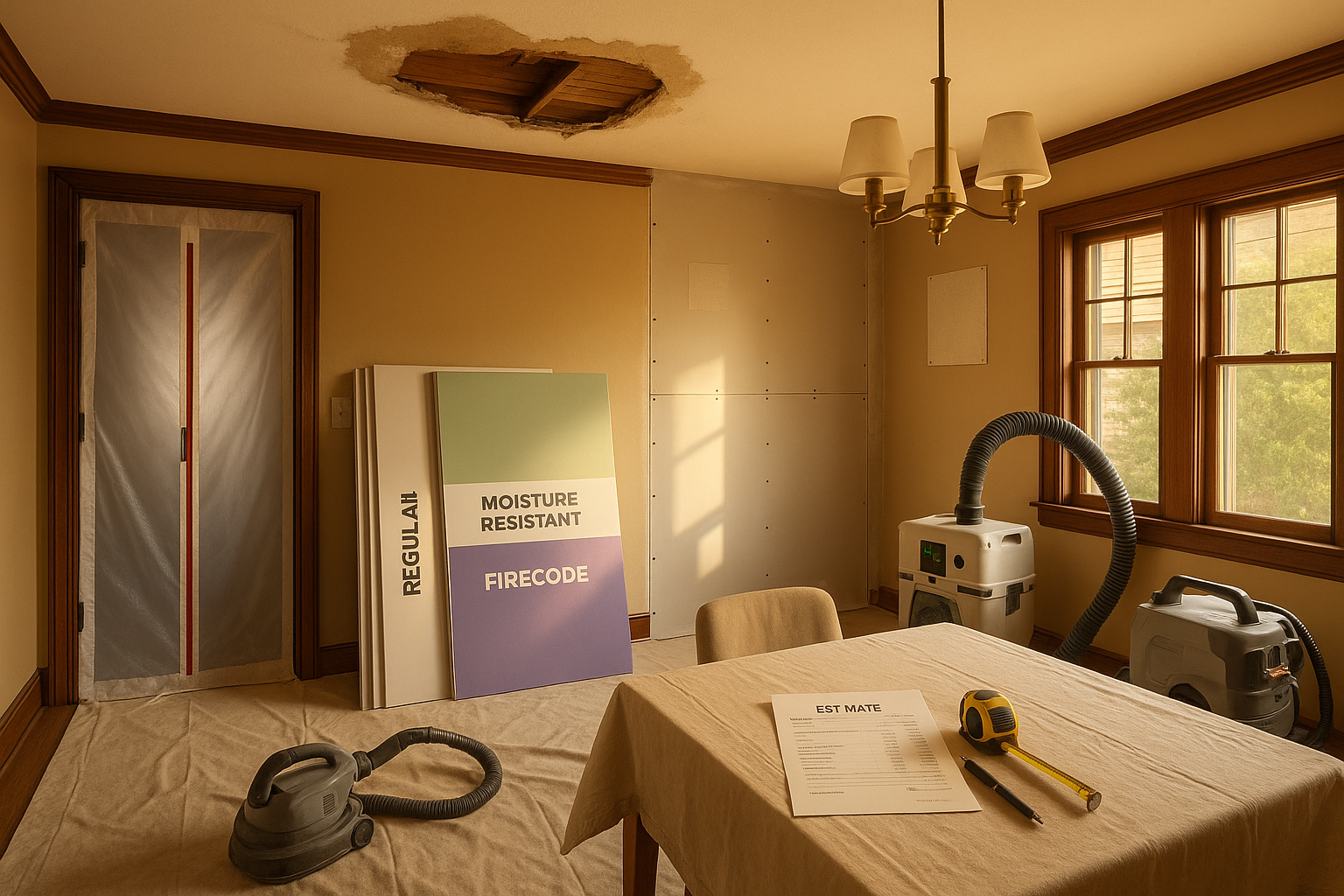
My neighbor in Broad Ripple had a water stain on her dining room ceiling after a roof leak last spring. The plaster was crumbling in a few spots. She called three different drywall contractors in Indianapolis. Two of them just gave her a price over the phone without looking. The third one came out, poked at the ceiling, checked the attic, and told her exactly what he'd do: cut out the damaged section, hang new board, tape it, skim coat to blend with the old plaster, and match the knockdown texture. That guy got the job. Why? Because she could see the plan. That's what matters when you're fixing walls in an older Indy home.
What a Drywall Contractor Indianapolis Actually Does Beyond Hanging Boards
A good drywall contractor Indianapolis starts by looking at the whole space, not just the hole in the wall. They check the framing, the moisture levels, the kind of existing surface—plaster, drywall, or masonry. They ask about your plans for paint and lighting, because that changes the finish level you need. In open-concept homes with big windows, even small bumps show up in low-sheen paint. If you want a perfectly smooth wall, that's a Level 5 finish. If you're okay with a standard texture or just need a patch, Level 4 might be fine. The point is, you shouldn't have to guess. A solid contractor will explain the options in plain English and put it in writing.
Plaster to Drywall in Meridian-Kessler and Other Older Neighborhoods
Lots of homes in Meridian-Kessler, Irvington, and Broad Ripple still have plaster-and-lath walls. Plaster is great when it's in good shape, but when it cracks or crumbles, patching it with more plaster can be a losing battle. Most of the time, the smart fix is to cut out the damaged lath and hang drywall in its place. The tricky part is making the new drywall blend with the old plaster at the edges. A good drywall contractor will use fiberglass mesh tape and a bonding agent to keep the two materials from moving apart. Then they'll skim coat and texture to match whatever the rest of the wall looks like. If you have an older Indianapolis home with plaster walls, don't let someone tell you they can't match the texture. We do it all the time. Ceiling repairs from old leaks are common too, and we can replace sagging drywall and match the existing texture. If you have an attic access hatch that's drafty, take a look at this post on attic access insulation and sealing.
Choosing the Right Drywall for the Job: Bathrooms, Basements, and Garages
Different rooms need different boards. In a bathroom, regular drywall behind tile will soak up moisture and grow mold. You need moisture-resistant board (often called green board or purple board). In a basement, especially in Indianapolis where the water table is high, you should use mold-resistant drywall and make sure the concrete is sealed before hanging anything. If you're finishing a basement in Fishers, Carmel, or Westfield, ask about a sump pump check before you put up walls—we've seen too many finished basements ruined by a failed sump pump. Here's a quick read on sump pump testing before the wet season. And in an attached garage, the wall and ceiling that separate the garage from the house need fire-rated Type X drywall. It's not optional; it's code in most of Marion County. If you're soundproofing a home office or a nursery, you might use thicker drywall with sound-dampening insulation and resilient channels. We can walk you through what makes sense for your space.
Dust Control and Daily Life During a Drywall Project
Sanding drywall makes a fine white dust that gets into everything. In an occupied home, that's a nightmare. A good drywall contractor will set up plastic sheeting to seal off the work area, put down floor protection, and use a HEPA-filtered vacuum sander that catches most of the dust at the source. We also run a negative air machine when the job calls for it. That means the air in the rest of the house stays clean. We schedule sanding for times when you can be out or in another part of the house. We clean up at the end of every day, not just the last day. If you're working from home or have kids napping, tell us. We'll work around your schedule as much as we can.
Why a Written Drywall Estimate Matters in Indianapolis
The biggest fear homeowners have is that a small drywall patch turns into a $3,000 surprise. A written estimate stops that. We break down the price by line item: hanging, taping, mudding, sanding, texture, priming, and debris disposal. That way you see exactly what you're paying for. If we uncover something unexpected—like rotted framing or old water damage—we stop and show you before doing anything. You approve any change before we continue. No hidden fees. And we don't charge extra for a second coat of mud if the first one doesn't look right. The price you agree to is the price you pay, unless you change the scope.
Common Drywall Questions from Indianapolis Homeowners
What's the difference between Level 4 and Level 5 finishes?
Level 4 is the standard for most walls that will get a texture or flat paint. It has a few coats of mud and is sanded smooth, but minor tool marks may still be there under certain lighting. Level 5 is a full skim coat over the entire surface, which gives a perfectly smooth, glass-like finish. In homes with large south-facing windows or lots of pot lights, we usually recommend Level 5 for walls that will get a satin or semi-gloss paint. It costs a bit more, but it's worth it when the light hits the wall and you see no bumps.
Can you match the texture on my existing walls?
Yes. Orange peel, knockdown, hand-trowel—we match them by testing small patches in an inconspicuous spot and adjusting the mix and technique until it blends. It's not an exact science, but a good drywall contractor can get it close enough that you'd never notice the repair.
If you're ready to get a drywall job done—whether it's a small patch, a ceiling repair, or a full basement finish—we'd love to come take a look. We work in Indianapolis and all the surrounding towns: Carmel, Fishers, Zionsville, Westfield, Noblesville, Greenwood, Brownsburg, Avon, Plainfield, and Lawrence. You can use the quote form on our site to set up a time for a walkthrough. We'll give you a clear written estimate and a schedule that makes sense. No pressure, no jargon, just straight talk and clean work.
Ready for a free estimate?
Send us the list, and we'll quote a flat price before we schedule — no pressure, no obligation.