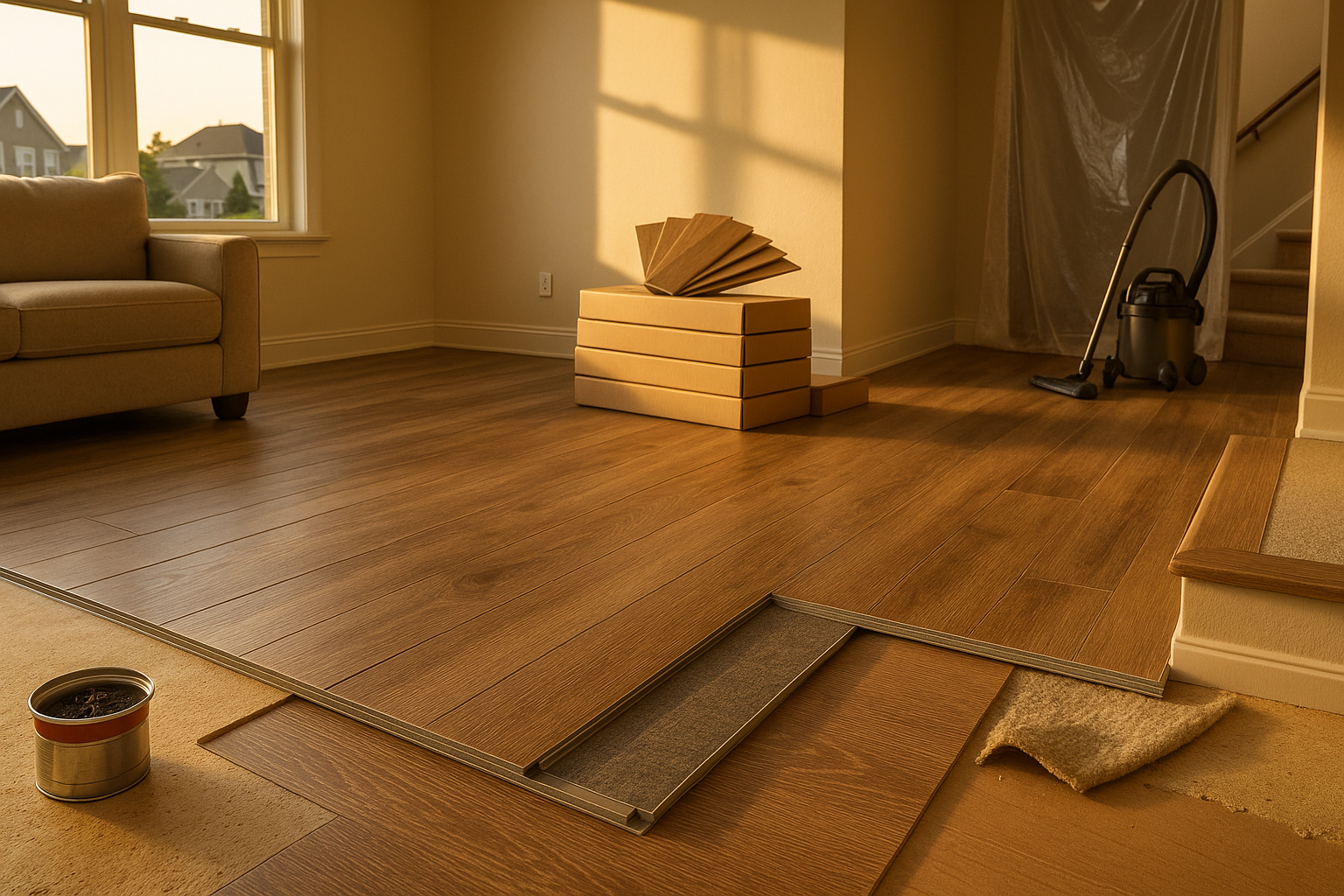
Last winter, my neighbor in Meridian-Kessler pulled up the carpet in his living room, all set to put down some nice new vinyl plank. He'd watched a few videos, bought a bunch of boxes from the big box store, and had a free weekend. By Sunday night, he was sitting on the subfloor with a coffee can full of screws, staring at a wavy plywood mess that was nowhere near flat enough for planks. He ended up calling us to finish the job. That's not a knock on DIY—it's just that vinyl plank flooring installation in Indianapolis has a few local quirks that make a pro's eyes and tools worth it. If you're dealing with an older home, a basement that gets damp, or just a busy household with pets and kids, LVP is a great pick. The trick is getting the prep right so the floor doesn't buckle, gap, or sound hollow a year later.
Why LVP Works So Well in Indy Homes
If you've got muddy shoes in March, a dog that thinks the kitchen is a racetrack, or a basement that gets a little musty in July, luxury vinyl plank is the flooring that doesn't flinch. It's not hardwood—but it doesn't pretend to be. Modern LVP with a 20-mil wear layer shrugs off scratches from pet claws way better than real wood or older laminate. The waterproof core means a spilled sippy cup or a blown washer hose won't warp the planks. And it feels warmer underfoot than tile, which matters when the heat kicks on and the air gets dry. We've installed LVP in rental turnovers near Butler University where tenants change every year, and in forever homes out in Zionsville where the kids do homework on the floor. Both cases, the floor looks good and cleans up easy.
The Planning-First Step Most People Skip
Before we ever pop a plank out of the box, we come to your home, take measurements, and check what's underneath. That means pulling up a corner of carpet or peeling back an old vinyl edge. We use a moisture meter on concrete slabs—especially after a heavy rain, when the ground around Indianapolis gets saturated. If you're in a basement in Westfield or a slab-on-grade ranch in Greenwood, that moisture reading decides whether a simple floating floor will work or if we need a glue-down with a vapor barrier. We also look at flatness. A dip bigger than 3/16 inch over 10 feet will make your floor feel bouncy or cause click-lock seams to break over time. If your house is in Broad Ripple or Irvington and was built before, say, 1960, don't be surprised if the subfloor has high spots and low spots. We'll grind down high edges and use self-leveler where needed. It's not fancy—it's just necessary.
Click-Lock vs. Glue-Down: What We Actually Recommend
People ask us all the time: “What's better, click-lock floating or glue-down?” The honest answer is, it depends. For most main floors and bedrooms, a click-lock floating LVP is faster to install, easier to replace a plank later, and doesn't off-gas like some adhesives. You can walk on it the same day. For sunrooms, three-season porches, or any room that gets baked by afternoon sun or big temperature swings—think a south-facing space in Carmel—we often steer folks toward a glue-down LVP. The adhesive keeps everything locked tight so it won't expand and contract as much. Glue-down also works great over old tile if you don't want to demo, though you still need to clean and prime the surface. And if you're worried about sound in a condo or an upstairs room, we can add a sound-reducing underlayment. That's a big deal if you share walls or floors.
Subfloor Prep: The Part You Never See
Most of the time, the actual plank-pulling is the easy part. The hard work is what happens before: leveling, patching, and sometimes replacing a rotten board. In older Indy neighborhoods, we see a lot of subfloors that have been patched over decades. Maybe the original wood is 3/4-inch oak, then someone added a layer of particle board, then a layer of 1/4-inch ply. By the time we get there, it's like a lasagna. We'll check for squeaks, screw down any loose boards, and skim-coat seams. On concrete slabs, we look for cracks and do a moisture test. If the slab is too wet, we won't just slap down a floating floor with a thin foam pad—that's asking for mold. We'll recommend a proper vapor barrier or a glue-down with moisture-blocking adhesive. This is standard practice for any vinyl plank flooring installation in Indianapolis, but not everyone does it. HandyPros does.
Stairs, Trim, and Transitions: The Details That Make It Look Pro
A new floor changes the height at door thresholds and stair landings. If you don't undercut door jambs, the plank will butt up against the wood and look wrong, or the door will drag when you try to open it. We undercut with an oscillating saw, so the plank slides neatly underneath. For stairs, LVP requires a special nosing piece—not just a cut plank. That nosing gives you a safe, finished edge and meets code for treads. We've seen too many DIY jobs where the stairs just end with a raw edge or a chunk of quarter round. Same goes for transitions between LVP and tile, carpet, or hardwood. We use color-matched metal or vinyl transition strips, so you don't get a trip hazard. If your door sweeps need adjusting because the floor is a bit higher, that's part of the job too. For exterior doors, we'll check the seal so you don't get drafts. Read more about that in our post on door threshold and sweep replacement.
Basements and Moisture: The Indy Reality Check
Basements in central Indiana get wet. Not always flooding, but that seasonal humidity creep. If you're finishing a basement in Fishers or turning a storage room in Noblesville into a playroom, you need to think about vapor. We always recommend a moisture test on the concrete. If readings are high, we'll suggest a 6-mil poly vapor barrier under a floating floor, or a glue-down vinyl with a moisture-resistant adhesive. Some LVP brands have a built-in underlayment that also acts as a vapor block. But you can't just ignore it. A few years back, a homeowner in Lawrence called us after a DIY basement install started buckling. They'd used a cheap underlayment and no barrier. The plank edges curled. We had to pull it up, dry the slab, and redo it. Now we always tell people: test first, then pick the product.
Dust, Noise, and the Daily Disruption
Nobody wants their house torn up for weeks. Most LVP installs in a couple of rooms take us 1–3 days, depending on prep. If you have a whole main floor, maybe 4–5 days. We move furniture for you—just clear off small items and breakables. We'll also unhook and move big appliances like refrigerators and ranges, then put them back and reattach the anti-tip brackets. Dishwashers are a special pain because raising the floor can pinch the water line or make it hard to slide in. We check that before we commit. Dust is minimal for LVP—no sanding, no grout—but we still hang plastic in doorways and run a vacuum with a HEPA filter. You can usually walk on a click-lock floor the same evening, but we ask you to keep heavy furniture off for about 24 hours. For glue-down, give it a full day before you move everything back.
The Cost Conversation (No Surprises)
Every job is different, but we give you an itemized quote before we start. That means line items for floor removal and disposal, subfloor leveling, transitions, stairs, and any baseboard replacement you want. Some folks want to save money by ripping out their own carpet; that's fine. We just ask that you get the tack strips and staples up. Others want us to haul everything away—we do that too. On average, LVP materials run $2.50–$6 per square foot depending on wear layer and brand, and labor adds $2–$4 per square foot. Glue-down is usually a buck or two more because of the adhesive and prep. But the biggest variable is always the subfloor. If we have to pour 20 bags of self-leveler, that's a real cost. We'll show you the numbers and let you decide. No hidden fees, no “oh, by the way” after we start.
Let's Get Your Floor Measured
If you're tired of looking at that stained carpet or the old sheet vinyl that's peeling at the edges, let's talk. We'll bring samples to your house so you can see how different LVP colors and textures look in your actual light—not under a warehouse glow. We'll check the subfloor, take moisture readings, and give you a written estimate that covers everything. No pressure, just honest advice from a local crew that's been doing this across Marion County and the donut counties long enough to know the quirks. Fill out the form on our quote page or give us a call. We'll get you squared away.
While we're at it, if you're also thinking about painting those old oak cabinets to match the new floor, our cabinet painting service pairs nicely—but that's a story for another day.
Ready for a free estimate?
Send us the list, and we'll quote a flat price before we schedule — no pressure, no obligation.