Last January, my neighbor Dan called me over to his place in Broad Ripple. He pulled back the rug by his front door and pointed at the daylight underneath. 'I can feel the cold coming in like a river,' he said. His furnace was running nonstop and he'd already tried stuffing a towel under the door. Two weeks later, after we replaced the sweep and adjusted the threshold, his living room stopped feeling like a walk-in freezer. That's the thing about exterior doors – you rarely think about the bottom seal until it fails. Then you notice every draft, every dust line, and every ant parade that sneaks in.
A door sweep replacement is usually the cheapest fix for a drafty door. It's a simple strip that seals the gap between the bottom of the door and the threshold. But not all sweeps are the same, and picking the wrong one can cause more frustration than it fixes. Let's walk through what actually works in Indianapolis.
Signs You Need a Door Sweep Replacement
If you see daylight under a closed door, that's the obvious sign. But even without visible light, you might feel cold air pooling at your feet in winter. In summer, hot, humid air sneaks in the same way. Water tracks on the sill after a heavy thunderstorm? That's often a failed sweep letting wind-driven rain push under. You might also notice:
- Torn or bent vinyl fins hanging off the bottom of the door.
- A brush sweep that's flattened and no longer springs back.
- Rusted or missing screws along the bottom edge.
- Bugs – ants, spiders, boxelder bugs – using the gap as a front door.
If the bottom seal is worn, a towel or a draft snake only masks the problem. It slides around, catches on the door, and does nothing for water or bugs. A proper door bottom seal replacement stops all of that.
Types of Door Sweeps (And Materials That Last Here)
There are four main styles you'll see at hardware stores or from pros:
- Screw-on U-shaped sweeps: Aluminum channel with a vinyl or silicone fin. The whole assembly slides onto the door bottom and screws into the face. Easy to install on most steel and fiberglass doors.
- Brush sweeps: A row of dense bristles, often face-mounted. Brush vs vinyl door sweep depends on your threshold – brush works better on uneven surfaces, while vinyl or silicone fins seal tighter on smooth thresholds.
- Kerf-in door sweeps: These slide into a groove already cut into the bottom of some wood doors. If your door has a thin slot, this is your style.
- Automatic drop-down door sweeps: More expensive, but great for tight clearances or uneven floors. They lift when the door opens and drop to seal when it closes.
For Indianapolis weather, skip the cheap adhesive-backed vinyl. Freeze-thaw cycles stiffen those fins until they crack. A silicone or EPDM fin stays flexible below zero and won't turn brittle in a cold snap. Pair that with an anodized aluminum body – it resists the road salt and winter grit that corrode plain metal. And use stainless or coated screws, because you don't want to do this again in two years.
How to Measure and Install a New Sweep
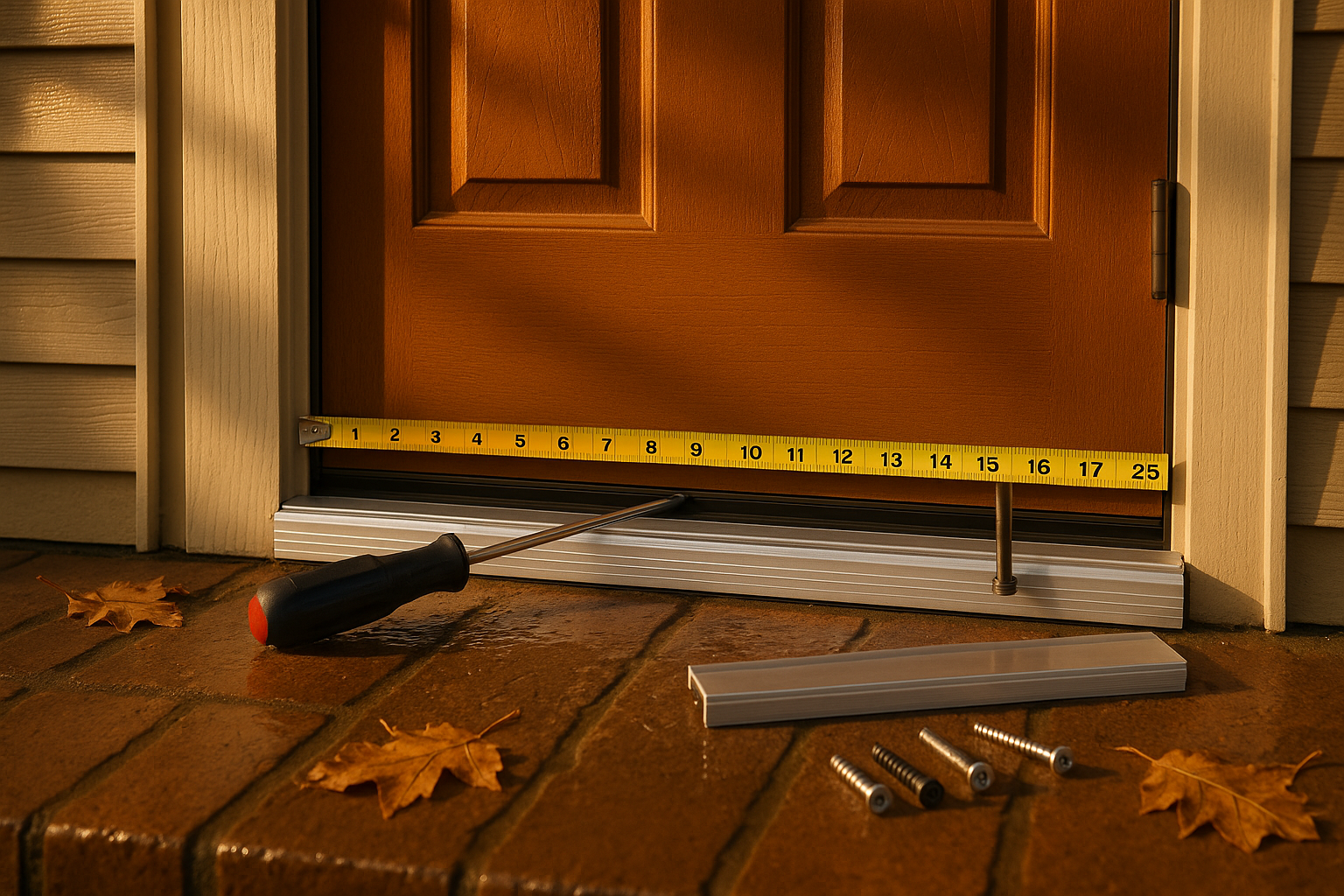
Start by measuring the width of your door, not the old sweep. Measure from edge to edge, then cut the new sweep to match. Before you cut, check the clearance under the door. A good seal should just kiss the threshold – about 1/16 to 1/8 inch of contact, no more.
Remove the old sweep. Clean the bottom edge of the door – scrape off old adhesive, dirt, and paint flakes. Dry-fit the new sweep. If it's a screw-on style, mark the screw holes, pre-drill if the door is metal or fiberglass, then attach lightly. Close the door and check for even contact. Adjust the fin height if it drags or leaves a gap. Once it's right, snug the screws but don't over-tighten – that warps the aluminum and ruins the seal.
Mistakes That Make a New Sweep Useless
- Cutting it too short leaves end gaps where cold air streams through. Measure twice, cut once, like every other project.
- Setting the fin too low creates drag, which makes the door hard to close and can wear out the fin fast.
- Ignoring a sagging hinge or mis-set threshold. If the door doesn't sit square, no sweep will seal properly.
- Using adhesives that fail in cold. Screws are the only reliable way on an exterior door.
If your door is out of square or you have a metal or fiberglass skin, the screw pilot holes need to be just right, or you'll strip them. That's when DIY turns into a weekend headache.
When a Sweep Isn't Enough – And When to Call a Pro
Sometimes the gap under the door isn't just a bad sweep. The threshold itself may be worn, broken, or set too low. Adjustable thresholds can be raised with a few turns of a screwdriver – that often pairs nicely with a new exterior door sweep. If the threshold is fixed or cracked, you may need a replacement. And don't forget the jamb weatherstripping: that's the strip around the sides and top of the door. A complete door weatherproofing job includes both.
If you have a storm door, check the clearance. Some storm door sweeps sit close to the primary door and can interfere with a thick new sweep. We covered storm door installation details in another post. In older Indianapolis neighborhoods like Meridian-Kessler or Irvington, settled foundations often mean the door frame has shifted. A pro can adjust the hinges, relevel the threshold, and choose a sweep that compensates for an uneven floor.
For steel or fiberglass doors, a screwed-on sweep is straightforward, but if you're worried about warranty or drilling holes in a metal skin, it's worth having a pro handle it. Automatic drop-down door sweeps also need precise mortising and adjustment – not a beginner project.
Expected cost in Indy: you can buy a quality standard sweep for $15–$45. An automatic drop-down model runs $60–$120. If you hire a local specialist for door sweep replacement plus threshold and jamb tune-up, expect roughly $95–$185 per door, depending on door type and adjustments. That's a fair price for a door that actually seals.
Indianapolis Seasons: Why This Matters Now
Our weather doesn't play nice. Winter brings freeze-thaw cycles that destroy cheap vinyl. Spring and summer thunderstorms push rain sideways against your entry door. Fall brings leaves, dust, and pollen that blow through the smallest gap. And garage-to-house entry doors are often the worst offenders – they open into a garage that's already cold, damp, or dusty.
North and west-facing entries feel colder in winter because they take the brunt of the wind. In newer homes in Carmel, Fishers, Westfield, and Zionsville, steel and fiberglass doors often have adjustable thresholds that pair well with a simple screw-on sweep. Older homes in Fountain Square or Broad Ripple may have wood doors with kerf-in grooves or settled thresholds needing a custom fit.
Around here, ants and boxelder bugs are notorious for following the gap under a door. A tight energy-efficient door seal blocks them, along with drafts and that cold spot on the floor near your front entry.
Get a Clear Fix Without Guesswork
If you're tired of the towel trick and want the draft gone for good, HandyPros serves Indianapolis and the surrounding suburbs – Carmel, Fishers, Zionsville, Westfield, Noblesville, Greenwood, Brownsburg, Avon, Plainfield, and Lawrence. We'll take a look at your door, tell you exactly what's wrong, and give you a clear scope with quality material options. No upsells, no mystery. Just a door that closes tight.
Get a quick quote for door sweep replacement or a full weatherproofing tune-up. Don't wait until the next cold snap. A ten-minute fix now saves you months of drafts and a higher heating bill.
While you're at it, check out other small fixes we tackle around the house.
Ready for a free estimate?
Send us the list, and we'll quote a flat price before we schedule — no pressure, no obligation.