Last spring, a homeowner in Broad Ripple called us about a smell she couldn't kick. Her kitchen floor felt cold every morning, and her kids were sneezing way more than usual. She had no idea the crawl space under her house was the culprit. The moment we opened the access door, she saw it: wet dirt, rusted ductwork, and a whole family of camel crickets. That's when it clicked. A damp crawl isn't just gross—it feeds mold, ruins floors, and makes your air feel clammy. And in Indianapolis, it's a battle. Our humid summers, heavy spring rains, and clay soil that holds water like a sponge. That's why crawl space encapsulation Indianapolis is more than a home upgrade. It's a fix that stops the problem at the source.
Why Your Crawl Space Gets So Wet in Indianapolis
Most older Indianapolis homes have vented crawl spaces. The idea used to be: let air flow through to dry things out. But around here, that backfires. In July, that "fresh" air is 80% humidity. In April and May, storms dump rain, and the clay soil under your house doesn't drain. So moisture hangs around, condenses on floor joists, and invites mold. We've seen crawl spaces in Meridian-Kessler where the wood was so wet you could poke a screwdriver through it. Over near the White River, the water table can rise so high that a sump pump becomes non-negotiable. And don't even get me started on the freeze-thaw cycles that crack foundations and push water in. Sealing that space off from the outside air and the ground below is the only way to get control.
What Crawl Space Encapsulation Actually Involves
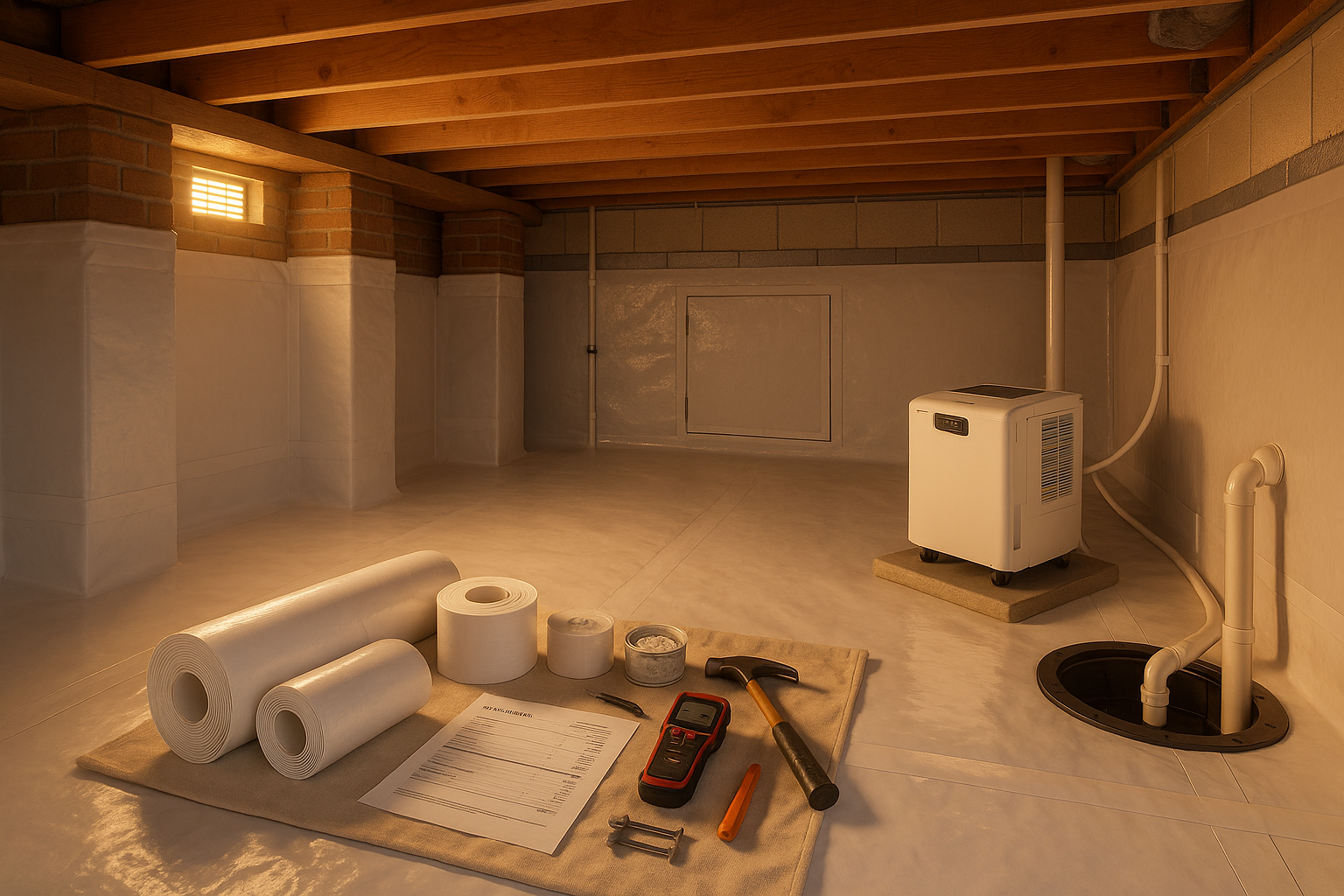
Crawl space encapsulation isn't just throwing down a sheet of plastic. That's what people picture, and it's why DIY attempts fail. A real encapsulated space is a system. That's the difference between a cheap DIY cover and professional crawl space encapsulation Indianapolis: the details. We start with an assessment: moisture readings, photos, a written scope with line-item pricing. Then we design it for your home. At minimum, we lay a 20-mil reinforced vapor barrier that gets mechanically fastened to the walls. Seams get taped and sealed around piers. We install an airtight crawl space door. We seal the vents and rim joists. And we add a dehumidifier sized for the space. If there's standing water, we may need an interior drain and a sump pump. Some folks ask why we bother with a dehumidifier if we're sealing out moisture. Because even after encapsulation, concrete and wood can still release moisture for months. That's why we include the dehumidifier unless the space is very small and dry.
This connects to plumbing and electrical work: the sump pump is plumbing, the dehumidifier needs a dedicated circuit. We are a handyman company, but we pull in licensed electricians and plumbers when the job needs it. That's part of our one-vendor approach. We know local codes; we're not going to leave you with a mess. Check out our thoughts on using one vendor for property repairs if you manage multiple units. One vendor vs many for property repairs
Drainage and Other Things No One Thinks About
Here's where it gets good. You can encapsulate all you want, but if your downspouts dump water right at the foundation, you're fighting a losing battle. We check grading, we extend downspouts, and if we see water coming in after rain, we talk about an interior French drain. That's a trench around the perimeter that collects water and sends it to a sump basin. The sump pump kicks it outside. In a tight crawl like you often see in Irvington or Speedway, we have to be creative. We might use low-profile drains or even dig by hand. Not fun, but it works.
We also handle existing insulation. That fiberglass batts hanging in the joists? It's often soaked and moldy. We'll remove it because once you seal the space, you don't need it there anyway. Rim joist air sealing is a huge deal, too. Those gaps let in cold air and moisture. We seal them with foam board and caulk. And we always leave an inspection strip along the foundation wall so termite guys can see what's going on. That's a common worry—encapsulation can hide termite tubes if you're not careful. We follow the standard and leave that gap.
Real Questions from Indianapolis Homeowners
We hear the same things over and over. "Can I just put down 6-mil plastic myself?" Sure, but it'll tear in a year, and without sealing the walls and vents, it won't stop humidity. 20-mil is way tougher. "Will encapsulation trap moisture and make mold worse?" No, if you have drainage and a dehumidifier, it dries out. "Do I need mold remediation first?" If there's heavy mold, we'll quote it separately, but light surface mold on wood is often fine once we dry the space. "How long does it take?" Most single-family crawl spaces take 1 to 3 days. Tight access slows things down, but we've done 18-inch crawls before. "What about radon?" Sealing the crawl can slightly change radon levels, but it's not a radon mitigation system. We recommend testing before and after if you're concerned. "What energy savings can I expect?" You might see a few percent on heating and cooling, but the real win is comfort and no musty smell. And floors don't freeze your toes.
The Payoff
Here's the thing: you open the crawl space door and it smells like... nothing. No mustiness, no damp air. Your floor in winter is warmer, your allergies might calm down, and your wood joists aren't slowly rotting. That's what encapsulation gives you. A friend of ours in Fishers encapsulated his crawl and then realized his dehumidifier was only running a couple hours a day. Before, when he had a vented crawl, the humidity was always 70%+. Now it's 45%. His wife stopped complaining about the smell in the guest room. That's the point.
We also work with landlords. If you own a small multifamily in Lawrence or Avon, you don't want tenant complaints about mold or bugs. An encapsulated crawl reduces those callbacks. Take a look at our blog on a preventive maintenance schedule for rentals to see how this fits into the big picture. Preventive maintenance schedule for rentals
How We Work with You
When you call HandyPros, we schedule a no-pressure on-site assessment. We'll crawl under there, take photos, check moisture levels, and then send you a written, line-item estimate. You'll know exactly what you're paying for. If you want to move forward, we'll set a date and show up on time. We protect your floors with drop cloths, we clean up, and we leave you with before/after photos, moisture readings, and a maintenance guide for the dehumidifier. We warranty our workmanship. If something's off, we come back.
So if you're tired of that musty smell and need crawl space encapsulation Indianapolis, let's talk. Get a free, on-site crawl space inspection and written estimate. Head over to our quote page and tell us about your house. We'll take it from there.
Ready for a free estimate?
Send us the list, and we'll quote a flat price before we schedule — no pressure, no obligation.