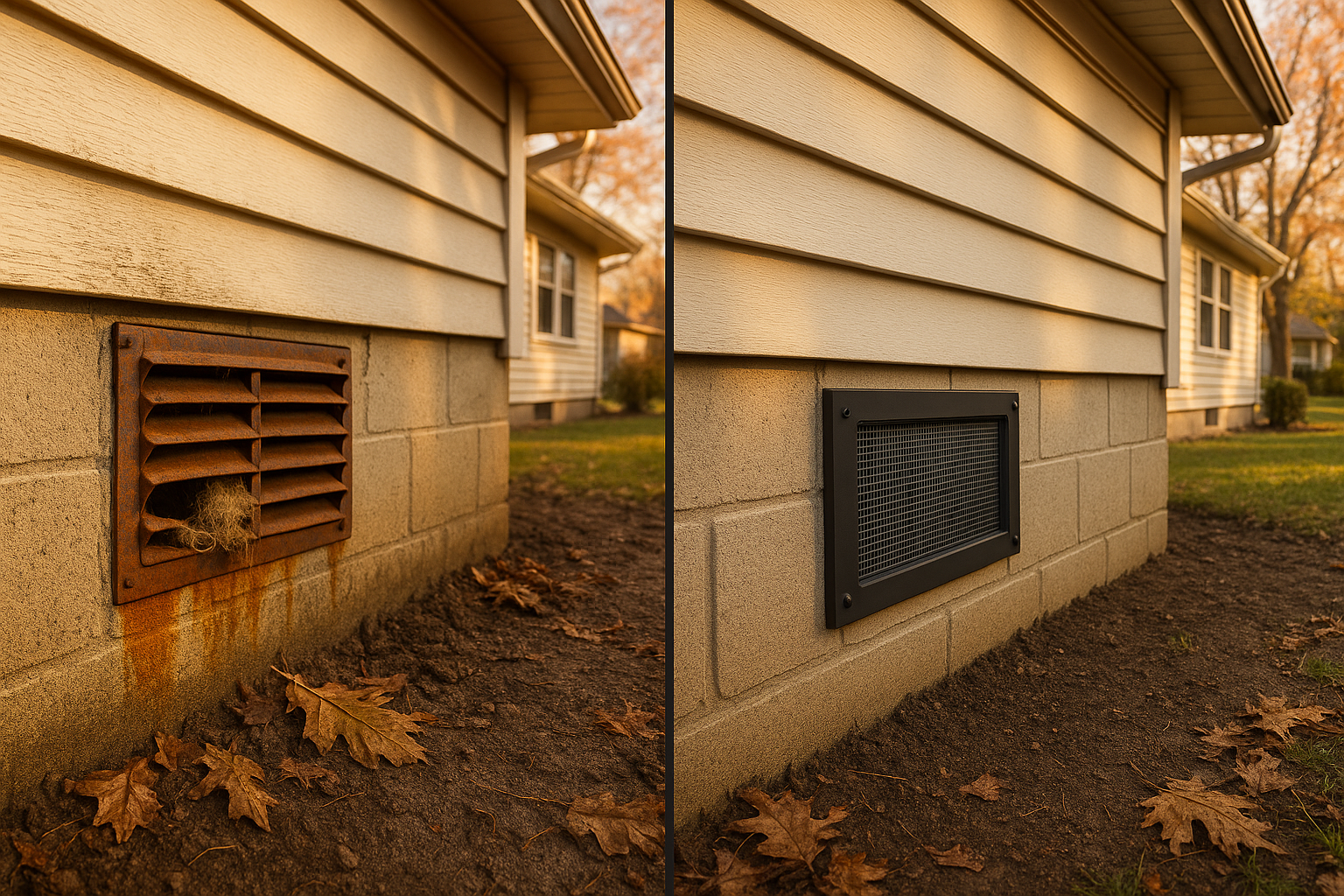
Last fall my buddy Dave called me from his place in Broad Ripple. He'd been fighting a damp smell in his hallway for weeks, and every time he walked barefoot to the kitchen the floor felt like a slab of ice. We pulled back a little insulation under the house and found the crawl space vents — the old metal louvers on the foundation — were rusty, bent, and one was half-open with a mouse nest tucked behind it. That's when Dave asked me the question I hear all the time from homeowners around Indianapolis: 'Do I really need those crawl space vent covers before winter hits?' Short answer? Yes, but not just any cover slapped on. This is central Indiana, where the clay soil holds water like a sponge, the summers are sticky, and the winters dip below freezing. If your vented crawl space is open to the elements, you're inviting trouble.
Why Your Crawl Space Vents Are a Problem in an Indiana Winter
Older homes in Indianapolis neighborhoods like Meridian-Kessler, Fountain Square, and Irvington often have vented crawl spaces with brick, block, or limestone foundations. Those vents were originally supposed to let moisture escape and keep the space dry. But Indiana weather doesn't cooperate. Our humid summers push damp air into the crawl, and the cold winter air makes the floor above feel like a walk-in cooler. Plus, wind-driven rain and leaf debris from mature trees clog the screens, and before you know it you've got a damp, musty smell creeping up through the floorboards. In places like Carmel, Fishers, and Zionsville, newer homes may have sealed crawl spaces already, but plenty of older places still have the old-style open vents. Covering them with proper crawl space vent covers can cut that draft and reduce moisture. It won't fix a wet crawl by itself, but it's a solid step. If your floors are still cold after sealing the vents, check out our post on door threshold and sweep replacement for more drafts to chase.
Two Main Options: Seasonal Covers or Full Sealing
You've got two basic routes. The first is a removable cover you put on each fall and take off in spring — something simple like a foam plug or a magnetic sheet. Those are cheap and help with drafts, but they don't keep mice out and they can fall off. The second route is a permanent, weather-tight cover with a gasket and pest-proof mesh. That's what we usually recommend for homes around Avon, Plainfield, and Greenwood where the soil stays wet and the critters are relentless. Permanent covers become part of a sealed or conditioned crawl space. That means you also need a vapor barrier on the ground and maybe a dehumidifier. If you're thinking about full crawl space encapsulation later, installing good solid covers now still helps because you won't have to redo the vents. The choice depends on your house, your budget, and whether you've got moisture issues beyond just cold air. A handyman service can help you sort that out.
What to Look for in a Vent Cover That Lasts
Not all crawl space vent covers are built the same. The cheap plastic ones from the hardware store crack after a couple winters. For Indianapolis, you want powder-coated steel or aluminum with a rubber gasket that seals against the masonry. Look for stainless-steel mesh with openings no bigger than 1/8 inch — mice can squeeze through a hole the size of a dime, and insects need even less. Insulated crawl space vent covers with a foam core help keep the cold out and the floor warmer. Foundation vent covers that mount with masonry anchors and backer rod sealant will stay put through freeze-thaw cycles. We've seen too many covers fall off because somebody just used adhesive or friction fit. Brick and block foundations shift a tiny bit, so a mechanical fastener is your friend. If you have a limestone foundation like in some older Lawrence or Southport homes, you need to be careful drilling — use a hammer drill and the right bit. A handyman who works on these foundations every week knows what works.
When You Should NOT Just Cover the Vents
Here's where I have to be straight with you. If you've got standing water under the house, visible mold on the floor joists, or bare dirt with no vapor barrier, closing the vents can trap moisture and make things worse. In that case, you need to fix drainage first — gutters, downspout extensions, grading — then install a vapor barrier, then decide on vent covers. That's why a quick assessment matters. We look for efflorescence (that white chalky stuff on the block), soft wood, animal droppings, and signs that water is pooling near the foundation. Also, if you have a gas furnace or water heater in the crawl space, you can't just seal it up without thinking about combustion air. Code requires either keeping enough ventilation or installing a sealed, conditioned crawl with mechanical dehumidification. A pro can walk you through that. Radon is another thing — Central Indiana radon levels vary, and if you have a mitigation system, vent changes need to coordinate with that. Don't DIY a permanent seal if any of these apply. Need to get your gutters and downspouts in shape first? Read our take on gutter guards worth it in Indiana.
How a Handyman Approaches the Job (Like We Do)
When HandyPros comes out to install crawl space vent covers, we don't just measure and slap on a cover. First we check the whole crawl: moisture readings, insulation condition, existing vent damage, and how water moves around the house. Then we measure each opening — they're never exactly the same size. We prep the surface: wire brush the rust, clean out debris, patch any missing mortar. Then we set the cover with masonry anchors, add backer rod and sealant around the edge, and make sure it's weathertight. We also label any removable panels for termite inspection access. We take before-and-after photos so you see exactly what got done. The whole process for a typical Indy home with 4-6 vents takes less than a day. And yes, we clean up the brick dust and leave the foundation looking tidy. Good crawl space vent cover installation in Indianapolis isn't rocket science, but it needs the right tools and a little patience.
While we're under there, we also look at the floor joists and sill plates. Rot is common in older crawl spaces, and a handyman can do basic carpentry repairs like sistering a joist or replacing a section of rim board. It's all part of keeping the house solid.
Maintenance and Seasonal Checks
You don't have to do much once the covers are installed. Every fall before the first hard freeze, walk around the foundation and check for debris, cracks, or covers that got knocked loose by a weed trimmer or snow shovel. After a big storm, make sure downspout extensions are still pointed away from the house. If you have removable covers for summer, swap them out in spring and store them in the garage. Also, if you have termite bait stations, don't cover them — keep them accessible. That's common sense. We recommend a quick crawl space check once a year, just like you'd check your attic. It's cheap insurance. While you're at it, take a look at our guide on attic access hatch insulation and sealing for another spot where air leaks cost you money.
Ready to Get Your Crawl Space Ready for Winter?
Look, you could try to DIY some foam board and duct tape. It might work for a few weeks. But Indianapolis winters are long, and the critters are patient. If you want a fix that actually holds up, call a local handyman who knows the difference between a seasonal cover and a permanent seal. We work in Indianapolis, Carmel, Fishers, Zionsville, Westfield, Noblesville, Greenwood, Brownsburg, Avon, Plainfield, and Lawrence. We'll come out, check your crawl space, and give you a clear line-item quote for vent covers or a full sealing plan. No surprises, no pushy sales talk. Just a straight answer about what your house needs. Request a quote for crawl space vent covers or a full assessment.
Ready for a free estimate?
Send us the list, and we'll quote a flat price before we schedule — no pressure, no obligation.