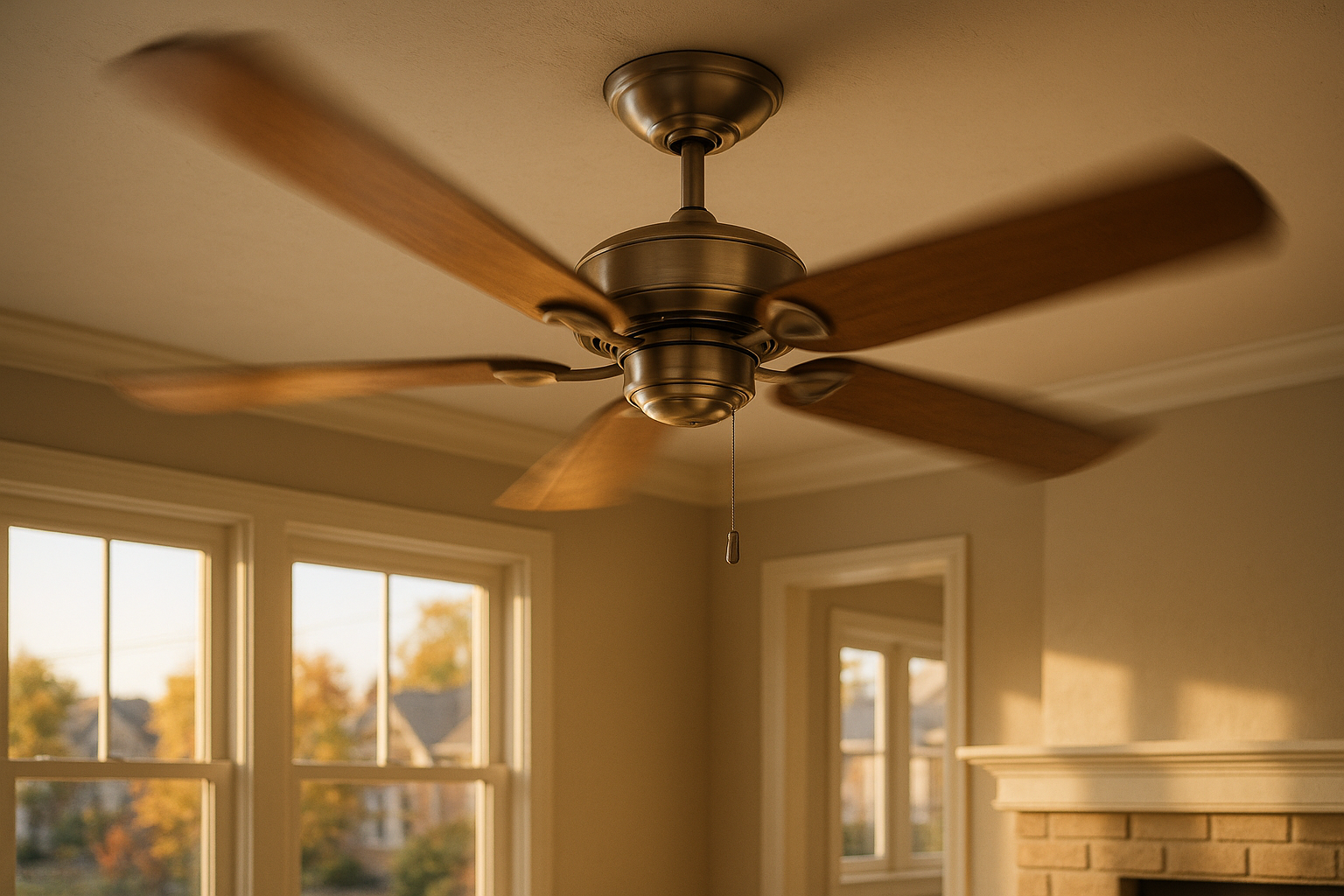
Last summer, a neighbor in Broad Ripple called me over because her ceiling fan was shaking so hard the light kit rattled like a maraca. She'd lived with the wobble for months, thinking it was just how fans are. When it started making a grinding noise, she got worried. I found the fan hanging from a plastic light fixture box—not a fan-rated box. That's a disaster waiting to happen. She's not alone. Ceiling fan wobble is one of the most common handyman calls we get at HandyPros, serving Indianapolis, Carmel, Fishers, and the rest of the metro. The good news? Most wobbles can be fixed. The better news? Some are dangerous and need a pro. Let's talk about what causes the wobble, what you can do yourself, and when to call us.
Why Ceiling Fans Wobble (And Why It Matters)
A ceiling fan wobble is exactly what it sounds like: the fan body moves side to side or front to back when it's running. A tiny bit of movement on high speed is sometimes ok, but if you can see the blades or the light kit shaking, that's too much. The wobble happens because something's off balance or not secured right.
Common causes: - Loose mounting screws at the ceiling or on the blades. - The electrical box isn't rated for a fan. Many fans get hung on ordinary light fixture boxes, which can't handle the weight and vibration. Code (NEC 314.27(C)) says ceiling fans need a listed fan-rated box. In Indianapolis, inspectors check for this. - Warped or bent blades. Humidity swings in Indiana—hot summers, damp springs—can make wood or cheap composite blades warp over time. - Blades that aren't all the same pitch or angle. - Dust and grime buildup on blades. - A downrod that's too long or too short for the room, or a slope adapter installed wrong on a vaulted ceiling.
I've seen fans in Greenwood that wobbled for years because the original installer didn't tighten the blade screws. A simple fix, but nobody thought to check.
Quick Checks You Can Do Yourself
Before you call anyone, try these simple fixes. Turn off the power at the breaker first.
- Tighten everything. Use a screwdriver to snug up the screws on the canopy, the mounting bracket, and all blade screws. Loose screws cause most minor wobbles.
- Clean the blades. Dust and pollen from spring and summer in Indy can throw off balance. Wipe both sides of each blade.
- Check blade alignment. Stand on a ladder and look at the blades from the edge. They should all be the same angle. If one is bent, you might need to replace that blade.
- Try a balancing kit. Hardware stores sell kits with a clip and small weights. You attach the clip, see if the wobble changes, then add a weight. This works for small imbalances, not structural problems.
If you've done all that and the fan still shakes, the problem is likely deeper—like a non-fan-rated box or warped blades. Don't keep guessing. That's when you call a pro.
A note on plaster ceilings: If you live in an older home in Meridian-Kessler or Irvington, your ceiling might be plaster and lath. You can't just screw a fan into plaster; the support has to come from the framing behind it. That's not a DIY job for most people.
When to Call a Pro (And What HandyPros Does)
Sometimes a wobble is a sign of a real safety problem. Call us if: - The fan wobbles even after you've tightened and balanced. - The fan shakes violently on high speed. - You don't know if the electrical box is fan-rated. Look inside the box for a sticker that says 'acceptable for fan support' or a steel strap. If you're not sure, assume it's not rated. - The fan is heavy, has a light kit, or is on a vaulted ceiling. - You have an older home with plaster walls or ceilings. - You hear grinding or clicking along with the wobble.
Here's what we do at HandyPros: we inspect the box, confirm it's fan-rated and mounted to framing. If not, we replace it with a listed fan-rated box with a brace, pull a permit if needed, and hang the fan correctly. We also check blade pitch, balance the fan, and test all speeds. We treat your home like our own—drop cloths, clean wiring, no surprises.
We've worked on plenty of fans in Carmel and Zionsville that had the same issue: a fan mounted to a flimsy box that was never meant to hold it. It's common in homes built in the 90s and 2000s. The fix isn't complicated, but it matters for safety and quiet.
Blade Balance and Replacement: What Actually Fixes a Wobble
Sometimes the blades themselves are the problem. If a blade is warped from humidity, no amount of balancing will fix it. You'll need to replace the blades or the whole fan. Lay each blade on a flat surface and see if it rocks. If one blade is visibly bent, replace that blade—or get a new set.
We had a customer in Fishers whose fan wobbled for years. He'd tried three balancing kits. Turned out his blades were warped from humidity in his bonus room. We replaced the blades, and the wobble vanished.
In Indiana, we get big humidity swings. Wood blades soak up moisture and warp. Composite blades are better for most homes. If you're replacing a fan, consider that.
Outdoor and Porch Fans in Indy
Covered porches are big in Indy suburbs like Westfield and Brownsburg. Outdoor fans get extra weathering. They should be damp- or wet-rated, with corrosion-resistant hardware. We often find outdoor fans wobbling because they're mounted to a vinyl soffit or beadboard ceiling instead of the framing. The fix is to add blocking between the joists and mount a fan-rated box to that. Also check the blades for rust or warping from rain and sun. If the fan is more than 5-7 years old and starting to rust, replacement might be smarter than repeated repairs.
Repair vs. Replace: Making the Call
So, should you fix your wobbly fan or just get a new one? Here's my rule: if the fan is under 5 years old, in good shape, and just needs tightening or balancing, fix it. If the fan is older, has damaged blades, a cracked housing, or the motor is making noise, replace it. Newer fans are quieter and more energy-efficient. A professional tune-up costs less than a new fan, but if the fan is on its last legs, don't throw good money after bad.
We'll be honest with you. If a repair doesn't make sense, we'll tell you. We give you a clear scope and price before we start, so no surprise add-ons.
If your ceiling fan wobble is driving you crazy—or you're worried it might fall—let's take a look. We offer a quick on-site assessment. We'll check the box, support, blades, and balance, then tell you exactly what it needs and what it'll cost. No pressure, no mystery. You can schedule a visit through our quote page. We serve Indianapolis and the whole metro area: Carmel, Fishers, Zionsville, Westfield, Noblesville, Greenwood, Brownsburg, Avon, Plainfield, and Lawrence. While you're here, feel free to browse our other home repair guides on the blog.
Ready for a free estimate?
Send us the list, and we'll quote a flat price before we schedule — no pressure, no obligation.