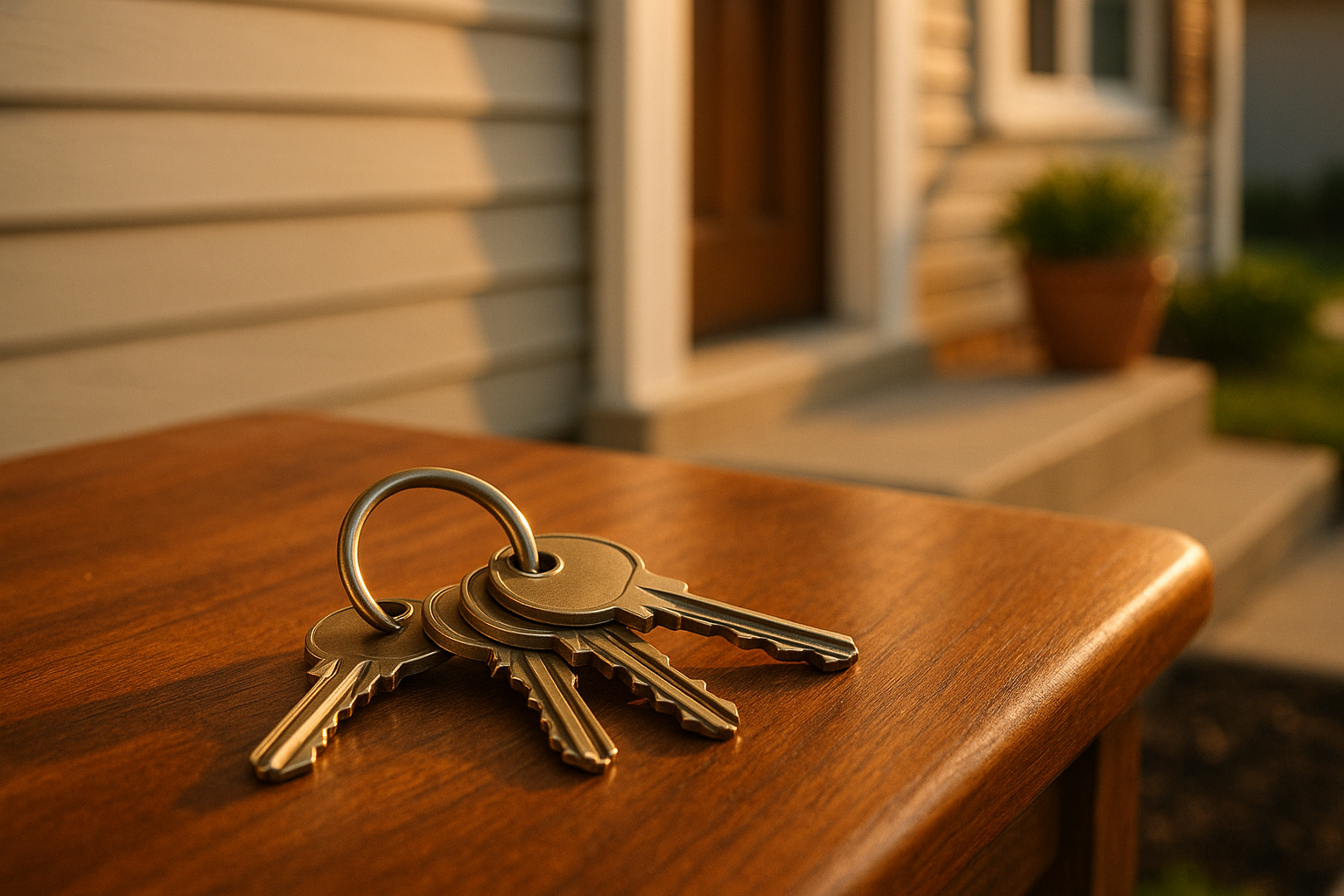
You just closed on a house in Carmel. The seller's agent hands you a ring of keys, and you're thrilled. Then your neighbor stops by and says, "Oh, the old owner gave a key to the dog walker, the cleaning lady, and her ex-boyfriend." Suddenly that new front door doesn't feel so safe. Do you rekey or replace the lock? That's the rekey vs replace lock question every new homeowner faces, and the answer isn't always the same. We've done both for people all over Indianapolis, from Meridian-Kessler to Greenwood, and we'll walk you through how to decide without wasting money.
First, Quick Definitions
Rekeying changes the pins inside your existing lock cylinder so old keys stop working. You keep the same hardware, but get new keys. Replacement swaps the entire lock or deadbolt for a brand new unit. Rekeying is cheaper if your hardware is still good. Replacement gives you new hardware, better security, or a style upgrade. Simple as that.
When Rekeying Makes Perfect Sense
Rekeying is the move when you move into a new place. Even if no one mentions extra keys, you don't know who had copies. The previous owner might have given a key to a neighbor, a relative, a contractor, or the teenager down the street. I remember a homeowner in Avon who moved in and found out the seller's son still had a key. Twenty minutes of rekeying and that worry was gone.
Same thing after a contractor finished a remodel, a roommate moved out, or you lost a key and can't be sure where it went. If your locks are in good shape and you like the finish, rekey all exterior doors to one key. That's called keyed alike service, and it's a customer favorite. For Schlage vs Kwikset rekey, both brands can be rekeyed, but mixing brands on one key ring can be tricky. Sometimes you need a conversion kit or you may just replace one lock to match the other. We'll tell you what's cheapest.
When You Should Replace Instead
If the lock is visibly damaged, like after a break-in, replacement is smarter. A bent deadbolt or cracked housing won't magically get stronger. Same if your lock is ancient or corroded. Door locks in Indiana take a beating from freeze-thaw cycles; metal contracts and expands, and cheap builder-grade hardware can corrode. If your lock sticks and you have to wiggle the key, that's a sign. Also, if you want a smart lock upgrade, you're often replacing the whole thing, though some smart locks convert existing deadbolts.
Another reason to replace: you moved into a newer subdivision around Fishers, Carmel, Westfield, Zionsville, or Greenwood and the builder put in the cheapest possible locks. Those are often Grade 3, which is fine for a bedroom door but not great for a front entry. Upgrading to Grade 2 or Grade 1 deadbolts is a smart one-time improvement.
Security Grades: What Do ANSI/BHMA Grades Mean?
Locks get grades from 1 to 3. Grade 1 is commercial grade, strong, costs more. Grade 2 is good for most homes. Grade 3 is basic builder grade. For your front door in Indianapolis, at least Grade 2. We recommend Grade 1 for back doors and garage-to-house doors because those are often targeted. But don't obsess; a properly installed Grade 2 with a reinforced strike plate is better than a Grade 1 slapped on a misaligned frame.
Smart locks are a different conversation. Can you rekey smart locks? Some yes, some no. Many smart deadbolts have proprietary cylinders that require specific tools or you just replace the cylinder. If you're thinking smart lock upgrade, consider whether you want keyless entry only, or full replacement. Smart locks work fine in cold weather mostly, but some have battery issues below zero. Keep a key override, just in case.
The Door Comes First
Here's a thing most people don't realize: a sticking latch is often a door alignment problem, not a lock problem. Central Indiana has humidity swings; your wood door swells in summer and shrinks in winter. If the deadbolt won't throw smoothly, you might just need a strike plate adjustment or a little filing. We always check the door, hinges, and frame before recommending rekey or replace. If we rekey a lock on a door that's sagging, you'll still have problems. Door alignment and strike plate repair is a huge part of what we do. It's not a lock failure; it's a door failure.
Storm doors are common in this area. If your storm door doesn't close right, it can push on the main door and mess up the latch. We see that all the time in Noblesville and Brownsburg.
Key Control for Landlords and Picky Homeowners
If you rent out a place or manage a small multi-unit, master keying is a game changer. Your tenant has a key that only opens their unit, but your key opens all units. That's master keying, and it's different from keyed alike. Rekeying can set that up. Another good option is restricted keyways, which prevent hardware store key copying. For historic doors in Broad Ripple, Meridian-Kessler, Irvington, or Fountain Square, you don't want to rip out original mortise locks. We can often rekey those or install a modern deadbolt above without destroying the character. High-security locks are an option if you want extra protection, but they cost more and sometimes need special keys.
Lost Keys and Break-Ins: Fast Help
Lost keys? Don't panic. If you're worried someone could find them, rekeying is fastest and cheapest. We can usually come same-day, especially if you need a mobile locksmith Indianapolis style — we come to you. We're not a 24/7 emergency locksmith, but we do offer quick scheduling for most situations. After a break-in, inspect the door jamb. If the strike plate pulled out, rekeying alone won't fix the vulnerability. We'll install longer screws into the framing and probably a reinforcement plate, then rekey or replace as needed. Your home insurance might require a certain deadbolt type; check your policy. Some HOAs in Carmel or Zionsville have rules about exterior hardware finishes, so a quick call to them can save a headache.
What Does It Cost in Indianapolis?
Rekeying typically runs $75-150 for the first lock, then less per additional lock, depending on trip fee. Replacement includes hardware cost: a decent Grade 2 deadbolt might be $40-80, plus labor. Smart locks run $150-300 or more. We give flat quotes before starting. A typical rekey or replace job takes under an hour per door once we're there. No surprises.
Our Process: We Look Before We Leap
When you call HandyPros, we ask about your situation. Then we send someone to look at the locks and doors. We'll tell you honestly if rekeying is enough or if you need new hardware. We'll show you options by grade and finish, match your existing keys if you want, and do the work right there. No upselling. Just practical advice. If you just moved in and aren't sure, get a free assessment and quote. We service Indianapolis, Carmel, Fishers, Zionsville, Westfield, Noblesville, Greenwood, Brownsburg, Avon, Plainfield, Lawrence. Request a quote here or check out our other blog posts for more home tips. And if you're still browsing, our home page has the full list of what we fix.
Ready for a free estimate?
Send us the list, and we'll quote a flat price before we schedule — no pressure, no obligation.