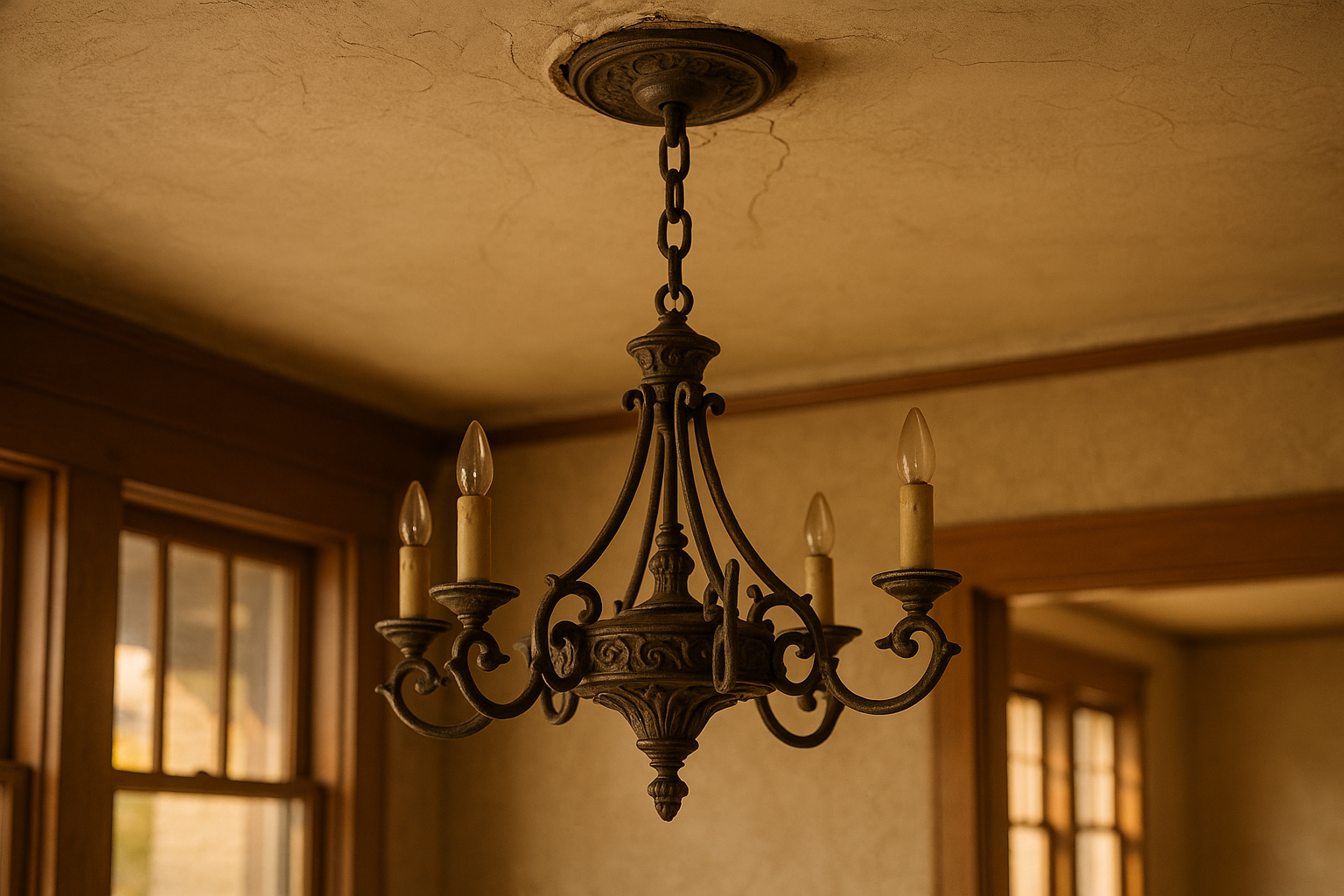
A few weeks back, a guy in Broad Ripple called us in a panic. He'd bought a gorgeous cast-iron chandelier from an estate sale, watched a couple YouTube videos, and figured swapping out his dining room light would be a quick Saturday job. It wasn't. The old box in his 1920s plaster ceiling was little more than a pancake box nailed to a joist—rated for maybe 15 pounds. His new fixture weighed 45. He got lucky: the box didn't rip out, but the whole assembly sagged a half inch before he caught it. That's when he called us. See, light fixture installation isn't just about connecting wires. The box behind the fixture matters more than the pretty glass you're hanging. If that box can't hold the weight, you're asking for a cracked ceiling or worse. We see this all over Indianapolis, from Irvington bungalows to Meridian-Kessler estates.
Why the Box Matters More Than the Pretty Glass
Think of the junction box like the foundation under a house. You can have the nicest flooring and paint, but if the foundation is weak, problems show up later. Same with a ceiling light. The box is the anchor. If it's not solid, your new light's just hanging by a thread. In older Indy homes—especially pre-war plaster like you find in Irvington or Meridian-Kessler—the original boxes are often shallow, sometimes only an inch deep, and not rated for anything heavier than a basic flush-mount. Add a modern chandelier or a big semi-flush drum and you're over the limit. For a heavy fixture, code says the box needs to be listed for the weight, or you need extra bracing attached to the framing. That's not a suggestion; it's the National Electrical Code. We've had to retrofit many boxes over the years. One homeowner in Zionsville had a box that was literally held in with two drywall screws. We added a fan-rated brace kit and suddenly the whole room felt more solid.
The Safety Stuff Nobody Talks About
Wires are the other half of the story. Old houses in Indianapolis often come with old wiring. Cloth-insulated wire, no ground, sometimes even aluminum. That's fine until you try to hook up a new LED fixture that expects a ground. A lot of newer fixtures have metal housings, and if there's no ground, you can get a tingle when you touch the fixture—or worse. We had a call in Fountain Square where the homeowner had swapped a light themselves and kept feeling a small shock when they touched the switch plate. Turned out the old wiring had no ground and the new metal fixture wasn't bonded. We ran a proper ground and replaced the box. Problem solved. So before you buy that shiny new fixture, it's worth checking what's behind the wall. If you're not sure, a quick photo consult can save you a headache. We're happy to look at pictures and tell you if it's a simple swap or needs more work.
Room-by-Room: What to Use Where
Every room has its own rules. Get this wrong and you'll be replacing the fixture again in a year, or worse, dealing with moisture or rust.
Bathrooms
Bathrooms need damp rated bathroom fixtures. That means they're built to handle steam and humidity without corroding or shorting out. A plain interior fixture above a shower? Bad idea. The humidity will eventually get inside and cause problems. We always recommend a sealed, damp-rated vanity light or exhaust fan light combo. In older Indy homes, bathrooms can get steamy quick because of the tight spaces. A proper fixture makes a big difference.
Exterior
Outside, you need wet rated exterior fixtures. Not just damp—wet. Indiana's freeze-thaw cycles are brutal on anything that's not sealed correctly. We always use weatherproof boxes and a good bead of caulk around the base. If you're replacing an outdoor light, check if the old box is gasketed. If not, water gets in, freezes, expands, and then you've got a loose fixture and a potential short. We wrote a whole post on exterior caulking before the first freeze—worth a read if you're doing any outdoor work this season.
Kitchens
Kitchen island lighting is a favorite project around here. Multiple pendants over an island look great, but spacing matters. You want them evenly distributed, not too close together or too far apart. And the height? Usually 30-36 inches above the countertop. Too high and they're useless for task lighting; too low and you'll bonk your head. Dimmers are a must here. A good LED dimmer lets you go from bright prep light to soft evening glow. Just make sure the dimmer is compatible with the LED driver, or you'll get flickering. More on that later.
Heavy Fixtures and High Ceilings
Vaulted ceiling chandelier install is a whole different animal. Two-story foyers in Carmel or Fishers look stunning with a big chandelier, but hanging one safely takes planning. You need a lift or a tall ladder, a helper, and a box that's properly braced for the weight. We've done a few where the original box was only good for a 20-pound fixture, and the chandelier weighed 80. We had to open the ceiling slightly to add a brace that spans between joists. The patch was tiny and you can't even see it now. If you're in a newer home with a pre-installed fan box, you might be fine, but if not, expect some minor ceiling work. It's worth it to have the light centered and safe.
Smart Switches and Dimmers
LED dimmer installation and smart switch installation are two of our most requested add-ons. But here's the thing: not all dimmers play nice with LEDs. If you have an old rotary dimmer from the 90s, your new LED might buzz or flicker. The fix is usually a modern LED-compatible dimmer. Smart switches are similar. They need a neutral wire in the box. Most homes built after 1985 have one, but many older Indy homes don't. That's okay—we can often work around it, but it's good to know before you buy the switch. We'll check the wiring and tell you what's possible during the quote.
What It Costs and When to DIY
Let's talk cost to install light fixture. For a basic swap on a modern, grounded box, the cost is pretty low—most of it's the service call and labor. But if you need a box upgrade, wiring repair, or a lift for a two-story foyer, the price goes up. Heavy fixtures, old wiring, and tall ceilings all add complexity. And that's fine—it's better to pay for it done right than to have a fixture fall. Simple flush-mount swap? You can probably DIY if you turn off the breaker and the box is solid. But anything over 20 pounds, any fixture in an old house, or any high ceiling—hire a pro. We're licensed and insured, and we've seen enough sagging boxes to last a lifetime.
Send Us a Photo and We'll Take It From There
If you're thinking about replacing a light fixture, snap a few pictures: the existing fixture, the ceiling around it, and your breaker panel (so we can see the circuit labeling). If you already bought a new fixture, send the spec sheet or a photo of the box label. That's the fastest way to get an accurate quote and avoid surprises. We'll tell you if your box needs upgrading, if your dimmer will work, and how long the job will take. Most single-room swaps are done in under two hours—power off, fixture up, clean up, done. For complex jobs, we'll schedule a quick in-person check first. Either way, the next step is simple: head over to the quote page and send us those photos. We'll get back to you with a straightforward scope and price. And if you want more tips like this, browse our blog for other home maintenance advice.
Ready for a free estimate?
Send us the list, and we'll quote a flat price before we schedule — no pressure, no obligation.