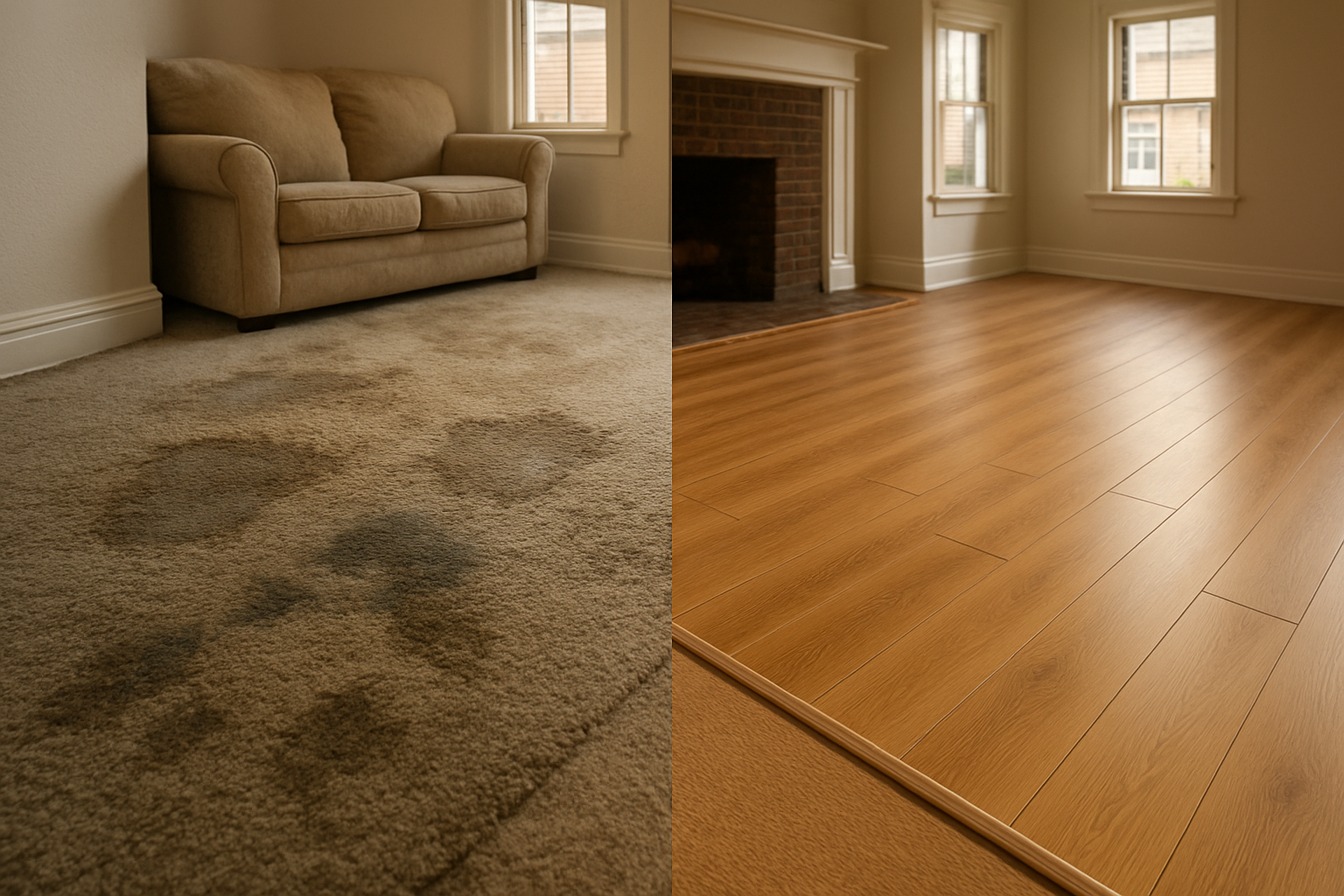
Last February, a landlord in Broad Ripple called us about a smell. Tenants had moved out of a duplex, and the carpet in the living room reeked like wet dog and old soup. The tenants had a German Shepherd, a cat, and apparently never opened a window. The carpet was ruined. He wanted to know: should he put carpet back, or try LVP? That's the exact question I hear from rental owners all over Indy—Carmel, Fishers, Greenwood, you name it. And honestly, the answer isn't one-size-fits-all. But for most rentals, LVP wins on toughness, and carpet hangs on for bedrooms and upstairs comfort. Let me break down the LVP vs carpet rental decision for you.
What's the Difference? LVP vs. Carpet Basics
LVP stands for luxury vinyl plank. It's not the thin, peel-and-stick stuff from the 80s. Today's LVP is thick, click-together or glue-down planks that look like wood. They're waterproof on top and can shrug off spills, dog claws, and dropped tools. Carpet is carpet—soft fibers over padding. Feels great under bare feet, but it grabs onto dirt, odors, and stains like a sponge. The LVP vs carpet rental question often comes down to what matters more: looks, comfort, or survival. For an Indianapolis rental, LVP often handles the living room and kitchen, while carpet handles the bedrooms. More on that below.
Durability: Pets, Stains, and Tenant Abuse
Tenants won't treat your floor like you would. That's not a slam—it's just reality. A friend who owns a duplex near Butler University told me about a tenant whose pit bull scratched the hardwood so badly he had to sand and refinish the whole room. He switched to LVP with a 20-mil wear layer and hasn't had a scratch since. LVP resists scratches, scuffs, and dents. Carpet? If a dog pees on it, you're looking at a full pad replacement, maybe the carpet too. And cat urine can soak into the subfloor. LVP just wipes clean. For pet-friendly rentals near IUPUI, scratch resistant flooring for dogs isn't a luxury—it's a money saver.
Moisture and Indianapolis Weather
Our winters bring salt, slush, and snow. That stuff gets tracked in by boots and eats away at carpet fibers. LVP near the entryway is a no-brainer—it's waterproof and you can mop it dry in minutes. Basements are another story. Many older Indianapolis homes have concrete slabs that wick moisture. Before you install any flooring down there, get a moisture test. If the slab is damp, carpet will go moldy fast. Waterproof LVP, on the other hand, can handle a basement that's a little humid. That's why so many landlords in Carmel and Zionsville are putting LVP in basements and calling it done. Check out our post on window insulation film for drafty windows if you're also dealing with cold air sneaking in—winter floors and drafts often go hand in hand.
Noise and Comfort: Upstairs Units and Bedrooms
Carpet is warm and quiet. LVP can sound like a tap dance if you don't install it right. In upstairs apartments or duplexes, noise complaints can wreck your relationship with neighbors. The fix? Acoustic underlayment. You can buy LVP with attached underlayment or lay a separate sound-dampening layer. That raises the STC and IIC ratings so footsteps don't sound like a herd of elephants. But even with underlayment, LVP won't feel as soft as carpet. So for bedrooms, especially upstairs, many landlords still go carpet. Tenants like warm toes on a cold morning. If you're dealing with drafty basements or garage doors, our post on garage door weather seal replacement can help keep the heat where it belongs.
Cleaning and Turnover: Saving Time Between Tenants
When a tenant moves out, you've got days—not weeks—to turn that unit. Carpet cleaning means renting a machine or hiring a pro, and even then pet smells can linger. Sometimes you have to rip it out and start fresh. LVP? Sweep, mop with a disinfectant, and you're done. If a plank got gouged, you can pop it out and click in a new one. No heavy equipment, no drying time. That speed matters in Indy, where spring and summer are the big leasing months. The less time the unit sits empty, the more money you keep. If you're thinking about other quick fixes before a new tenant, we have a post on porch step repair before winter that might help.
Lifecycle and ROI: What Lasts Longer?
Carpet in a rental typically lasts 5 to 10 years, depending on traffic. LVP with a good wear layer can go 15 to 20. Carpet might cost less up front, but you'll replace it more often. LVP also lets you do spot repairs—replace one plank instead of re-carpeting a whole room. Over a 10-year hold, LVP usually wins on cost. And tenants? They like the look. A decent LVP looks like real hardwood without the maintenance. In neighborhoods like Meridian-Kessler or Broad Ripple, that premium look can help your unit rent faster. Flooring ROI rental property is a real thing—the right floor can mean fewer days vacant.
Room-by-Room: Where Each Floor Makes Sense
Here's my rule of thumb for Indianapolis rentals: LVP everywhere except bedrooms, and maybe a carpeted den if you want extra coziness. Living rooms, hallways, kitchens, baths, mudrooms—all LVP. It handles foot traffic, spills, and the mess from kids and pets. Basements? LVP, assuming the slab is dry after a moisture test. Upstairs bedrooms? Carpet. It's warmer, quieter, and tenants often expect it. If you have stairs, LVP treads with color-matched nosing look sharp but require careful install. Don't forget threshold strips between rooms—they keep the floor heights right and hide the seams.
Installation and Prep: Don't Skip the Subfloor
LVP is forgiving, but it's not magic. If your subfloor has dips or bumps, the planks will flex and eventually fail. Older Indy homes—think Meridian-Kessler or Irvington—often have uneven floor joists. You might need to sand down high spots or pour leveler. The same goes for concrete slabs: do a moisture test first. Too much moisture and glue-down LVP could peel. Click-lock LVP floats over small imperfections, but you still need a flat floor. Glue-down is great for high-traffic areas and can be replaced plank by plank. Which one's right for your rental? That depends on the subfloor, the room, and the tenant load. We can look at your place, check the floors, and give you a straight answer. No guesswork.
Let's Pick the Right Floor for Your Rental
If you're tired of replacing carpet every three years, or you're not sure whether LVP will work in your upstairs apartment, we can help. HandyPros does on-site flooring assessments all over Indianapolis, Carmel, Fishers, Zionsville, Westfield, Noblesville, Greenwood, Brownsburg, Avon, Plainfield, and Lawrence. We'll measure, test moisture where needed, and give you a clear quote for LVP or carpet by room. We'll also handle the install and make sure the trim, thresholds, and stair parts are done right. Then you can hand over the keys and not worry about the floor for a decade. Sound good? Book a flooring assessment here: /#quote.
Ready for a free estimate?
Send us the list, and we'll quote a flat price before we schedule — no pressure, no obligation.