A buddy of mine in Fishers called me last winter, half panicked. "My water heater sounds like a rock tumbler," he said. "Is it going to blow?" No. It wasn't going to explode. But it was full of mineral junk from hard water. After a simple water heater flush, the noise went away and his hot water came back faster. This is the kind of thing a lot of Indy homeowners deal with.
Why Your Water Heater Sounds Like a Rock Tumbler (Or Gets Weak)
If you live in Indianapolis, Carmel, Zionsville, or anywhere around here, you've got hard water. The local water supply runs around 12–20 grains per gallon. That's a lot of dissolved minerals. Over time, those minerals settle at the bottom of your water heater tank. Think of it like sand in a pot. When the burner or heating element kicks on, that sediment traps heat and makes popping, rumbling, or sizzling sounds. It also acts like insulation between the flame and the water, so your heater works harder and uses more energy.
Signs you need a water heater flush: - Rumbling, popping, or knocking noises from the tank. - Lukewarm water or inconsistent temperature. - Less hot water than you used to get. - Longer wait for water to reheat after a shower. - Brown or rusty water from the hot tap only.
I've heard from homeowners in Broad Ripple and Irvington who thought they needed a new water heater. Turned out they just needed to flush out the sediment and check the anode rod. That rod is a sacrificial piece of metal inside the tank that attracts corrosion so the tank walls don't rust. If the rod is worn down to a toothpick, you're on borrowed time. A pro can check it during a water heater maintenance visit.
How Often Should You Flush a Water Heater? (And Tankless Too)
For most tank-style heaters in our area, once a year is the sweet spot. If you've got a big family, a high-use rental, or water that's especially hard (Noblesville and Westfield folks often tell me their water stains everything), every 6 to 12 months is better. Tankless water heaters are different. They don't store water, but hard water scale builds up inside the heat exchanger. A tankless unit needs a descaling flush every 12 to 24 months. That's a process where you circulate a food-grade vinegar or approved descaler through the unit using a small pump for about 45–60 minutes, then rinse with clean water.
Why does winter make it worse? Cold inlet water in January and February means your heater already has to work harder to reach 120°F. After a good flush, you'll often notice the hot water recovers faster. Some homeowners in Carmel and Greenwood report their gas bill drops a little too, because the heater isn't wasting energy heating a layer of sludge. So yes, a flush can improve water heater efficiency and extend water heater lifespan.
DIY Flush: The Basics (And Why Some People Call a Pro)
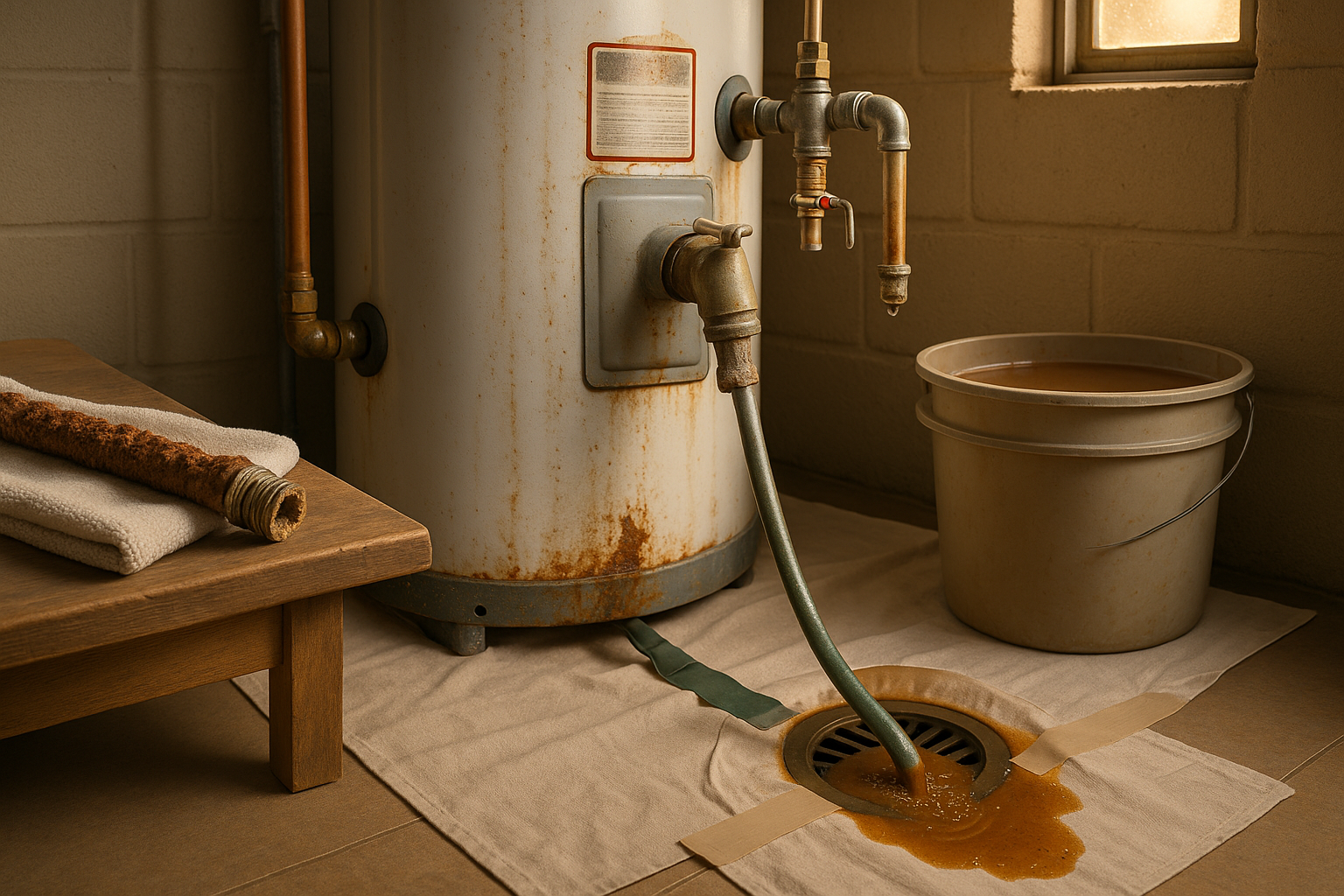
You can absolutely flush a tank-style water heater yourself. Here's the short version:
- Turn off the power (breaker for electric, gas control to "pilot" or off for gas).
- Shut off the cold water supply valve.
- Hook a garden hose to the drain valve at the bottom, run it to a floor drain or outside.
- Open a hot water tap somewhere in the house to break the vacuum.
- Open the drain valve and let the water run until it's clear. You might see white chunks or reddish-brown goo. That's the sediment buildup.
- Briefly open the cold supply for a few seconds to stir up remaining sediment, then drain again.
- Close everything up, refill the tank, bleed air from the hot taps, then restore power or gas.
Sounds easy, right? But I've seen plenty of drain valves that won't close all the way after a DIY attempt. Older homes in Meridian-Kessler or Fountain Square often have brittle, partially clogged drain valves. If the valve won't open or breaks, you've got a mess. And if you force it, you could snap the plastic handle. That's the number one reason people call a local handyman Indianapolis for a water heater flush. A pro can replace a stuck drain valve without draining the whole tank (usually), and can also check the anode rod at the same time.
Gas vs electric matters for the shutdown and restart. Gas heaters have a pilot light you need to relight. Electric heaters need the breaker off so the elements don't burn out when the tank is empty. If you're not comfortable with either, don't wing it.
Also, tankless descaling is more involved. You need isolation valves and a submersible pump. It's not a beginner DIY job. Call someone who does tankless water heater flushing regularly.
What a Pro Does That You Might Skip
When HandyPros comes out for a water heater flush, we don't just open a valve and call it done. We check the anode rod. If it's more than 75% gone, we recommend a new one. We test the pressure relief valve. That's the little lever on the side or top of the tank. If it doesn't release water when lifted, it's dangerous. We vacuum out the burner compartment on gas models, check the electrical connections on electric models, and make sure the T&P discharge pipe is properly routed. We look for leaks, corrosion, and signs the tank is near the end.
Plus, we protect your floors. Basements in Avon and Plainfield often have carpet or nice utility rooms. We lay down drop cloths and make sure the hose is secure. No rust stains on your concrete.
We also take a quick look at your shutoff valve and gas line. If something looks off, we'll tell you before it becomes an emergency. That's the planning-first approach: clear scope, straight communication, no surprises.
Related: If you've ever had a water heater leak onto a ceiling below, check out ceiling water damage repair cost in Indianapolis. It's a common combo in two-story homes.
When to Replace Instead of Flush
A flush isn't a miracle cure. If the water stays muddy brown after a thorough flush, or you see rust on the outside of the tank, or there's an active leak, it's time to think about replacement. Most tank water heaters last 8–12 years. If yours is older than that and making noise, flushing might buy you a few months, but don't throw good money after bad. The cost to flush water heater is low (usually in the low hundreds, depending on the condition), but a new tank is a bigger investment. Sometimes the smart move is to replace before it fails.
Getting It Done Without the Hassle
If you're in Indianapolis, Carmel, Fishers, Zionsville, Westfield, Noblesville, Greenwood, Brownsburg, Avon, Plainfield, or Lawrence, we can help. A standard water heater flush takes about 60–90 minutes. Tankless descaling runs 90–120 minutes. You'll have hot water back the same day. No long scheduling nightmares. We show up, do the work, clean up.
You can read more on our blog for other home maintenance tips, or if you're ready to get that rumbling fixed, request a quote here. It's easy. Tell us what's going on, and we'll give you honest advice.
Don't wait until the next cold snap when everyone's water heater gives out. A little maintenance now saves a cold shower later.
Ready for a free estimate?
Send us the list, and we'll quote a flat price before we schedule — no pressure, no obligation.