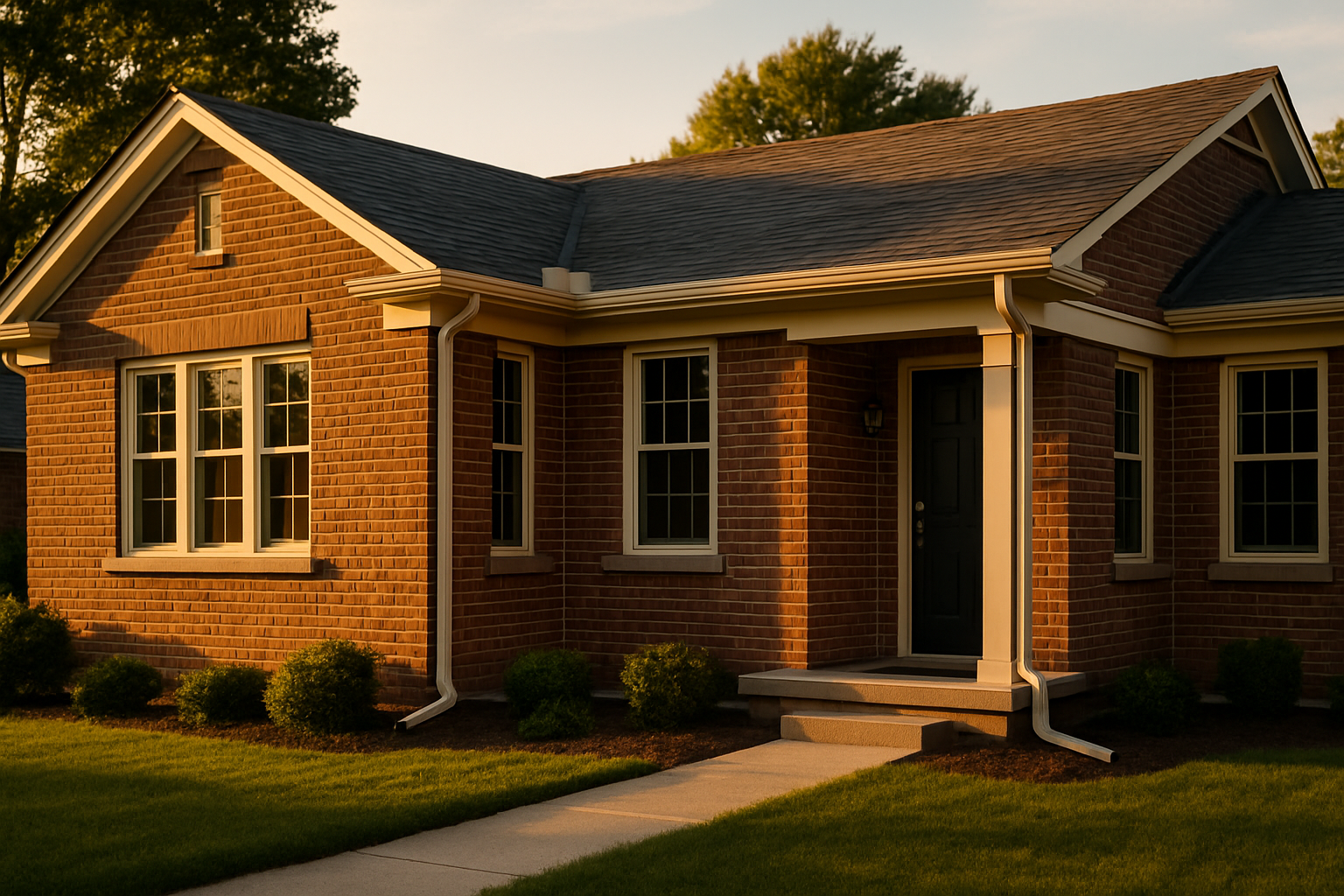
Last winter I got a call from a homeowner up in Carmel. She had a beautiful brick ranch, but the caulk around her front windows looked like a dried-out riverbed—cracked, pulled away, little chunks missing. Water had been sneaking in during every big storm, and by February the trim was starting to feel soft in one corner. She'd already tried to recaulk it herself with a tube from the hardware store. That bead lasted about four months before it split again. The problem wasn't effort. It was the wrong material for the joint and zero prep work. That's where caulking services in Indianapolis come in—not just running a bead, but actually understanding how these joints move and fail.
Why Caulk Fails in Indianapolis
Central Indiana throws a lot at your home. Warm days, then a hard freeze, then rain, then a hot afternoon with high humidity. Those freeze–thaw cycles open gaps around brick, wood trim, and fiber-cement lap joints. Wind-driven spring and summer storms push rainwater into any unsealed trim joint or utility penetration. And the strong afternoon sun on south and west facades bakes cheap caulk until it shrinks and cracks.
I've seen older homes in Meridian-Kessler and Broad Ripple where the original wood trim was in decent shape, but the seams looked terrible—paint peeling, gaps opening, bugs getting in. Newer builds around Geist and Lawrence often have fiber-cement siding. That stuff moves a lot with temperature swings. If somebody used a stiff painter's caulk on those lap seams, it won't last two seasons. You need a flexible, paintable sealant that can stretch without pulling away.
What We Actually Do (Trim, Caulking & Weatherproofing Scope)
HandyPros focuses on exterior trim, windows, doors, siding joints, brick and masonry transitions, utility penetrations, and a few interior wet areas—tub, shower, backsplash. We don't do whole-house repaints or blow-in insulation. We do the critical sealing work that keeps water, air, and critters out of the envelope. That keeps us specific and lets us get really good at prep and bead work.
When we assess a home, we look at each joint for movement, water paths, and draft points. Then we pick the sealant chemistry that fits the surface. For wood trim that will be painted, we use a paintable siliconized acrylic. It tools out smooth, accepts paint well, and flexes enough for normal thermal movement. For shower and tub corners, it's 100% silicone because it handles constant moisture and mildew better. For high-movement siding joints and brick-to-sill transitions, we go with urethane or hybrid polymer sealants. Those stay flexible through decades of Indy weather and bond aggressively to rough surfaces.
Prep Is the Part Most DIYers Skip
Removing old caulk is tedious, but it's half the job. We cut out the failed bead, scrape the surfaces clean, and wipe everything down with a solvent if needed. If the joint is deep, we pack in backer rod so the new caulk gets the right thickness. On porous surfaces like brick or concrete, we may prime first. This is how you avoid the classic problem of new caulk peeling off in sheets six months later.
Then comes application. We mask the edges, use a consistent bead size, and tool the caulk with a quick, wet finger or specialized tool. The goal is a clean line that looks intentional—not lumpy, not smeared. Homeowners often ask if it'll look neat. Yes, because we don't rush the tooling. That's what separates professional sealant work from a weekend attempt.
Weatherproofing Your Home: More Than Just a Bead
Caulking is one part of the weatherization picture. Snowmelt and ice along eaves can drive moisture behind fascia and trim, so we often check gutter end-caps and downspout tie-ins while we're on a ladder. If we see that a gutter is overflowing or split, we'll mention it. We do gutter cleaning and repair as a related service, and sealing the fascia seams only makes sense if the water is actually draining away.
Doors are another common leak point. Old thresholds and worn sweeps let cold air pour in during winter. We can recaulk the side jambs and threshold, but if the sweep is shot, the joint still won't be airtight. That's where door installation and repair comes in. We'll tell you straight up: a $10 door sweep plus caulk does more for an entry door than three tubes of silicone.
Common Questions from Homeowners
Can you work in cold weather?
Yes, with the right products. Most sealants need surface temps roughly 40–90°F. In late fall or early spring we schedule around the warmest part of the day. If it's below 40, we can use cold-rated sealants or wait for a thaw. We won't force a job when the caulk won't cure right. That just creates a callback for us and a headache for you.
How long will this caulk last?
Depends on the joint and exposure. A properly prepped joint on a protected north side can easily last 8–10 years. A south-facing brick-to-trim joint in full sun might need a touch-up in 4–5 years. That's normal wear. We'll give you a realistic lifespan for each area and suggest a simple inspection schedule.
Is the caulk paintable?
For trim and siding, yes—we use paintable formulas and tell you exactly when you can paint over them (usually a few hours to a day). If you want us to touch up the paint after sealing, we can do that too. Check out our interior painting and touch-up service if the caulk line is inside or next to a painted surface.
What about old brick homes in historic neighborhoods?
Brick expansion joints in Meridian-Kessler or Broad Ripple are a big deal. The mortar cracks, and the caulk joint has to move with the brick. We use urethane or hybrid polymer for those, often with a backer rod. The bead will be slightly recessed so it doesn't look like a glue blob on your brick. That's a project where the right material matters twice as much.
Ready to See What Sealing Can Do?
If you're tired of drafts around windows, water staining on trim, or cracked caulk that looks like a spider web, let's take a look. We'll come out, walk the perimeter of your house, check the wet areas you're worried about, and then send you an itemized quote with the exact materials and timing. No high-pressure sales. Just a clear plan.
You can use the quote form right now to request a site assessment. Tell us what's bugging you—window leaks, drafty door, old tub caulk—and we'll schedule a visit that fits your day. In Indianapolis, Carmel, Fishers, Zionsville, Westfield, Noblesville, Greenwood, Brownsburg, Avon, Plainfield, or Lawrence, we'll get you sorted.
Ready for a free estimate?
Send us the list, and we'll quote a flat price before we schedule — no pressure, no obligation.