My neighbor in Broad Ripple spent a Sunday caulking the gap under his front door. By Tuesday, the door wouldn't open without a yank. He'd used caulk on a moving part. Classic mix-up. The truth is, caulking vs weatherstripping isn't just a word choice. It's about whether the surface moves. Get that right and your house feels tighter, quieter, and your gas bill (Citizens Energy Group, hello) doesn't make you wince.
The Quick Rule: Caulk for Still, Weatherstripping for Moving
Here's the deal. If two pieces of your house don't move relative to each other — like the joint where window trim meets siding — you seal it with caulk. Caulk fills cracks and stops air, water, and bugs. It's basically a flexible glue. If a surface has to open and close — like a door, a window sash, an attic hatch — you need weatherstripping. Weatherstripping is a compressible gasket that lets things move but blocks drafts when they're shut.
So when you're looking at a leaky window in your Fishers house, ask: does this part move? If yes, weatherstrip. If no, caulk. Simple.
Where to Use Caulk (and What Kind Holds Up in Indiana)
Caulk shines on outside joints that don't budge. Window trim to siding, door frames to brick, spots where pipes or wires poke through the foundation. Inside, you'd caulk gaps between baseboards and walls, or around stationary window sashes. But not all caulk is the same.
Indiana's weather is hard on sealants. Freeze-thaw cycles in winter, brutal summer UV, humidity that makes your shirt stick by 9 a.m. That's why the best exterior caulk for Indiana climate is either 100% silicone or a polyurethane hybrid. These stay flexible when it's 10 below and don't crack when the sun beats down. Avoid plain latex caulk outside. It'll shrink and split in two seasons. For interior trim, a paintable acrylic-latex with silicone works fine — it sands smooth and accepts paint if you want to touch up baseboards in your Zionsville living room.
If you've got a gap bigger than about a quarter inch, don't just fill it with caulk. You need backer rod first. That's a foam rope you press into the gap before caulking. It gives the caulk something to grab onto and keeps the right depth. In older neighborhoods like Meridian-Kessler or Irvington, where wood trim has settled and gaps are irregular, backer rod is a lifesaver. It keeps the caulk from sinking into the void and cracking later.
Weatherstripping That Won't Fight You
Weatherstripping is all about fit. Too thick and your door won't latch. Too thin and cold air still slips through. The kinds that work best around here are EPDM bulb seals or silicone kerf-in weatherstrips for exterior doors. They compress nicely, bounce back, and don't turn brittle in the cold. If you have an older home with wood door jambs, V-strip weatherstripping is a good option — it's a flexible metal or plastic strip that nails or staples into the jamb and lets the door slide against it.
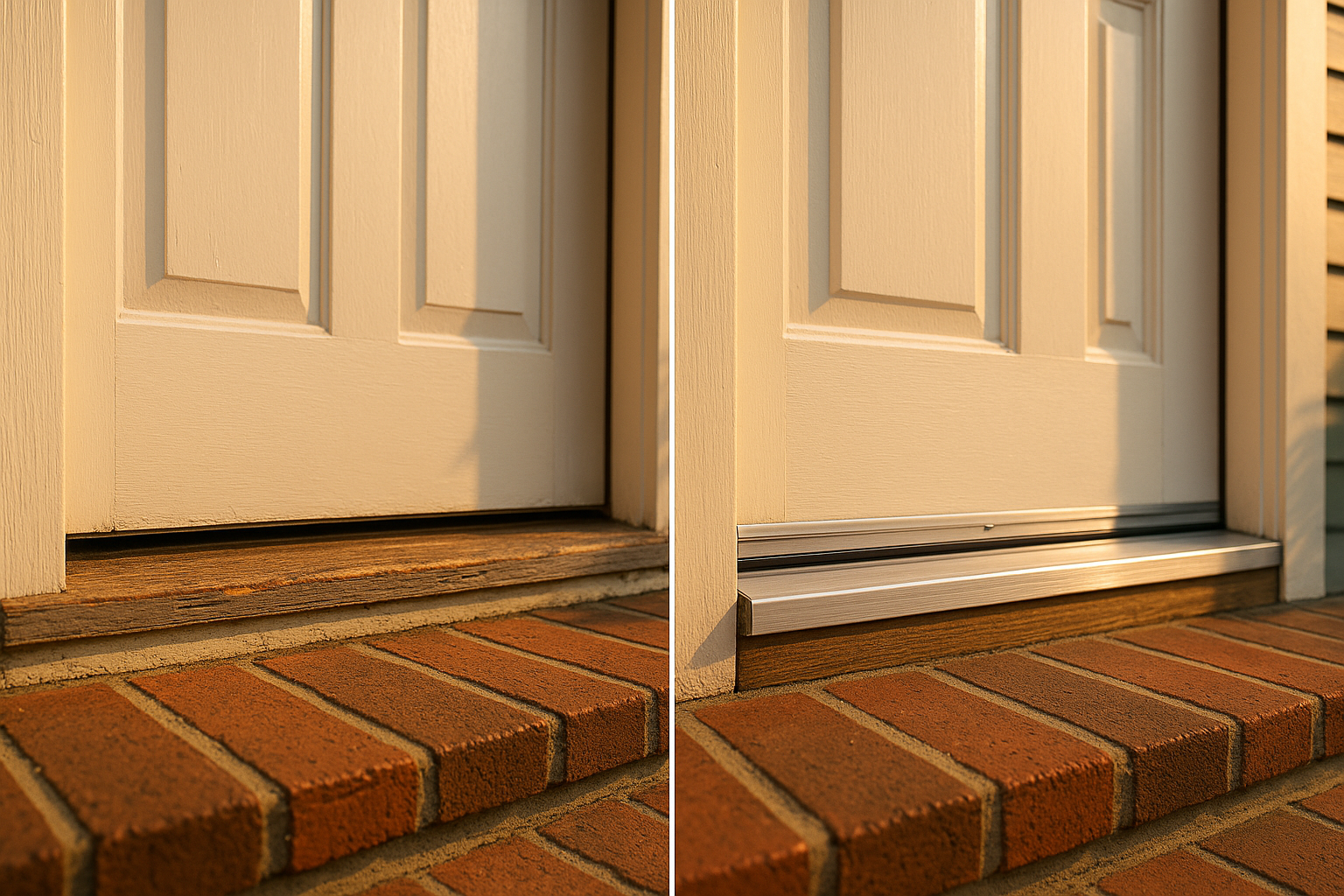
For the bottom of a door, you're talking about a door sweep. A door sweep is actually a type of weatherstripping, so the whole door sweep vs weatherstripping question is a bit off — a sweep is just one piece of the puzzle. In Indianapolis, where winter winds blow from the west and northwest, front entries take a beating. An aluminum sweep with a silicone insert seals that gap and keeps leaves out, too. I've seen doors in Carmel where the sweep wore down to nothing, and you could see daylight under the door. Fixing that alone made the entry feel 10 degrees warmer.
Also check the threshold. A small adjustment screw can raise it to meet the sweep better. But don't overdo it — if the door rubs, you'll be right back to that yanking problem. (We've got a whole post on that over at sticking door fixes if you blame the door, not the weatherstripping.)
Common Mistakes (and How to Skip Them)
I hear the same three mess-ups all the time.
One: caulking an operable joint. A window that's supposed to open, caulked shut. Then you can't get fresh air in April without a utility knife. Only caulk the parts that don't move.
Two: using interior latex caulk outside. It'll peel off by fall and leave ugly gaps. Spend a little more on silicone or hybrid for outside.
Three: stretching weatherstripping when you install it. If you pull it tight, it loses its compression. Lay it in place and cut it at the right length without stretching. And pick a profile that's appropriate for the gap. If you've got a big gap, a thick bulb seal might press too hard and make the door hard to close. That's a common complaint: "weatherstripping made my door hard to close." Usually it's because the new seal is too thick or the door is slightly misaligned. Fix the door first, then choose a moderate compression.
And for the love of all that's draft-free, don't skip backer rod on wide gaps. I've seen people pump an entire tube of caulk into a half-inch crack, and it sags and cracks by winter. Backer rod first, then caulk.
When DIY Is Fine — and When to Call HandyPros
If you've got one small window with a cracked caulk bead, or a door sweep that's loose, go ahead and DIY. A tube of exterior silicone and a screwdriver will handle it. But if you've got drafts you can't pinpoint, gaps over a quarter inch, misaligned doors, historic trim you don't want to mangle, or a whole house full of openings, that's where we come in. HandyPros does this every week across Indianapolis, Carmel, Fishers, Zionsville, Westfield, Noblesville, Greenwood, Brownsburg, Avon, Plainfield, and Lawrence.
We'll walk your home with you, feel for drafts, and give you a clear plan: caulk here, weatherstrip there, replace this sweep, adjust that threshold. No guesswork. We write it down with materials and a straightforward estimate. Then we install it cleanly, testing every door and window before we leave. You get a walkthrough and a home that finally feels sealed up. It's not a huge project, but it makes a huge difference — less noise from outside, less dust, and lower utility bills. Air sealing is one of the cheapest ways to improve your home's energy efficiency, especially before winter hits.
Best time to do this? Dry days above 40°F, usually fall or spring. But we do winter installs too — we use low-temp products and prep surfaces accordingly. So don't wait if your living room feels like a wind tunnel right now. If you're tired of drafts and want a no-pressure assessment, hit the quote form on our site: get a draft-sealing assessment. We'll set up a time to come by and show you where the cold air is getting in.
Ready for a free estimate?
Send us the list, and we'll quote a flat price before we schedule — no pressure, no obligation.