Last summer, my neighbor in Broad Ripple called me over. Her front door had made that awful scraping sound for weeks, but now it wouldn't latch unless she slammed it. She'd already tried sanding the edge with a piece of 60-grit, and now the door looked worse and still stuck. I grabbed a screwdriver, tightened the top hinge screws that had wiggled loose, and the door swung free. Five minutes, no sanding needed. That's the thing about a door sticking fix—it's rarely about the door itself. It's usually the hinges, the frame, or the weather.
In Indianapolis, we get humid summers that swell wood and dry winters that shrink it. That seasonal movement is a big reason doors in older neighborhoods like Irvington or Meridian-Kessler start to rub. But there are other culprits too: paint buildup on the edges, a sagging jamb, worn-out hinges, or a strike plate that's drifted out of line. Sometimes weatherstripping gets stiff and pushes back. Before you reach for a sander, try these five fixes that actually last.
1. Tighten the Hinges (and Upgrade the Screws)
Most sticking doors have loose hinge screws. Over time, the weight of the door pulls against the screws, and they back out a little. When that happens, the door sags and the latch side rubs on the frame. Grab a screwdriver and tighten every hinge screw. If they turn without tightening, the screw holes are stripped.
Here's the trick: take out one of the short screws from the top hinge and replace it with a 2.5- to 3-inch screw that goes through the jamb and into the framing behind it. Drive that long screw in until it pulls the door back up and into alignment. Do the same on the other hinges. This single move fixes a lot of sagging doors.
If the screw holes are too torn up, fill them with a hardwood dowel coated in wood glue. Let the glue dry, drill a small pilot hole, and then put the screw back. That gives the screw something solid to bite into.
2. Check the Hinge Alignment and Add Shims
Sometimes the door frame has shifted just enough to throw off the reveal—the gap between the door and the frame. If the gap is tighter at the top on the latch side, the top hinge might need a little help. You can slip thin cardboard or plastic shims behind the hinge leaf to adjust the angle. Cut a piece from a cereal box, fold it over once, and place it behind the hinge where it attaches to the door or the jamb. Snug the screws. This pushes the door back toward the hinge side and opens up the gap on the latch side.
Look at the hinges themselves too. If the pin has play, or the knuckles are worn, the door will drop every time you open it. Replacing a worn hinge is cheap and fast. A new hinge with a tight pin often makes the door feel new again.
3. Adjust the Strike Plate for a Smooth Latch
A door that sticks might also just not latch right. If you have to push or pull hard to get the latch to catch, the strike plate is out of position. Close the door and look at where the latch hits the plate. You can rub a little lipstick or a pencil mark on the latch, then close the door to leave a mark on the strike plate. If the mark shows the latch hitting too high or too low, loosen the two screws on the plate and shift it up or down a bit. Tighten it back.
If the latch won't fully engage because the hole in the plate is too small, you can use a small chisel to carefully widen the opening. Go slow, test the door, and stop when it latches with a gentle push.
4. Plane or Sand Only What You Need
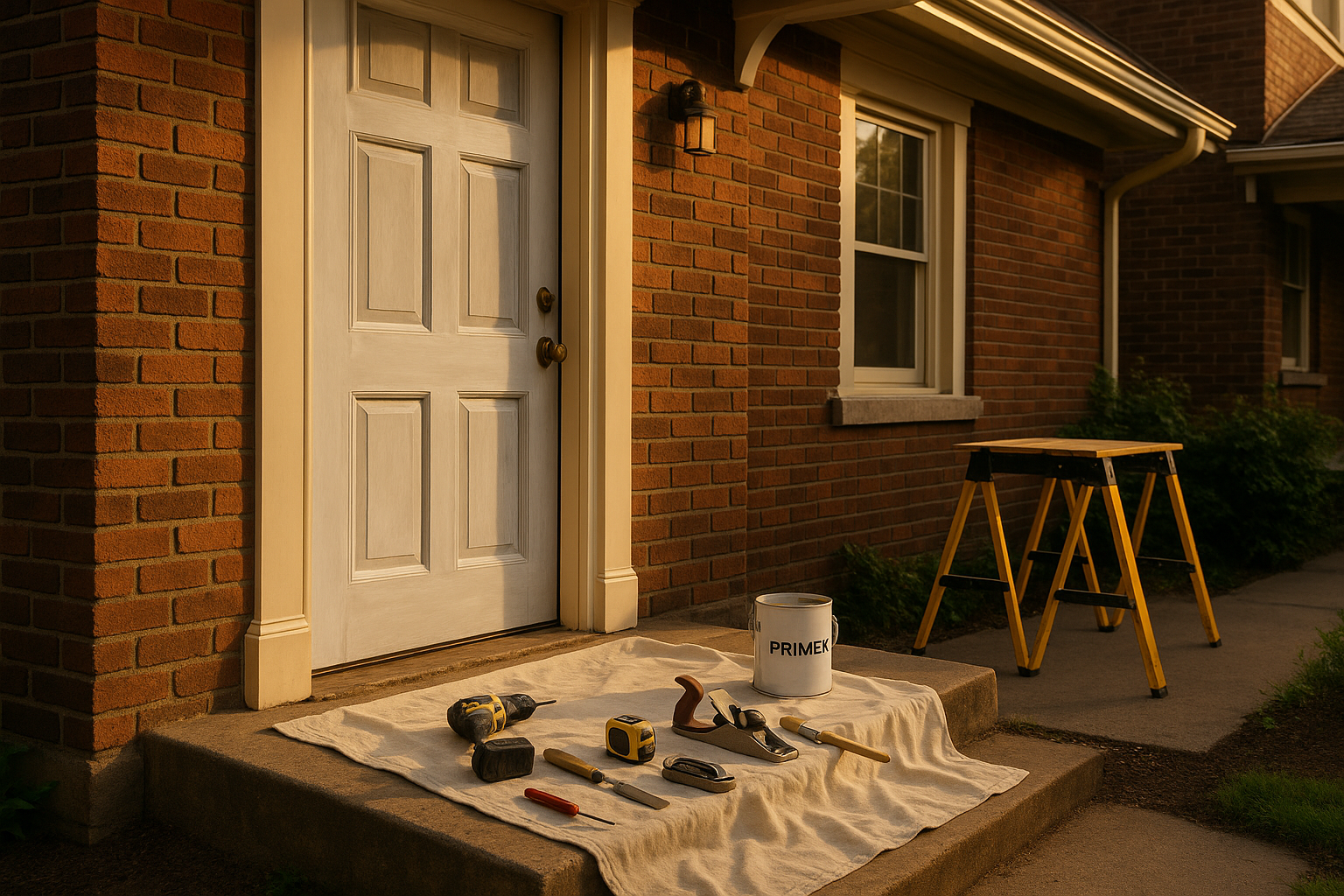
After you've tightened hinges and adjusted the strike plate, if the door still rubs, then it's time to remove a little material. But do it the right way. Take the door off the hinges and set it on sawhorses. Mark the high spots with a pencil—rub marks from the frame will show you where it binds. Use a block plane or a sander with 120-grit paper, and take off a tiny bit at a time. Test the fit often. You want an even gap all around, about the thickness of a nickel.
If you have an older home built before 1978, the paint might have lead in it. Don't sand lead paint dry. Use a chemical stripper or call a pro who knows lead-safe practices. Even without lead, wear a dust mask and eye protection.
After you plane or sand, seal the bare wood. Brush on a coat of primer (shellac-based or oil-based works great for this) and then paint over it. This step is huge. If you skip it, the bare wood will soak up summer humidity and swell again, and you'll be right back where you started.
5. Check Weatherstripping and the Threshold
If your door sticks only during certain seasons, the weatherstripping might be the problem. Foam or rubber strips can get compressed, brittle, or swollen. When they push too hard against the door, it feels like the door is sticking. Inspect the seal around the frame and the sweep at the bottom. If the sweep is curled or torn, replace it. Many hardware stores sell universal sweeps that you cut to length.
For exterior doors, you also want to make sure the threshold is sitting right. If it's loose or warped, the door might catch on it. Adjust the threshold screws if it has them, or add a thin shim underneath to level it out.
Why You Might Want a Handyman for This
I'll be honest: most door sticking fixes are DIY-able. But some situations call for a second set of eyes. If your door is heavy, has glass inserts, or is an exterior security door, messing with the hinges could throw off the whole frame. If your house has foundation cracks you can see from the outside, a sticking door might be a symptom of something bigger. Check out our post on drywall crack causes in Indiana homes to see if you have other signs. For a simple door, though, the five fixes above will usually do it.
Here's how we handle a door sticking fix at HandyPros. We come out, look at the whole door—hinges, frame, strike plate, weatherstripping, and the slab itself. We protect your floors with drop cloths, make precise adjustments, seal any wood we cut, and test the door until it swings and latches like it should. No dust, no guesswork, no repeat callbacks. We work in Indianapolis and the surrounding areas—Carmel, Fishers, Zionsville, Westfield, Noblesville, Greenwood, Brownsburg, Avon, Plainfield, Lawrence, and everywhere in between. If you're tired of fighting a sticky door, request a quick on-site assessment. We'll give you a fixed, written scope before we start, so you know exactly what you're paying for. Get your free quote here.
Ready for a free estimate?
Send us the list, and we'll quote a flat price before we schedule — no pressure, no obligation.