Last month I got a call from a woman in Broad Ripple. Her dad had just come home from a knee replacement. He was doing okay with a walker, but the shower was a slick tile box. She'd bought one of those suction-cup grab bars from a big box store. You know the kind – it stuck to the wall, looked solid, but the second he leaned on it, it popped right off. He didn't fall, but it scared the daylights out of her. She said, "I need something that actually holds." That's where we come in.
If you're in Indianapolis, Carmel, Fishers, or anywhere around the metro, and you've been thinking about adding a grab bar, you're probably having the same worry. You don't want a decorative towel rack that pretends to be supportive. You want something your mom, your grandpa, or you after surgery can genuinely trust. Let's talk about what works.
Why Grab Bars Are a Smart Move in Indy
Falls in the bathroom are one of the top reasons older adults end up in the ER. And it's not just seniors. Anyone recovering from surgery, dealing with balance issues, or even just having a clumsy morning can slip on a wet tub floor. A well-placed grab bar is cheap insurance compared to a broken hip.
In Indianapolis, our winters bring ice and snow, which already makes getting around harder. Add a slick fiberglass shower or a tile floor that's seen better days, and you've got a real risk. Many of the homes around here – from the historic builds in Meridian-Kessler and Irvington to the newer suburban places in Westfield and Greenwood – have bathrooms that just weren't designed with safety in mind. But they can be upgraded easily.
Where Do You Actually Put Them?
Placement matters more than anything. You don't just screw a bar into the wall and call it done. Here's what works for most homes.
Shower and Tub
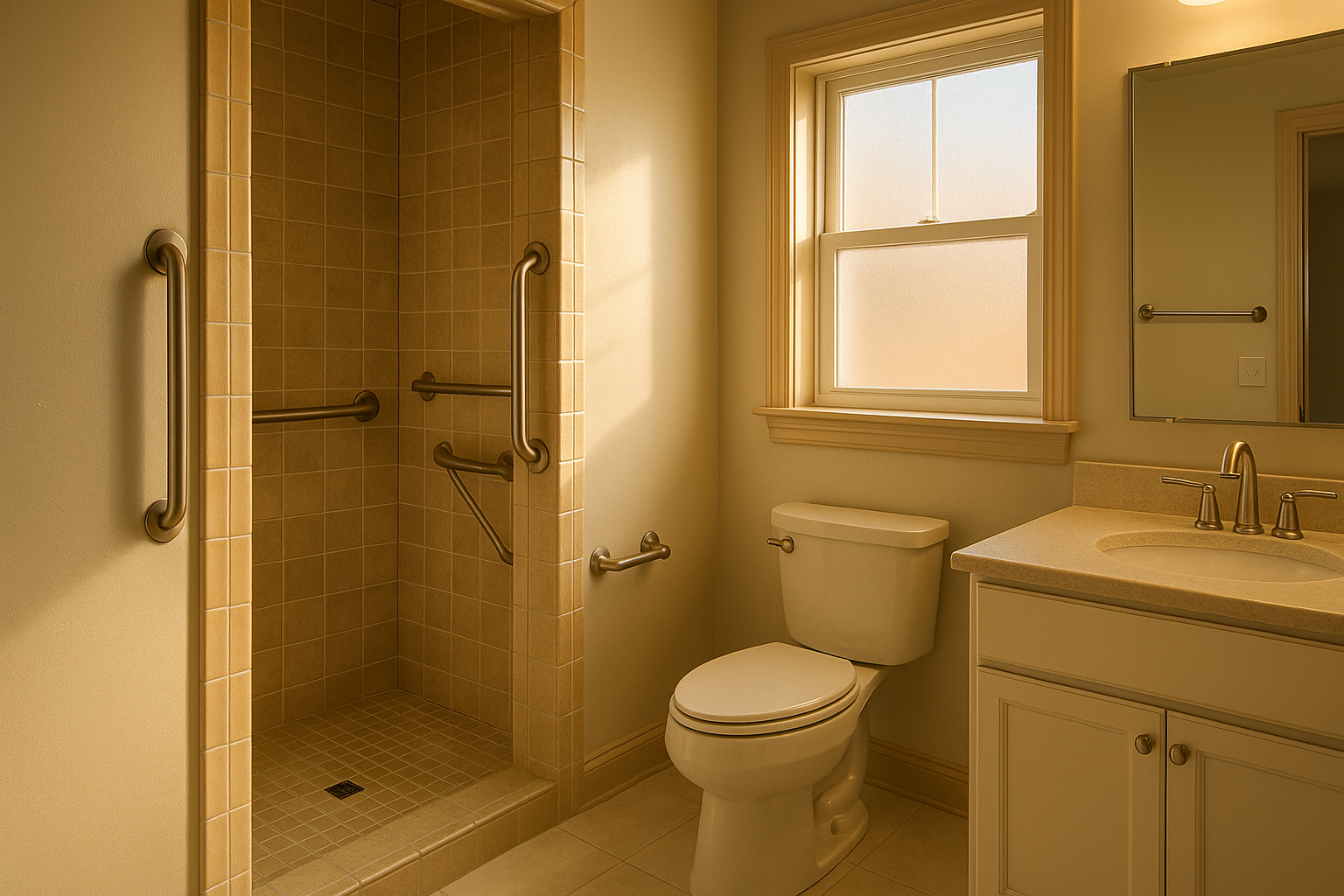
A vertical bar right at the shower entry is great for stepping over the threshold. Inside the shower, a horizontal bar or an angled bar gives you something to hold while washing or reaching. Near the tub, a bar on the side wall or along the rim area helps people get up and down safely. We've also installed shorter bars on the back wall of a tub for folks who like to sit on a shower chair.
Toilet
A 36 to 42-inch horizontal bar beside the toilet is the sweet spot. It lets someone push up with their arm instead of grabbing a wobbly towel bar or the sink for support. If space is tight, a shorter bar or an angled one can work too. We've put them in small half-baths in Lawrence and Avon more times than I can count.
Other Spots
Grab bars aren't just for bathrooms. We've installed them in garages next to the step into the house, in mudrooms, and by back doors. In the winter, a bar by the garage door can save you from a nasty fall on icy steps. They also work by vanities or anywhere someone needs a stable handhold.
And no, you don't have to follow ADA rules in your private home. Those are for public buildings. But ADA guidelines are a good reference for diameter (1.25 to 1.5 inches) and placement. We use them as a starting point, then adjust for your specific body size and bathroom layout.
Mounting into Tile, Fiberglass, and Old Plaster
This is where most people get nervous. Will the tile crack? What if there's no stud right where you want the bar? How do you keep water from getting behind the wall?
Here's the deal: a good installer uses a low-speed diamond drill bit and a steady hand for tile and stone. That means no cracked tiles. For fiberglass surrounds, you need to check what's behind the panel – sometimes there's a backing board, sometimes not. If a stud isn't in the right spot, you don't have to give up on the location. There are rated anchors made specifically for grab bars that work on tile, fiberglass, and even stone. They spread the load behind the wall and hold a lot of weight.
We've worked on plenty of old Indianapolis bathrooms with mud-set tile and plaster walls. You know the ones – built in the 1950s, thick tile beds, walls that feel like concrete. Those need a different approach. You can't just blast a regular drill bit through. We use the right fasteners and take our time to locate studs or use toggles that open behind the plaster. Same goes for plaster and lath in older homes around Zionsville or Brownsburg. The last thing you want is a bar that pulls out when someone leans on it.
And sealing? We always seal around the flange with a waterproof silicone so no water sneaks behind the tile or into the wall. That protects the surround and keeps mold from growing. (By the way, if you're dealing with moisture issues in your bathroom, check out our post on bathroom exhaust fan venting into the attic – it pairs well with grab bar upgrades.)
What to Pick: Materials and Finishes
You don't have to live with a clunky, chemical-looking bar that screams "hospital." Modern grab bars come in stainless steel, brushed nickel, oil-rubbed bronze, and even matte black. They can match your existing shower head and towel bars. We generally recommend 304 or 316 stainless steel. It holds up to hard water, which is a real thing in Central Indiana. Cheaper bars with zinc flanges can corrode after a few years, especially in a steamy shower.
Look for bars with concealed screws and flanges that sit flush against the wall. Non-slip textures are good too, but avoid anything too rough that might hurt your hands. Powder-coated bars are okay if you want a color, but make sure the coating is thick and the fasteners are stainless.
A Word on Suction Cup Bars
Please don't use those suction cup bars as your main support. They're fine for a temporary travel aid or maybe a lightweight towel bar, but they fail. I've seen them let go more times than I can count. If you or someone you love actually needs a grab bar for safety, spend a little more and get one that's screwed into the wall. Your bones will thank you.
What It Costs and How Long It Takes
Most grab bar installations take an hour or two, and we usually do one to three bars in a single visit. We cover the area with drop cloths, use dust control, and clean up after ourselves. You won't come home to a construction zone. You don't need a permit for grab bars in most Indianapolis homes, but if your situation is unusual, we'll tell you up front.
Our process is simple. We come out for a quick in-home assessment, check the wall structure, talk through where you want the bars, show you finish options, and give you a written quote before any work starts. No surprises, no upselling.
Ready to Stop Worrying About Falls?
If you're in Indianapolis, Carmel, Fishers, Zionsville, Westfield, Noblesville, Greenwood, Brownsburg, Avon, Plainfield, or Lawrence, we'd love to help. You can book a safety assessment and get a quote – it's free, and there's zero pressure. We'll tell you what you need, what you don't, and make sure your grab bars actually hold. Because the only thing worse than a fall is a false sense of security.
For more tips on keeping your home safe and functional, browse our blog or head back to the home page.
Ready for a free estimate?
Send us the list, and we'll quote a flat price before we schedule — no pressure, no obligation.