Last winter, my buddy Mike called in a panic. A pipe burst in his basement at 6 a.m. and water was spraying everywhere. He ran to the basement, but he couldn't find the main shutoff. He had lived in that house for five years and never once thought about it. By the time he shut off water at the street (which took 20 minutes of searching), water had soaked his drywall, his carpet, and a bunch of storage boxes. The repair bill? Over $4,000. And most of that damage could have been avoided if he'd known where his water shut off valve was and how to use it.
That's why I'm writing this. If you live in Indianapolis or any of the surrounding towns like Carmel, Fishers, Zionsville, Westfield, Noblesville, Greenwood, Brownsburg, Avon, Plainfield, or Lawrence, you need to know this stuff. It's not hard, but it can save you a huge headache.
Why Your Water Shut Off Valve Matters
A water shut off valve is exactly what it sounds like: a valve that stops water from coming into your house. When a pipe bursts, a toilet overflows, or a water heater leaks, that valve is your first line of defense. The faster you turn it off, the less water damage you get. In Indianapolis, winters get cold enough for pipes to freeze and burst, so this isn't just a "someday" problem. It's a real risk every winter.
I've heard stories from local plumbers about homeowners who had to call them to shut off water because they didn't know where their main valve was. By the time help arrived, the water had already ruined a ceiling or a finished basement. If you have a basement (like many older homes in Broad Ripple or Meridian-Kessler), a few minutes of delay can mean thousands in repairs.
Where Is the Main Water Shut Off Valve in Indianapolis Homes?
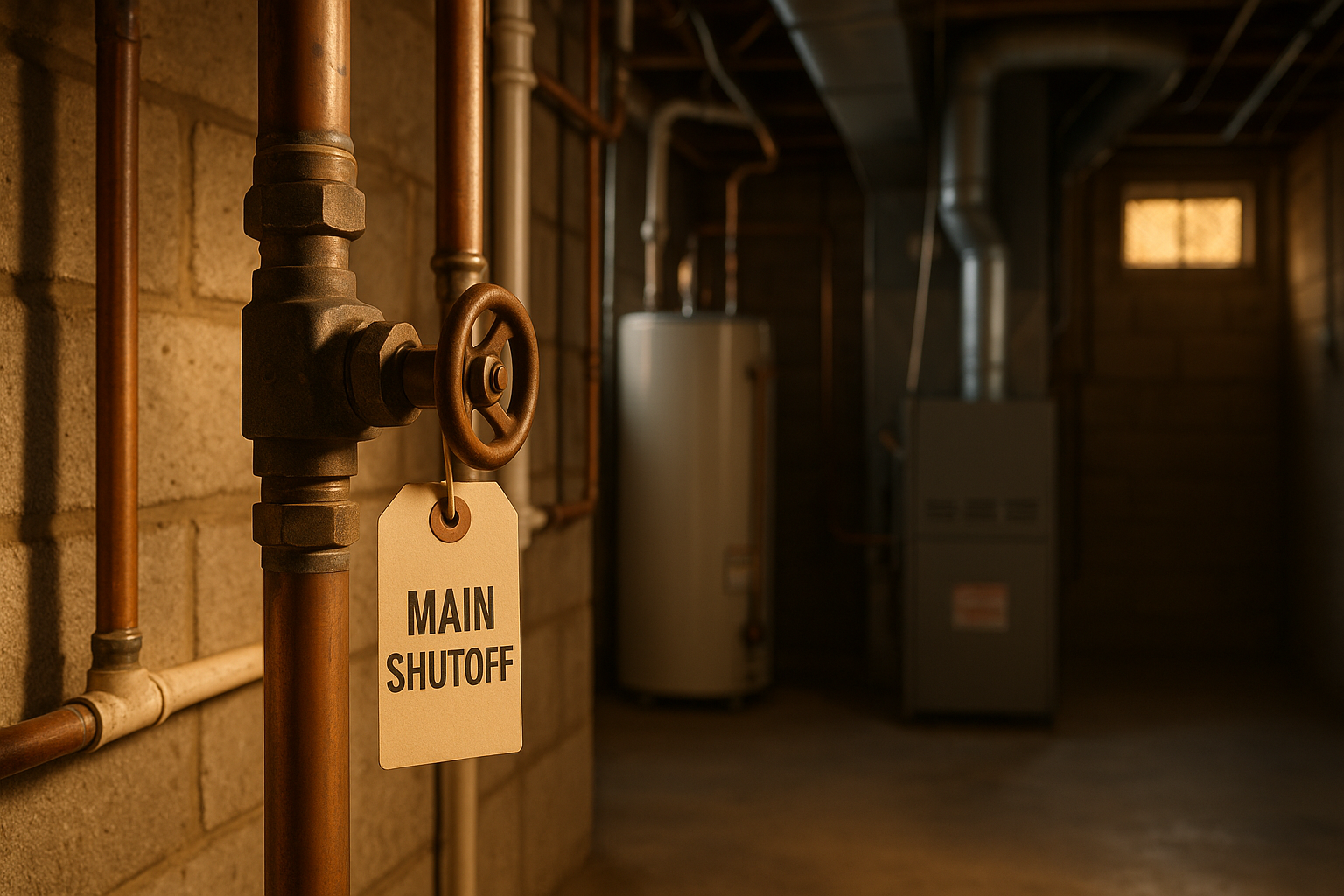
The location depends on your home's style. In older neighborhoods with basements, like Irvington or Fountain Square, the main shutoff is usually near the front foundation wall where the water line comes in from the meter. Look for a pipe coming through the wall, often next to the water meter. In a crawlspace, it might be near the front of the house, close to the ground. For slab-on-grade homes built after the 1980s (common in south and southeast Indianapolis), the shutoff might be in a laundry room, garage, or a mechanical closet. Townhomes and condos sometimes have valves in shared mechanical spaces, but in many cases you have one inside your unit. If you can't find yours, don't guess. Give us a call and we'll locate it, label it, and test it for you.
The Curb Stop vs. the Main Valve
There's also a curb stop valve at the meter pit in your front yard, usually near the sidewalk. That one belongs to Citizens Energy Group, and you should not open or turn it yourself. If you need the street valve closed because your main valve is broken or stuck, coordinate with Citizens Energy Group or call HandyPros. We can help arrange the timing with them.
Types of Shutoff Valves You Might Have
Most homes have a few different valves:
- Main shut off valve: Stops all water into the house. Older homes may have a gate valve (round handle, multiple turns) which tends to get stuck. Newer homes often have a ball valve (quarter-turn lever). Ball valves are better because they're less likely to seize up and they're easier to operate in an emergency.
- Fixture supply valves: These are the small shutoffs under sinks, toilets, and behind washing machines. They let you isolate one fixture without turning off the whole house.
- Branch shutoffs: Some homes have valves for specific areas, like exterior spigots or kitchen lines. PEX manifold shutoffs are common in newer homes, with labeled valves for each branch.
If you still have an old gate valve for your main, consider replacing it with a full-port ball valve. The difference is huge. A ball valve only needs a quarter turn to shut off, and it's less likely to leak over time. I've seen old gate valves that were so corroded they wouldn't budge. Home inspectors in Indianapolis often flag these during real estate transactions.
How to Test Your Water Shut Off Valve
Testing is simple, but you need to be careful:
- Find the main valve and make sure you can reach it easily. If it's behind stuff, clear a path.
- Turn the valve clockwise to close it. If it's a ball valve, the handle will go from parallel with the pipe to perpendicular. If it's a gate valve, turn it several rotations until it stops. Don't force it.
- Open a faucet on the lowest level of your house (like a laundry sink) to drain water and relieve pressure. Then open another faucet upstairs to let air in.
- After a few minutes, check that water stops running. If it doesn't, the valve may be broken and needs replacement.
- Turn the valve back on slowly. Open the lowest faucet first to let air out, then close it. Check around the valve for any seepage.
If you're not comfortable doing this yourself, we can do it for you. We'll test it, label it, and even show you how to use it.
What If Your Valve Is Stuck?
A stuck water shut off valve is common in older Indianapolis homes. The gate valve stems can corrode or get mineral buildup. If you force it, the stem can snap and then you have a real emergency on your hands. Don't try to muscle it. Instead, note the condition and call a pro. We replace stuck gate valves with modern ball valves all the time. It's usually a quick job, and it makes your system way more reliable.
Labeling and Mapping Your Valves
One of the best things you can do is label your valves. Use a waterproof tag or a sharpie on a piece of tape. Write "MAIN SHUTOFF" on the main valve, and "KITCHEN SINK" on that fixture supply valve. Then draw a simple map of your house showing where each valve is. Tape it inside a utility cabinet or near your electrical panel. If you have kids or roommates, show them too. You don't want to be the only one who knows where the valve is when you're out of town and a pipe bursts.
Winter Prep for Indianapolis Homeowners
Indy winters are no joke. Before it gets cold, shut off and drain your exterior hose bibs. If you have interior shutoffs for those bibs, turn them off and then open the outdoor faucet to drain any remaining water. Insulate any exposed pipes in garages or against exterior walls. And test your main water shut off valve before the first hard freeze. That way you know it works when you need it.
When to Call HandyPros
You can DIY a lot of this, but sometimes it's smarter to hire a pro. If your valve is stuck, leaking, or you can't find it, give us a call. We'll locate, label, and test it. If it needs replacement, we'll swap it out for a full-port ball valve. We do clean work — if we need to cut drywall to access a valve, we patch it to a paint-ready finish. We also coordinate with Citizens Energy Group if the curb stop needs to be closed.
What to expect with HandyPros: a planning-first visit, clear scope and materials, dust control, and same-day replacement in most cases. We'll leave your utility room cleaner than we found it. And if you have other handyman needs like drywall repair or ceiling water damage, we handle that too. (See our /ceiling-water-damage-repair-cost-indianapolis/ and /drywall-installation-indianapolis/ pages for more.)
If you're not having an emergency, that's the best time to do this. Schedule a valve locate and condition check now, and you'll be ready before the next cold snap. You can request a quote and pick a time that works for you on our /#quote page. We'll come out, test your valve, and if it's old and grumpy, we'll recommend an upgrade. It's cheap insurance against a flooded basement.
Don't wait until you're standing in water up to your ankles. Know where your water shut off valve is today.
Ready for a free estimate?
Send us the list, and we'll quote a flat price before we schedule — no pressure, no obligation.