My neighbor Karen called me at 11 p.m. last winter. Her hallway smoke alarm wouldn't stop chirping. She'd changed the battery twice, but the chirp came back. Turns out, the whole unit was 13 years old. Most homeowners never think about replacing the detector itself. They just assume a fresh battery fixes everything. Here's the thing: smoke detectors have a shelf life. And once they hit 10 years, they're done. No amount of new batteries will bring them back to life.
Why Your Smoke Detector Has an Expiration Date
Smoke detectors don't last forever. The sensors inside slowly degrade. Dust, humidity, and age make them less sensitive — or overly sensitive, which leads to false alarms. You might notice yellowing plastic or a unit that chirps even after you swap the battery. That's a pretty clear sign you need a full smoke detector replacement, not just a new 9-volt.
In Indianapolis, summer humidity can make aging sensors even more twitchy. A friend in Broad Ripple learned that the hard way when her 12-year-old detector screamed every time she boiled pasta. She called an electrician, but the fix was simpler: replace the whole unit. Most manufacturers print the manufacture date on the back. If it's older than 10 years, don't even think about saving it. That's the smoke detector lifespan 10 years rule. No exceptions.
Pick the Right Alarm for Your Home
There are two main sensor types: photoelectric and ionization. Photoelectric alarms are better at catching slow, smoldering fires — like a couch that's been smoldering for hours. Ionization alarms respond faster to fast-flame fires. For most Indianapolis homes, photoelectric is the better choice. It's less likely to false alarm when you're cooking, and it catches the kind of fires that happen while people sleep. Some units have both sensors (dual-sensor), which is fine, but photoelectric alone often does the job.
What about power? You have three options:
- Hardwired with battery backup: These tie into your home's electrical system. If the power goes out, the battery keeps them working. In Indy, summer storms knock out power often enough that battery backup isn't a luxury. Hardwired smoke detector replacement is common in newer homes and mid-century ranches that were built with wired alarms.
- 10-year sealed battery smoke alarm: No battery changes for a decade. When the battery dies, you replace the whole unit. Great for spots where wiring isn't present, like some older bungalows.
- Smart smoke detector installation: These connect to Wi-Fi and send alerts to your phone. Some can tell you which room is triggered. If you're already installing a doorbell camera, smart smoke alarms fit right in. We've done plenty of those for homeowners in Carmel and Fishers.
Interconnected alarms matter more than you think. If one goes off, they all go off. That's huge when you have bedrooms upstairs and the fire starts in the basement. Mix-and-match brands usually won't interconnect reliably. If you're replacing units piecemeal, you might end up with a system that doesn't talk to itself. Better to do a full replacement at once.
Where to Put Smoke Alarms Without Losing Your Mind
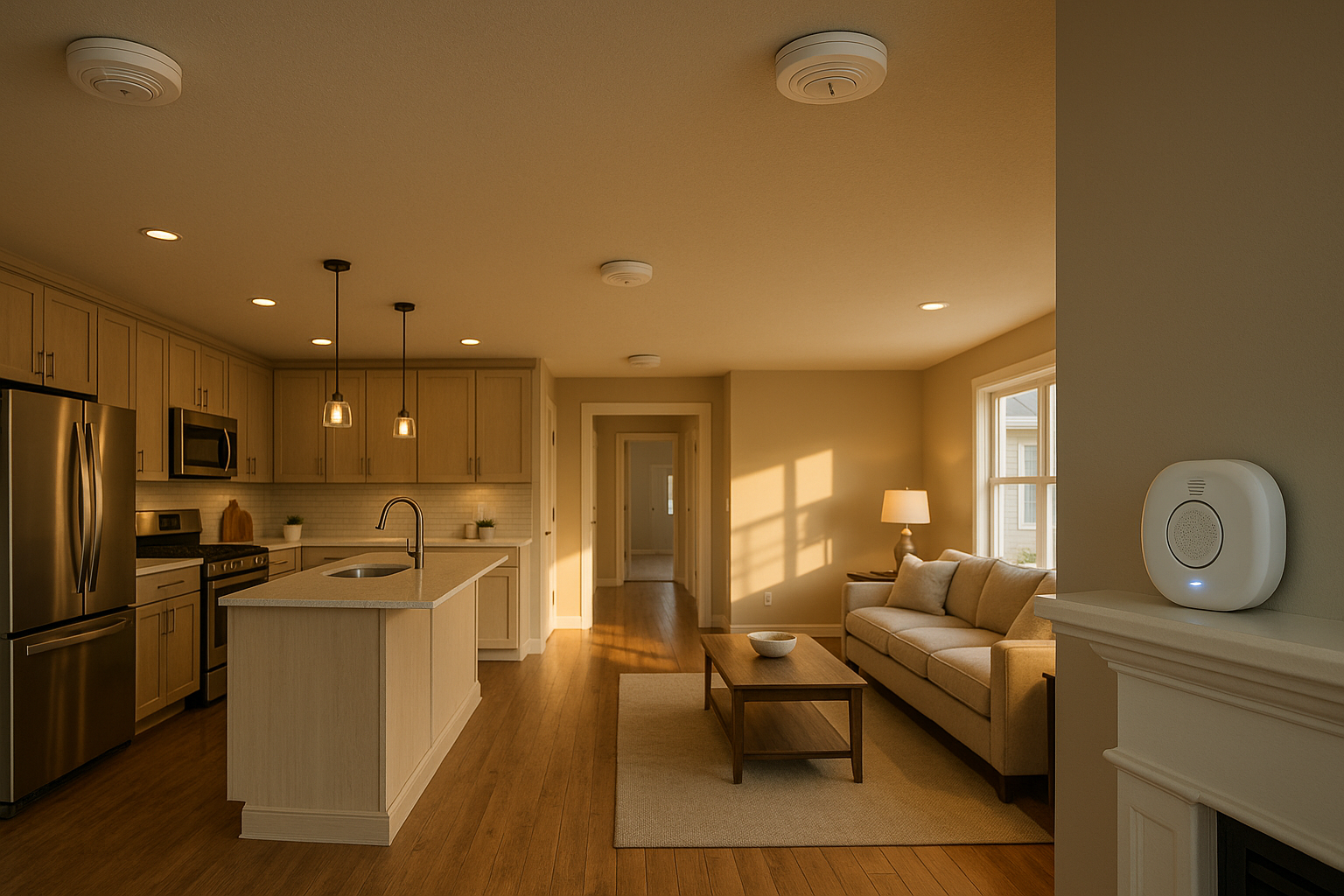
The basic rules come from NFPA 72 smoke alarm placement. You need:
- One inside every bedroom.
- One outside each sleeping area (like a hallway).
- One on every level of the house, including the basement.
So a two-story home with a basement and three bedrooms might need six or seven alarms. Most older Indianapolis homes fall short. A 1950s ranch in Perry Township might have just one in the hallway. That's not enough.
Ceiling placement matters too. Keep alarms at least 4 inches away from the wall. On sloped or vaulted ceilings, mount them within 36 inches of the peak, but not right at the apex. Avoid spots near supply vents, ceiling fans, or bathroom doors. Steam from a shower causes false alarms. And in the kitchen, keep smoke alarms at least 10 feet from cooking appliances. That's the smoke detector near kitchen distance rule. If you have a photoelectric unit near the kitchen, you'll get fewer nuisance alarms.
Don't forget carbon monoxide detector installation if you have any fuel-burning appliances — gas furnace, water heater, fireplace — or an attached garage. Many Indianapolis homes have both. Combination smoke/CO units are an easy way to cover both without adding extra devices.
How HandyPros Handles Smoke Detector Replacement
When we come out for a smoke detector replacement in Indianapolis, we don't just swap units. We start with a walkthrough. We look at your current layout, count units, check the breaker panel, and figure out where you're missing coverage. Then we give you a clear scope and a written quote. No surprises.
A landlord in Greenwood called us after a tenant complained about chirping at 3 a.m. We found six detectors, four different brands, none interconnected. He needed a full replacement to meet code and stop the midnight calls. We installed all new hardwired alarms with battery backup, labeled the circuit, and tested the interconnect. He hasn't had a late-night call since.
We also handle smoke detector wiring Indianapolis homes need. If you're missing a wire in a bedroom, we can run it with minimal drywall damage. We use proper boxes, listed connectors, and we label everything. After installation, we test each unit and the whole system. You get a maintenance schedule and a map of where everything is. That's the planning-first approach. No mess, no guesswork.
What About Cost and Hassle?
The price of smoke detector replacement depends on a few things: hardwired vs battery, number of units, ceiling height, and whether you need new wiring or repair. A simple swap of three battery units might take an hour. A whole-house hardwired replacement with new circuits can take a half day. But it's not as expensive as you might think. Most Indianapolis homeowners spend less than they would on a new washing machine.
I know some of you are thinking, "I can just swap the battery." That's fine if your unit is under 10 years old and the battery is the only problem. But if the unit is past its expiration date, a new battery just masks a dead sensor. Hardwired alarms aren't as complicated as they sound. If you're comfortable with basic electrical, you might DIY it. But if you have high ceilings, old wiring, or you want the reassurance of a pro, call us. Scheduling is easy. We work around your day, show up when we say we will, and leave the place cleaner than we found it.
Common Indianapolis Homes We See
Every neighborhood has its own quirks. In Broad Ripple and Irvington, you'll find 1920s bungalows with one alarm in the hallway and nothing in bedrooms. Mid-century ranches in Perry and Wayne often have hardwired alarms, but no carbon monoxide detector. Newer builds in Carmel, Fishers, and Westfield usually meet current code, but brands might be mixed or sensors might be outdated. Tall ceilings in renovated Midtown homes make placement tricky — we've had to get our tallest ladder out more than once.
Basements are everywhere in Indy. Don't forget to put an alarm down there, even if it's just for storage. And if you have an attached garage, add a CO alarm. It's cheap peace of mind.
Ready to Stop the Chirping for Good?
You don't have to live with false alarms or wonder if your smoke detectors will actually wake you up. HandyPros offers a straightforward on-site assessment for smoke detector replacement in Indianapolis and the surrounding areas — Carmel, Fishers, Zionsville, Westfield, Noblesville, Greenwood, Brownsburg, Avon, Plainfield, Lawrence. We'll walk through your home, mark every location, test your current units, and give you a clear quote. No pressure. No jargon.
If you want the whole house covered with quality, low-nuisance, code-compliant alarms, just request a quote at /#quote. Or check out our blog for more home safety tips. One afternoon of work, and you'll sleep better. I promise.
Ready for a free estimate?
Send us the list, and we'll quote a flat price before we schedule — no pressure, no obligation.