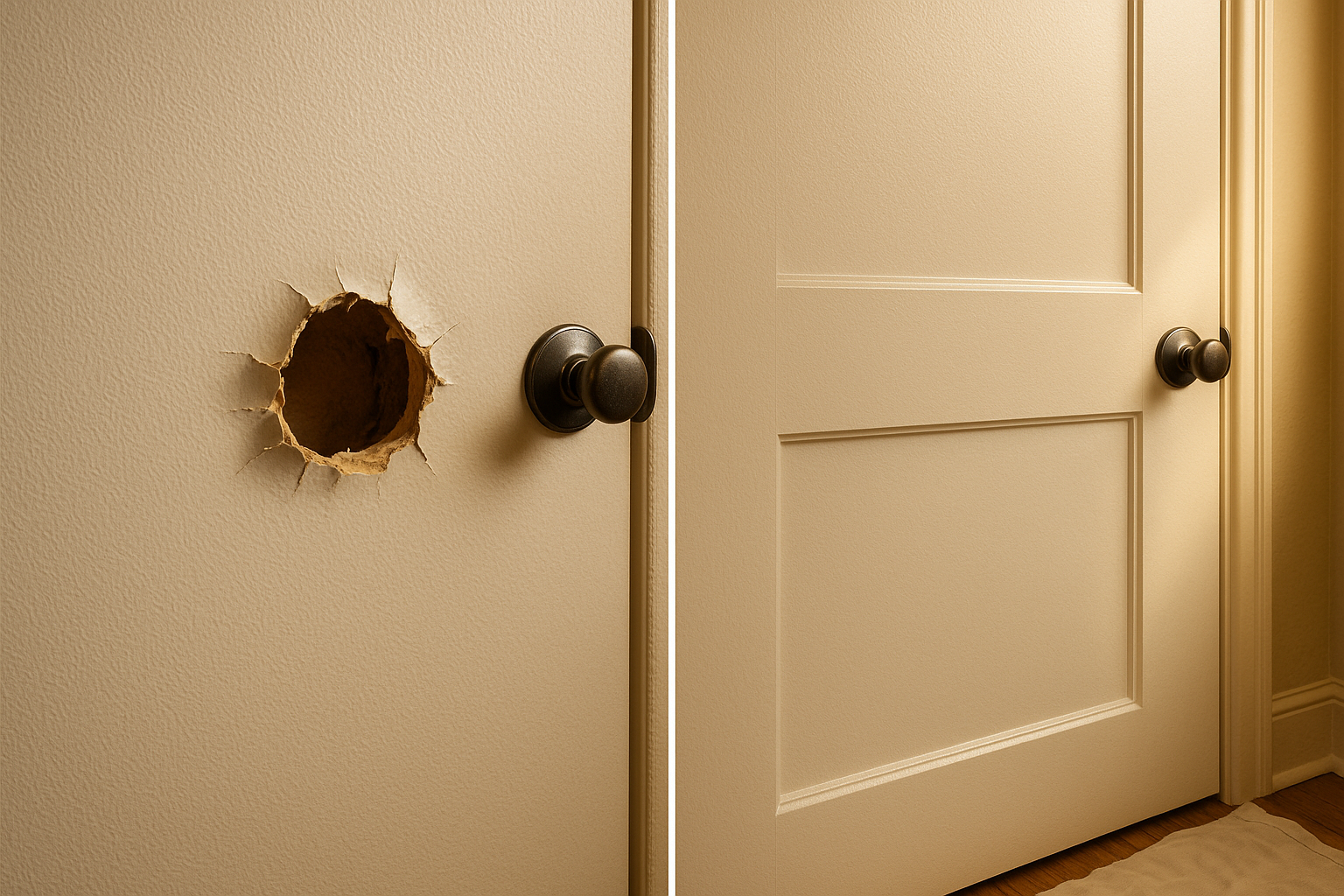
A while back, a landlord in Broad Ripple called us in a panic. A tenant had just moved out, and the bedroom door looked like somebody took a hammer to it—well, actually, a doorknob. The hollow core door had a hole the size of a baseball right where the latch should catch. He needed the place rented again by the weekend. Replacing the whole door meant matching hinges, painting, maybe trimming—days of work. Instead, we patched the hole, textured it, and painted the door. Two days later, you couldn't tell anything happened. That's the power of a good hollow core door repair.
What's a Hollow Core Door, Anyway?
Most interior doors in Indianapolis—especially in homes and apartments built from the 1970s onward—are hollow core. They're made of two thin sheets of hardboard or Masonite over a cardboard honeycomb frame. That makes them light, affordable, and easy to install. Problem is, they dent and puncture pretty easily. You see six-panel and flush styles all over places like Meridian-Kessler, Irvington, and Fountain Square. And when a door gets a hole, it's not just ugly—it can also affect how the door shuts.
The Usual Suspects: Damage We See
We've fixed every kind of hollow core door problem you can imagine. Doorknob punctures are the classic—somebody opens a door too hard and the knob slams into the door itself, or a kid swings it into a wall and the knob punches through the skin. Corner cracks happen when a door gets yanked open and the hinge area takes the stress. Skin delamination is when the outer layer starts peeling away from the core, often from moisture or age. Loose hinges and latches that won't catch are another common one, especially in central Indiana where humidity swings from muggy summers to dry winters. And pets? A big dog clawing at a door can shred the bottom pretty fast.
The good news is, most of these issues are fixable with a hollow core door repair. The question is whether to patch or replace. Let's dig into that.
Repair vs. Replace: When to Patch and When to Swap
Here's the honest take. For a hole smaller than a golf ball—like a doorknob puncture—patching almost always makes more sense than replacing the whole door. You get to keep the existing trim, the paint already matches, and you're not dealing with hardware transfer or hinge tweaking. A pro can make a patch invisible for around $150 to $300, depending on the size and finish. Replacing a slab might start around $150 too, but by the time you add labor, painting, and door prep, you're usually looking at more money and more time.
But if the door is a super-cheap builder grade slab and you don't care about an exact match, slapping in a new one can be quick. For larger damage—like a hole bigger than a plate, or a split that runs the full height—a door skin replacement might be the better call. That's when we lay a new thin hardboard or veneer skin over the damaged side and feather the seams. Cost runs $250 to $500, but it saves a perfectly good door frame and gives you a near-invisible fix.
Check out our blog for more home repair tips, or browse our home page to see all the stuff we handle.
How a Pro Patches a Hollow Core Door (So You Can't See It)
Patching isn't just smearing on some wood filler and hoping for the best. Here's the process we use at HandyPros:
- Clean up the hole edges. Get rid of any loose or jagged bits.
- Add a backer inside the hole. We often use a small piece of cardboard or foam that sits behind the skin so filler has something to grip.
- Fill in layers. Two-part epoxy or a strong wood filler gets built up slightly proud of the surface.
- Sand flat. We feather the edges so it blends into the surrounding door skin.
- Match the texture. This is where a lot of DIY jobs fail. If your door has a woodgrain or orange-peel texture, we recreate it with a texture stamp or a stipple technique.
- Prime and paint. Use a good primer, then two coats of a matching sheen. Most interior doors are painted semi-gloss or satin, which shows imperfections, so the prep has to be perfect.
This usually takes one or two visits because each filler and paint layer needs time to dry. But you can close and use the door the same day we finish—no waiting overnight.
Door-Skin Replacement for Bigger Damage
If the hole is huge or the door skin is peeling off in sheets, we might recommend replacing the skin instead of just patching. That means removing the old damaged skin, sanding the core smooth, and gluing on a new hardboard sheet, then trimming and painting. It's more involved but results in a door that looks brand new. We do this a lot for rental turnovers in areas like Fishers and Westfield where landlords need everything ready for the next tenant.
Hinges, Latches, and the Indy Humidity Factor
Hollow core doors aren't the only things that act up. The hinges and latch hardware often cause problems, especially with Indianapolis weather. In summer, humidity makes wood swell and doors stick or the latch won't catch. In winter, dry air shrinks things and you get gaps. Sometimes the fix is as simple as tightening hinge screws—but if they're stripped, we use longer screws that bite into the wall framing. That alone can pull a sagging door back into alignment.
If the latch hole is wallowed out or the strike plate is misaligned, we sometimes glue a dowel into the old screw holes, re-drill, and adjust the plate. That's a door jamb and hinge repair we handle all the time. In older neighborhoods like Speedway or Irvington, settling foundations can throw doors off too, and a little hardware tweak makes a big difference.
What About the Wall Behind the Door?
Ah, the classic doorknob-through-the-drywall move. You've seen it—someone opens a door too wide and the knob punches a hole in the wall. It's almost comical, but it's also a quick fix. We can patch the drywall, texture it, and paint the wall to match, often in the same visit as your hollow core door repair. If you need a larger drywall patch or whole-wall work, check out our drywall installation page and our drywall installation cost guide for more details.
Costs and Turnaround in Indianapolis
Here are the typical price ranges we see for hollow core door repair around Indianapolis, Carmel, Fishers, Zionsville, Westfield, Noblesville, Greenwood, Brownsburg, Avon, Plainfield, and Lawrence:
- Doorknob hole patch: $150 – $300
- Edge crack or hardware reinforcement: $125 – $225
- Door skin replacement: $250 – $500
- Full door replacement: Varies by slab style and hardware, but often $250+ all-in
Most minor patches take 1–2 visits because of dry time between filler and paint coats. Door skin replacements might require a pickup or a longer appointment. The best way to get an accurate number is to send us a few photos through our quote form. We'll get back fast with a tailored estimate.
Prevention: Stop the Hole Before It Starts
Once we fix a door, we usually recommend a few cheap things to prevent future damage. Install a door stop or a soft bumper—either on the wall or on the hinge. Those little spring stops or the ones that mount on the baseboard can save a wall and a door. If your door tends to swing open too far, limit the hinge opening. And in a house with kids or big dogs, a rubber door stopper on the floor is a lifesaver. Also, check your hinges twice a year—when the seasons change—and tighten any loose screws. A small tweak now avoids a cracked door edge later.
Why HandyPros for Your Hollow Core Door Repair?
We get it—there are a lot of handyman options in Indianapolis. But here's what we bring to every job: a planning-first walkthrough where we look at the door, the trim, the wall, and the hardware before we touch anything. We use premium primers and paints, and we match texture and sheen so the repair disappears. We lay down drop cloths and clean up after ourselves. No dust cloud in your living room, no paint smell for days. And because we're local, we know the quirks of Indy homes—from the hollow core doors in Broad Ripple bungalows to the newer builds in Avon and Plainfield.
We service all the surrounding areas, including rental turnovers and apartment units. If you're a property manager, we can coordinate with your schedule and handle multiple doors in one visit.
If you've got a hole in a hollow core door—or a latch that won't catch—don't live with it. Send us a couple of photos through our quote form and we'll give you a straight answer on repair options and cost. We'll get you on the schedule before the weekend, just like we did for that Broad Ripple landlord.
Ready for a free estimate?
Send us the list, and we'll quote a flat price before we schedule — no pressure, no obligation.