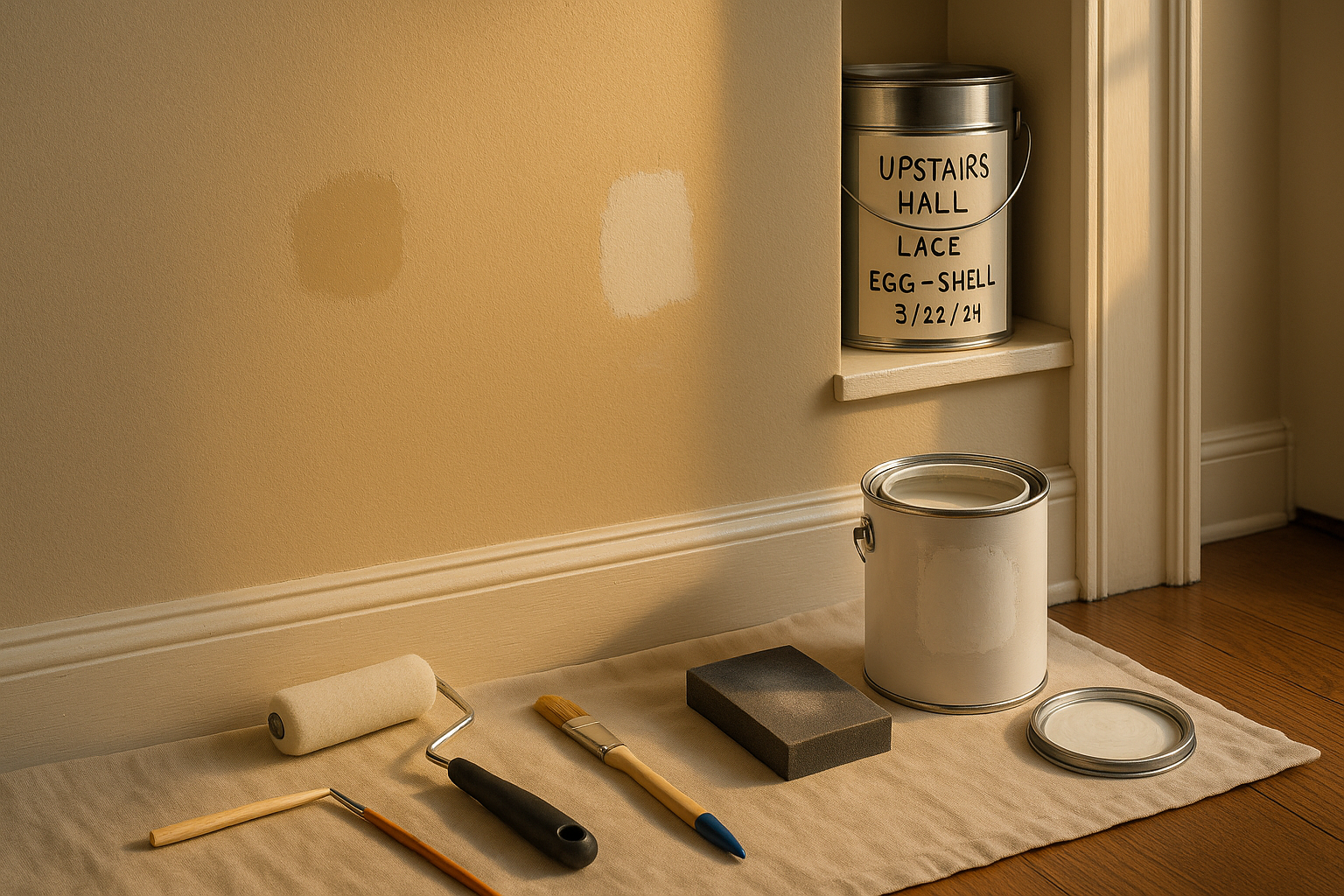
Last month I was in a hallway in Meridian-Kessler, staring at a spot where a homeowner had patched a nail hole after moving a picture. She used the exact same paint can from the garage, but the spot looked like a shiny sticker on an old wall. 'It's the same paint! Why doesn't it match?' That's the question, and after years fixing walls in Indianapolis, I can tell you: it's rarely the paint. It's everything else.
The Real Reason Your Touch-Up Looks Off
Paint touch up not matching usually comes down to age, sheen, and prep. That old paint on your wall has faded from sunlight (especially south- and west-facing rooms in Carmel or Fishers). It's oxidized and collected dust, so fresh paint looks darker or lighter. Touch-up paint looks darker when the wall faded lighter, and lighter when the wall picked up grime. Sheen matters too: eggshell and satin reflect light differently than flat. A brush leaves a different texture than the original roller, causing wall paint flashing. Paint batch variance is real, and if you patched drywall without primer, the patch soaks up paint differently. Dry winter air from the furnace makes paint dry too fast, which can cause patchy results.
When a Touch-Up Can Actually Work
Flat paint hides touch-ups way better than eggshell or satin. That's the builder-grade flat you see in a lot of newer homes in Avon, Plainfield, and Greenwood. Flat has no sheen, so nothing catches the light. But flat paint touch-up problems happen when the area is burnished (rubbed shiny). You need to sand that gloss off first. Eggshell, satin, and semi-gloss almost always flash after a touch-up, no matter how careful you are. The sheen mismatch eggshell vs satin is like putting a clear coat on half the wall. In hallways with side windows (common in Zionsville and Noblesville), angled light makes it obvious. So you can sometimes blend flat or matte paint if it's under two years old and you use the right technique. Higher sheen? Plan to repaint the whole wall or up to a natural break.
Step-by-Step: How to Blend a Touch-Up (If It's Possible)
Here's the process for a small spot on a flat or low-sheen wall in an Indianapolis home. First, clean the spot with a damp cloth and let it dry. If the wall has any gloss, sand it lightly with 220 grit sandpaper to dull it. If you patched drywall, prime before touch up — bare drywall compound soaks up paint and changes the color. Stir the paint for two or three minutes; if you don't mix it, the touch-up can look patchy. When you apply, match the original tool. Roller vs brush texture: a mini-roller leaves the same orange-peel texture as the rest of the wall, while a brush leaves smooth streaks. Feathering edges for touch up is key: start in the center and press lighter as you move outward, going a few inches beyond. If you can, paint to a natural break. Let it dry completely, then check in daylight and at night from different angles. If it still flashes, the wall likely needs a repaint.
The Indianapolis Climate Factor
Our weather can make or break a touch-up. Paint stored in an unheated garage goes through freeze-thaw cycles every winter in Indianapolis, Carmel, and Fishers. That ruins the paint's consistency. Store leftover paint correctly: keep it inside, not the garage. Label the can with room, color, finish, and date — you won't remember which white can is which. Humidity matters too: in spring and summer, paint stays wet longer, which helps blending. In winter, furnace heat dries the air and paint can flash-dry before you feather it. That's why paint touch up not matching is more common in dry indoor winter air. And older plaster walls in Broad Ripple or Meridian-Kessler need texture matching, not just color.
When to Stop Fighting and Repaint the Wall
My rule: if the wall is eggshell or satin, the spot is bigger than a dime, or the paint is over three years old, repaint the whole wall. For a small bathroom or hallway wall, that's a couple hours and a quart of paint. That's the repaint wall vs spot repair decision, and for higher sheens, repaint wins. Why touch up shows after drying? The sheen or texture difference only shows up once the paint is fully dry and light hits it at an angle. If you've tried twice and it still flashes, stop. In new subdivisions in Brownsburg or Lawrence with builder-grade flat, the paint wears down fast and touching up might only look good for a month. A better quality paint will hold up longer, but you still need to repaint the whole wall.
How HandyPros Can Help
When a homeowner calls HandyPros, we don't just slap paint on and hope. We look at the wall under real lighting — day and night, from a few angles. We check the finish, the paint age, and whether the surface is flat or textured. Sometimes we do a tiny test blend behind a door and wait for it to dry. If it looks good, we proceed. If it flashes, we'll tell you straight: this wall needs a repaint, and here's what it'll cost. We serve Indianapolis and surrounding towns — Carmel, Fishers, Zionsville, Westfield, Noblesville, Greenwood, Brownsburg, Avon, Plainfield, Lawrence. Tired of that dull patch? Check out our guide on small repairs that prevent big bills. Ready for a straight answer? Request a free assessment through our quote form and we'll come take a look.
Ready for a free estimate?
Send us the list, and we'll quote a flat price before we schedule — no pressure, no obligation.