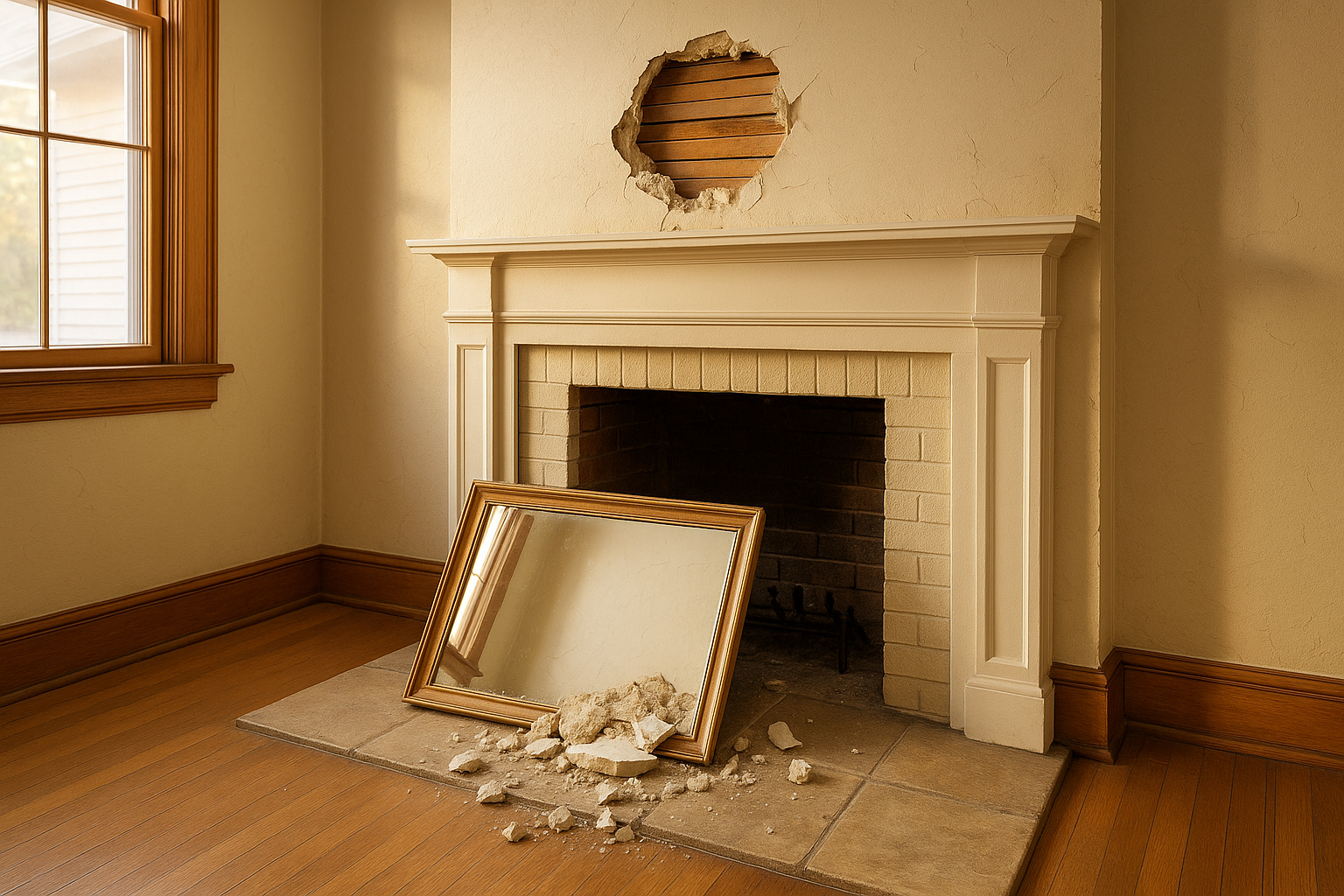
Last spring, a homeowner in Irvington hung a 45-pound mirror over her fireplace using those little plastic anchors from a picture-hanging kit. At 2 a.m., the whole thing came down—mirror, anchors, and a chunk of plaster the size of a dinner plate. She told me later, "I didn't know drywall could just let go." It can, and it does, but it doesn't have to. Learning how to hang heavy things on wall surfaces is about matching the hardware to your wall, finding the studs, and not drilling blind. Here's how to hang heavy things that stay up, whether you live in a 1920s bungalow in Broad Ripple or a new build in Fishers.
Know Your Wall Before You Drill
Every wall in Central Indiana is different. In older neighborhoods like Irvington, Meridian-Kessler, and parts of Broad Ripple, you'll often find plaster over wood lath. It's brittle, it cracks, and it hates hammer-in anchors. In most homes built after 1960 around Carmel, Fishers, Zionsville, Westfield, Noblesville, Greenwood, Brownsburg, Avon, Plainfield, and Lawrence, you've got drywall over wood studs. Downtown condos sometimes have metal studs. Basements and exterior walls in older brick homes might be actual brick or block. The first step in how to hang heavy things on wall surfaces is knowing what you're drilling into.
If you're not sure, pop off a switch plate and poke around (carefully, with the power off). You'll see drywall layers or plaster and lath. And if you see brick, that's your answer.
Find a Stud First (And Avoid the Wiring)
If you can hang into a stud, you're already winning. Wood studs in Indianapolis homes are usually 16 inches on center, but sometimes 24, especially in older places or garages. A stud finder with AC detection is your best friend. It'll beep at a stud and flash if it senses live wiring. Trust the flashing. One guy in Fishers ignored the warning, drilled straight into a live wire above a light switch, and spent $400 on an electrician before he ever got his TV up.
Test your stud finder on a spot where you know there's a stud (like next to a door frame). Then scan the area and mark the edges. Drill a tiny pilot hole with a small bit to confirm you're hitting wood. If you're hanging a heavy mirror on drywall, plaster, or anything else, never skip this step. For more on mounting TVs safely (which absolutely need studs or special anchors), check out our guide on mounting a TV on drywall safely.
Pick the Right Hardware: Lags, Toggles, and Cleats
Once you know the wall type, match the fastener to the weight. Here's the plain-English version:
- Wood studs: Use lag screws (1/4-inch or 5/16-inch) with washers. Pre-drill a pilot hole slightly smaller than the screw so the wood doesn't split. This is the strongest option. You can hang shelves into studs, heavy cabinets, and big mirrors with confidence. For a 100-pound load, a couple of 5/16-inch lags into studs is solid.
- Hollow drywall (no stud): Plastic expansion anchors are for pictures, not heavy stuff. For anything over 20 or 30 pounds, use a toggle bolt or a snap toggle. Snap toggles are the best wall anchors for heavy items—they spread the load behind the drywall like a little metal spider. A 1/4-inch snap toggle in 1/2-inch drywall can hold 100 pounds or more, but you need to follow the snap toggle installation steps: drill a hole, push the toggle through folded, let it spring open, pull the collar tight, snap the plastic piece off, and thread the screw. Watch some videos, it's easy once you see it. Toggle bolts vs molly bolts? Toggle bolts are stronger for heavy items, while molly bolts are a bit easier to reuse. For floating shelves or a heavy mirror, I'll take a snap toggle every time.
- French cleat for heavy items: If you're hanging a large mirror, a headboard, or even upper cabinets on drywall, a French cleat is genius. You mount one angled board to the wall (into studs if possible, or with multiple toggles) and the matching board on the back of the item. Then the item just drops into place. It spreads the weight across the whole width, and it lets you slide the item a little left or right to center it. Plus, if you ever want to adjust the height or move it, you only patch small screw holes, not a big ugly bracket. For hanging cabinets on drywall, a French cleat or a ledger board is the pro move.
I remember a handyman friend in Noblesville telling me about a customer who tried to hang a 70-pound bathroom mirror with two molly bolts. The mirror tilted forward, stressed the drywall, and left a crack from floor to ceiling. He fixed it with a French cleat anchored to two studs and the mirror has not budged since. The weight ratings for wall anchors are printed on the package—read them, then double them to be safe. I like a 2x safety margin. And for floating shelf weight capacity, check the bracket specs; most will list max pounds per bracket, but you must anchor into studs or toggles.
The Tricky Stuff: Plaster, Brick, and Metal Studs
Older Indianapolis homes with plaster and lath can be a pain. The plaster keys that hold the plaster to the lath get brittle over time. If you drill too fast or use a hammer, you can shatter the keys and cause chunks to fall out. For hanging heavy items on plaster walls, use painter's tape over the spot first, drill slowly with a sharp bit, and then use a toggle or a mounting rail that spans multiple lath pieces. If you have a big piece, consider anchoring a plywood panel to the wall first with toggles in multiple spots, then hang your item on that. It looks clean and avoids damaging the plaster. If you're wondering how to find studs behind plaster, a good stud finder with deep scan can often detect them, but tapping and using a strong magnet to find nails in the lath works too. For more on why plaster cracks and what to do about it, read this post about drywall crack causes in Indiana homes.
Brick walls are a different animal. You cannot use drywall anchors in brick. You need masonry bits and masonry anchors like Tapcons or sleeve anchors. In Meridian-Kessler and other neighborhoods with brick veneer, aim for the brick itself, not the mortar joints—the brick holds better. For brick wall anchors in Indianapolis, we usually use a 3/16-inch Tapcon with a washer for medium loads, or a 1/4-inch sleeve anchor for heavier stuff like a heavy shelf. If you're in a condo downtown with metal studs, you need special self-drilling anchors or toggle bolts designed for metal studs. Screwing a wood screw into a metal stud just spins and strips. Don't do it.
When to Call a Pro (And Yes, That's Us)
You can absolutely DIY many of these installs if you have a drill, a bit set, a level, and some patience. But here's my honest opinion: if the item weighs more than 75 pounds, if you have plaster walls, brick, or metal studs, or if you're worried about hitting wires or plumbing, calling a pro is not expensive—it's cheaper than a busted wall or a broken heirloom. HandyPros serves Indianapolis, Carmel, Fishers, Zionsville, Westfield, Noblesville, Greenwood, Brownsburg, Avon, Plainfield, and Lawrence, and we've hung everything from 100-pound farmhouse mirrors to ceiling-height bookshelves. We find the studs, check for wiring, pick the right anchors, and clean up the dust. We also patch and paint any holes we make.
A homeowner in Carmel told me she spent four hours one Saturday trying to hang a heavy mirror on drywall with toggle bolts, and it still wobbled. We came out on a Tuesday, had it up in 45 minutes with a French cleat, and not a single extra hole. That's the kind of clean, warrantied install you get when someone who does this every day handles it. If you'd like a no-pressure look at your wall and a quote, request a quote here. And if you're still deciding whether to tackle the project yourself or bring someone in, here's a little guide on when to call a handyman vs. a contractor.
Learning how to hang heavy things on wall surfaces correctly takes a little knowledge and the right hardware. Once you know your wall type and pick a solid anchor or stud strategy, that mirror or shelf will stay up for years—no 2 a.m. surprises.
Ready for a free estimate?
Send us the list, and we'll quote a flat price before we schedule — no pressure, no obligation.