My neighbor over in Broad Ripple texted me at 2 a.m. last week. “Dude, my toilet keeps running and I can’t sleep. It’s like a tiny waterfall in my bathroom.” I laughed, but he wasn’t joking. That constant hiss or the ghost-flush sound in the middle of the night is maddening. And it’s a common problem all over Indianapolis—from Fishers to Greenwood to Zionsville.
A running toilet is never just a noise issue. It’s money going down the drain. Even a slow, silent leak can jack up your Citizens Energy water bill more than you’d think. The good news? Most causes are simple to diagnose, and you might fix it yourself in under thirty minutes. But if you’d rather hand it off, that’s where we come in.
Here are the three usual culprits when a toilet won’t stop running—and what you can do about them.
The Flapper: The Rubber Seal That Usually Gives Up First
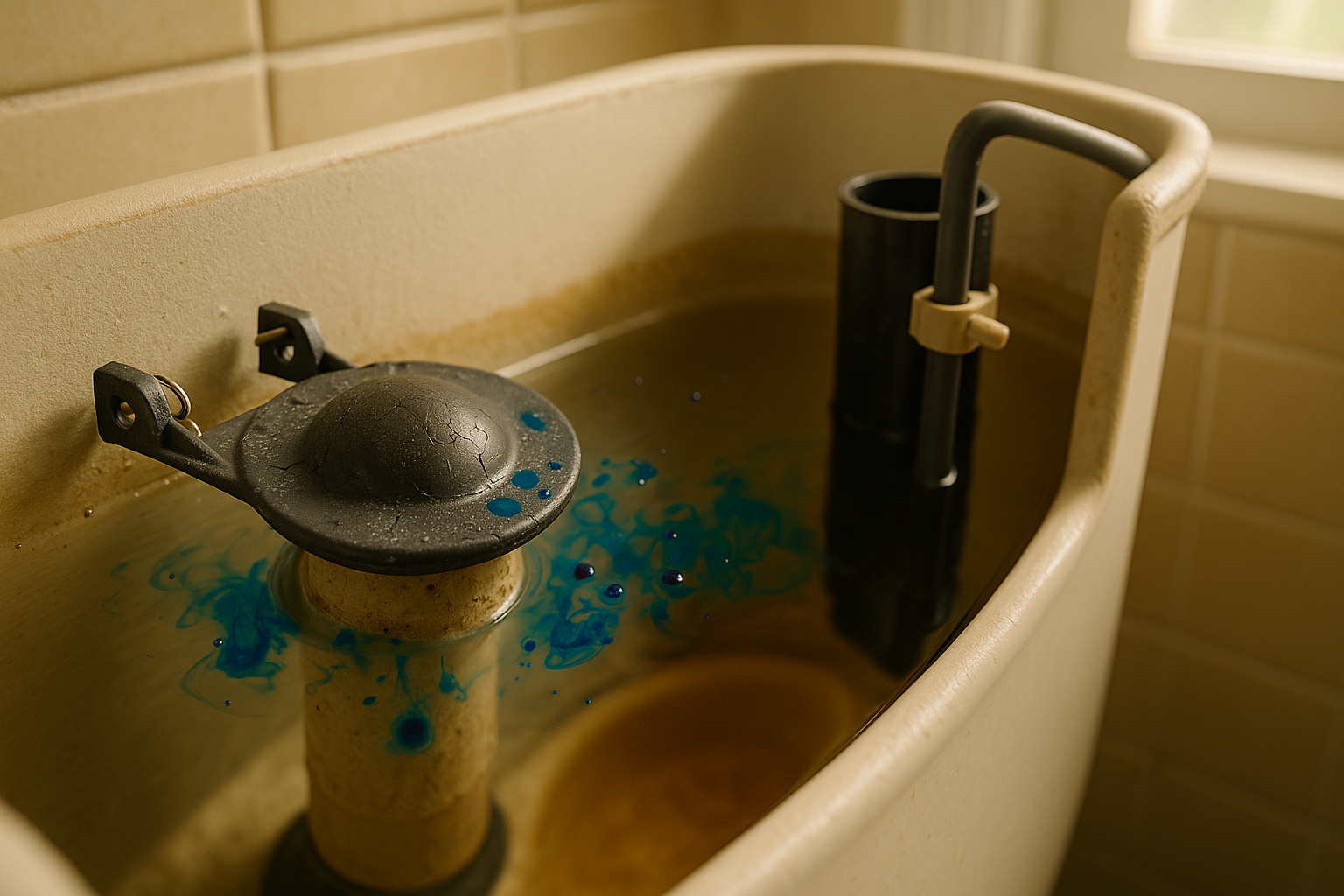
The flapper is that round rubber or plastic stopper at the bottom of the tank. When you flush, it lifts, lets water rush into the bowl, then falls back down and seals the flush valve. If that seal isn’t perfect, water trickles from the tank into the bowl continuously. You’ll hear it—a faint hiss or a gurgle every few minutes. That’s a toilet running randomly, and it’s the number one reason a toilet keeps running.
Here’s a quick test: put a few drops of food coloring in the tank (not the bowl). Wait 15 minutes. If the colored water shows up in the bowl without flushing, your flapper is leaking. Sometimes the flapper looks fine but has tiny cracks or mineral scale from our hard Indiana water. Central Indiana’s water is hard—lots of calcium and lime. That scale builds up on the flush valve seat, making a rough, uneven surface the flapper can’t seal against.
If the flapper is worn, replace it. But don’t just grab any cheap flapper from a big-box store. Those often break down faster in our water. You want a chlorine-resistant flapper. Also, make sure you get the right size—most modern toilets use a 3-inch flapper, older ones a 2-inch. If you’re not sure, bring the old one to the store or take a photo. Replacing a flapper takes about five minutes: shut off the water, flush to drain the tank, unhook the old flapper from the chain and the ears on the flush valve, and snap in the new one.
But sometimes the flapper is fine and the chain is the problem. If the chain is too long, it can get caught under the flapper, leaving a gap. If it’s too short, the flapper might not drop all the way down. You want about 1/4 to 1/2 inch of slack. A toilet chain too long is a quick fix—just move the clip.
The Fill Valve: The Thing That Refills Your Tank
After a flush, the fill valve opens and lets water back into the tank until it hits the right level. If the fill valve doesn’t shut off all the way, water keeps flowing and goes down the overflow tube. That’s the loud, constant hissing you hear. The tank never overflows because the overflow tube carries the extra water into the bowl—but it’s a huge waste.
Sometimes debris—especially sediment from city main work or tiny mineral chunks from hard water—gets stuck under the fill valve cap. You can clean it out: shut off the water, unscrew the cap (usually a quarter-turn), and rinse the seal and diaphragm. Reassemble and test.
If the fill valve is old or corroded, a toilet fill valve replacement is the way to go. Most replacement fill valves are adjustable and quieter than the old ballcock style. Look for a “quiet fill valve” that shuts off crisply. While you’re in there, check the refill tube. That’s the small flexible tube that clips onto the overflow tube. It should be aimed into the overflow, not below the waterline in the tank. If it’s below the waterline, it can siphon water from the tank into the bowl—another reason for phantom refills. Just re-aim it and clip it to the top of the overflow.
The Float and Water Level: Small Tweaks, Big Results
Every fill valve has a float that tells it when to stop. On older valves it’s a big ball on a rod; newer ones have a cup that rides up and down the fill valve stem. If the float is set too high, water overflows into the tube. If it’s set too low, you get weak flushes. You want the water level about an inch below the top of the overflow tube.
To adjust an old ball float, bend the rod gently or turn the screw on top. For a cup float, pinch the clip and slide it down to lower the water level, or up to raise it. Adjust toilet float is one of the easiest fixes for a toilet that won’t stop running. If the float is waterlogged (for the ball type), replace it—you can get a universal replacement for a few dollars.
But here’s an Indianapolis-specific trick: our hard water causes mineral buildup on the float rod and the fill valve stem. If the float sticks in the up position, the valve might not shut off. A little vinegar soak or a quick scrub can free it up. If it keeps sticking, replace the fill valve.
When to Stop Tinkering and Call a Pro
Some running toilet problems go deeper than a flapper or a float. Dual-flush toilets have more parts and seals—a dual-flush toilet running can be frustrating because the flush valve seal is different and often less intuitive to replace. If you have an older Indianapolis home—say in Meridian-Kessler, Irvington, or Fountain Square—you might also have an old shutoff valve that won’t close all the way. That’s a problem because you need to shut off water before any repair. A stuck angle stop is common with galvanized pipes and mineral buildup. Replacing a toilet shutoff valve is a quick job for a handyman and worth doing at the same time you fix the running toilet.
Also, if you’ve done the dye test and replaced the flapper but the toilet still runs, there may be a crack in the flush valve itself or the tank-to-bowl gasket is leaky. Those require more involved repair. Rusted tank bolts? That’s a sign of moisture and age. If you don’t want to wrestle with porcelain—which can crack—call a handyman toilet repair service.
We’ve seen a lot of DIY attempts go sideways because someone overtightened the tank bolts and cracked the tank. Porcelain is unforgiving. That’s why a lot of people in Carmel, Westfield, and Noblesville call us for a simple flapper or fill valve replacement. It takes us 30 minutes, we have the right part, and we don’t leave a mess.
What HandyPros Does When You Call Us
We’re not a big plumbing company that sends a truck with three techs and a sales pitch. We’re a local handyman business that fixes running toilets every week in Indianapolis and the surrounding metro—from Brownsburg to Avon to Plainfield to Lawrence. Here’s our process:
- We diagnose first. We’ll do the dye test, check the fill valve, listen for leaks, and inspect all the parts. No guesswork.
- We quote a clear price. You’ll know exactly what it costs before we start. No surprises.
- We replace only what’s needed. Flapper, fill valve, supply line, angle stop—whatever’s broken. We use quality parts: chlorine-resistant flappers, quiet adjustable fill valves, stainless braided supply lines, and quarter-turn angle stops.
- We clean up and test. No water on the floor, no leftover parts.
If you’ve got a toilet that keeps running and you’re tired of messing with it, hit us up. Or if you’re a landlord and need documentation for a tenant, we can provide a quote you can forward to your property manager. Same goes for homeowners who want a second opinion before calling a plumber. Most running toilet repairs are well within a handyman’s scope—we’ll tell you honestly if it’s a job that needs a licensed plumber.
Don’t Let a Running Toilet Drain Your Wallet
A constantly running toilet in Indianapolis isn’t just annoying—it’s literally money trickling away. Citizens Energy meters water in real time, so even a small leak can add $20–$50 to your monthly bill. And hard water scale accelerates wear on rubber parts. A little maintenance now saves a lot later.
While you’re dealing with bathroom stuff, check out our other guides: we’ve written about grabbing the right bathroom grab bars and why your bathroom exhaust fan venting into the attic is a problem. Keeping your bathroom dry and functional goes hand in hand with a toilet that behaves.
If you’d rather have a pro handle it, request a fast quote from HandyPros. We serve all of Indianapolis and the metro—Carmel, Fishers, Zionsville, Westfield, Noblesville, Greenwood, Brownsburg, Avon, Plainfield, Lawrence. We’ll diagnose the issue, give you a clear price, and fix it right the first time. No upsell, no pressure. Just a toilet that stops running.
Ready to sleep through the night again? Get your quote now.
Ready for a free estimate?
Send us the list, and we'll quote a flat price before we schedule — no pressure, no obligation.