There’s a moment I think about a lot. A homeowner in Irvington walked into her kitchen one morning and noticed the tile in front of the dishwasher had a little give. Not a crack, just a subtle bounce. She figured the tile was old. Two weeks later, the grout started crumbling and the tile popped loose. Underneath, the subfloor looked like a wet sponge. Turned out the dishwasher supply line had been leaking a tiny bit for months, maybe a year. By the time she called us, the water had wicked all the way to the baseboard and started creeping up the drywall.
That’s the thing about subfloors—they hide problems like a pro. You can’t always see the damage until it’s bad enough to feel. But if you know what to look for, you can catch it before your floor turns into a trampoline.
What Does a Subfloor Actually Do?
Think of your subfloor as the skeleton’s skin. It’s the structural layer nailed or screwed to the floor joists, and it’s what your tile, hardwood, carpet, or luxury vinyl plank sits on. In most Indianapolis homes built after the 1970s, that layer is OSB (oriented strand board). Older neighborhoods like Meridian-Kessler, Fountain Square, or Irvington might have plank subfloors made from 1x6 boards. Either way, the subfloor has one job: stay flat, stay dry, and keep your feet off the joists.
When water gets in, OSB swells. The edges delaminate, the board loses strength, and you get that wavy, uneven feeling underfoot. Plywood handles moisture a little better, but if it stays wet long enough, it rots just the same. And once the subfloor goes, your expensive flooring on top will follow.
How Water Gets to Your Subfloor in Indianapolis
Around here, we get heavy spring rains, late-summer humidity, and freeze–thaw cycles that push water toward foundations. That’s before you even consider indoor leaks. Some of the most common sources I see on service calls:
- Toilet wax ring failures – The wax ring dries out or was never seated right, and every flush sends a few drops onto the subfloor. Over time, that adds up. The floor around the toilet gets soft, the toilet rocks, and you might smell sewage.
- Dishwasher or fridge line leaks – Those plastic supply lines behind the appliance can crack or get kinked. A slow drip that goes unnoticed can rot the subfloor under the whole kitchen run.
- Tub or shower overflows – Kids splashing or a forgotten running bath can send water over the edge. If the tub’s overflow gasket is bad, water seeps into the bathroom subfloor and rots it from below.
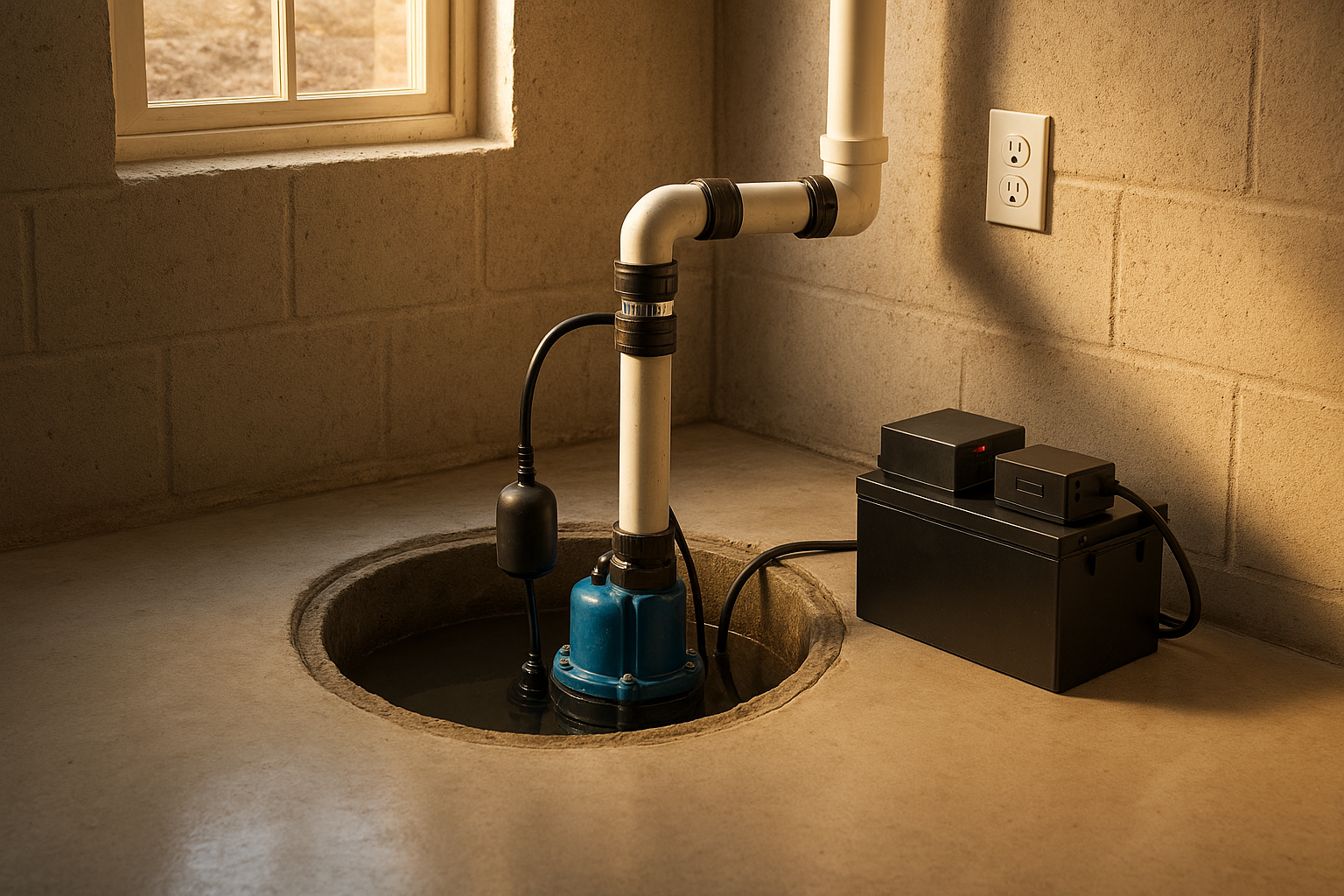
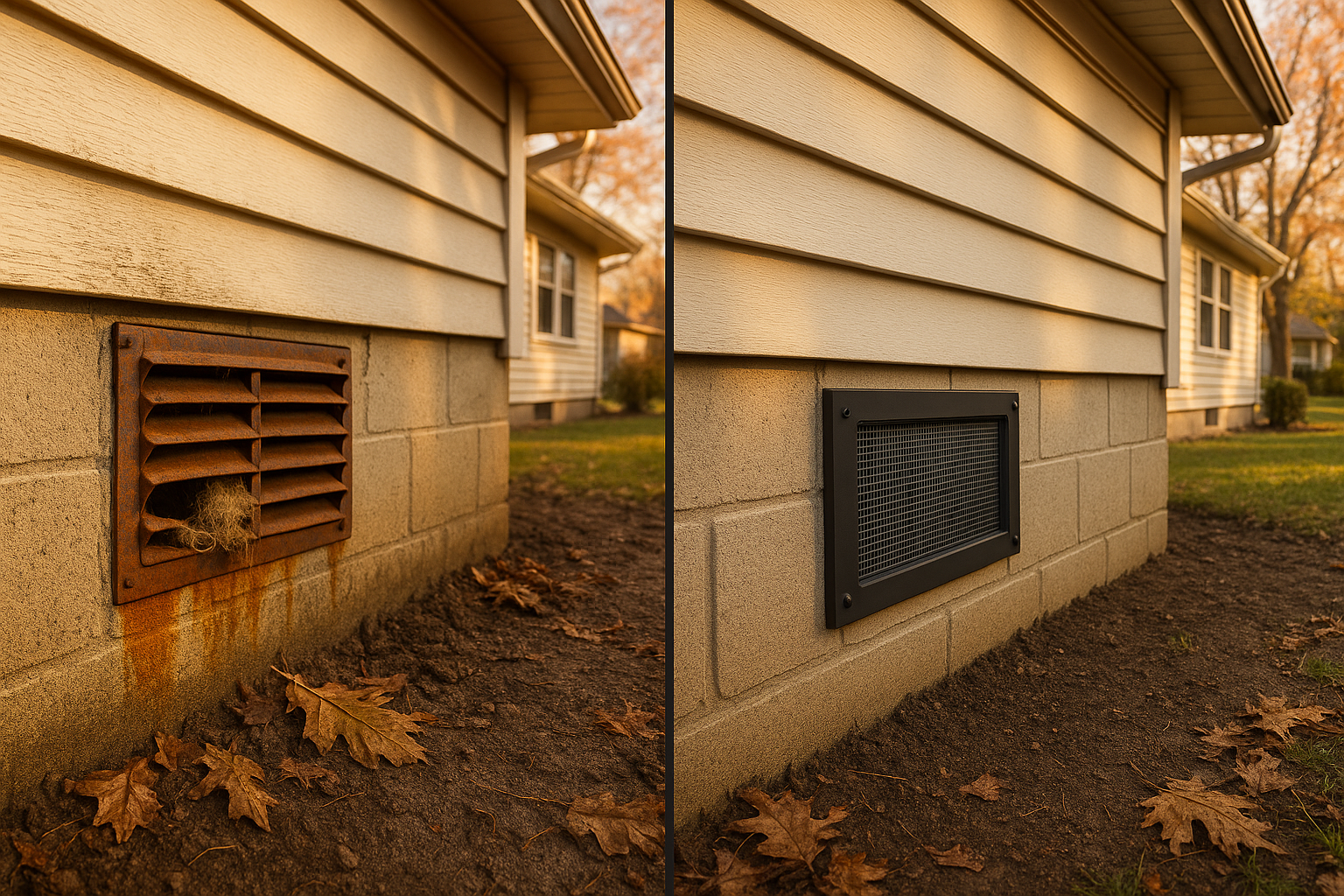
- Basement humidity and sump pump failures – Most Indy homes have basements or vented crawl spaces. If the sump pump dies during a storm or the crawl space has no vapor barrier, moisture rises and condenses on the underside of the subfloor. That’s why you sometimes see warped hardwood floors on the first floor but no visible leak anywhere.
- Roof leaks that travel – Water from a damaged roof can run along framing and drip onto a subfloor far away from the original entry point. That’s why a water stain on the ceiling might mean the floor below is also at risk.
If you’ve had a basement flood or a major leak, you should read what to do first when your basement floods. Acting fast makes a huge difference.
Signs You Might Have Subfloor Water Damage
Here’s what to look for before you start poking holes in your floor:
- Soft or spongy spots – If the floor feels bouncy or gives under your foot, the subfloor has lost integrity. Don’t wait.
- New squeaks – A little squeak is normal, but if a section suddenly gets noisy, it could mean the subfloor has swelled and is rubbing against fasteners or joists.
- Cupped or warped hardwood – Individual boards curl at the edges or cup in the middle. That’s a classic sign of moisture from below.
- Loose or cracking tile – Tile doesn’t fail on its own. If grout lines crack and tiles pop, the subfloor underneath is moving.
- Musty odor – That basement-y smell that won’t go away? It’s often mold or mildew growing on a damp subfloor.
- Rusted nails or screws – Pop a floor vent or pull up a small piece of carpet. If the fasteners are rusted, water has been present.
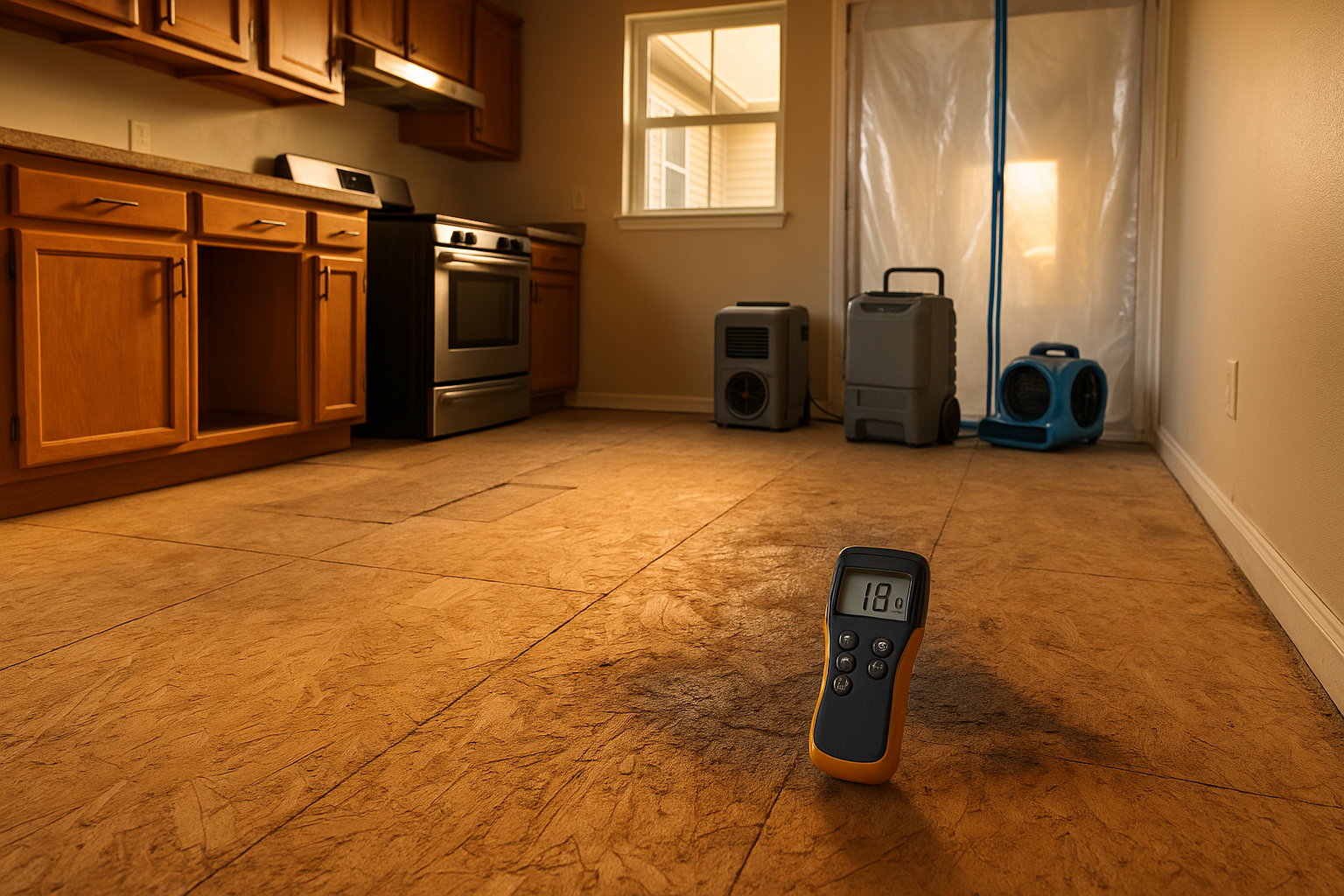
- Moisture meter reading above 16% – A pro uses a moisture meter to check. Normal subfloor should be around 6–10% MC. Above 16% means trouble.
I once got called to a home in Fishers where the homeowner swore the floor was just “old.” The vinyl plank was fine, but the subfloor had turned to oatmeal in a 4-foot circle around the water heater. The water heater had been weeping for months and the moisture had wicked under the flooring. The planks floated on a soft, dark layer—barely held up by the joists. The repair meant replacing not just the subfloor, but also a section of the bottom plate on a nearby wall.
To Repair or Replace? That’s the Real Question
Lots of folks ask, “Can’t you just dry it out?” Sometimes, yes. If the water event was recent, the subfloor is plywood (not OSB), and the moisture meter reads below 16% after a few days of dehumidifiers and air movers, you might get lucky. But OSB that has swelled or delaminated won’t go back. And if you see mold or the wood crumbles when you poke it, replacement is the only honest fix.
Your flooring type matters too. Tile set on cement board over a wet subfloor? That subfloor has to come out if you want the new tile to last. Hardwood? You might be able to salvage some boards, but the subfloor underneath needs to be solid. The rule of thumb: if the subfloor won’t hold a screw, replace it.
The Actual Subfloor Water Damage Repair Process
Here’s what a proper repair looks like, step by step. We always do a planning-first assessment, so you know exactly what’s included and what it costs before we cut anything.
- Find and stop the source – If the leak is still active, nothing else matters. Fix the toilet, replace the supply line, patch the roof.
- Protect the area – We seal off the work area with plastic and run a HEPA-filtered negative air machine so dust doesn’t travel to your whole house.
- Remove the flooring – Carefully pull up the tile, hardwood, or vinyl to expose the damaged subfloor. We number and save any reusable boards.
- Cut out the bad section – Use a circular saw set to the subfloor thickness and cut back to solid, dry wood. The opening should land on joist centers.
- Inspect and treat the joists – If the joists are rotten, we sister new lumber alongside them or replace sections. Then we treat any remaining wood with a mold-inhibiting spray.
- Dry to 12–15% moisture content – We run dehumidifiers and fans for several days, checking with a moisture meter daily. You can’t rush this step or the new subfloor will cup.
- Install new subfloor panels – We use 3/4-inch tongue-and-groove exterior-grade plywood (not OSB, unless you specifically want to match an existing floor) glued with construction adhesive and screwed down every 6 inches on edges and 12 inches in the field. This creates a solid, squeak-free base.
- Prep for new flooring – We flatten seams, screw down any high spots, and make sure the surface is clean and dry for your new tile, hardwood, or LVP.
In bathrooms, we also pay attention to the toilet flange. If the subfloor has been replaced, the flange typically needs to be reset at the correct height. We’ll install a new wax ring (or a wax-free seal) and caulk the base after the toilet is set.
Prevention Tips for Indy Homeowners
Once the repair is done, you don’t want a repeat. Here’s what we recommend for our climate and soil:
- Extend downspouts at least 6 feet from the foundation. Many homes in Carmel and Zionsville have downspouts that dump right at the foundation wall. That’s asking for trouble. Check out our guide on gutters, downspouts, and basement flooding for more.
- Improve yard grading so water flows away from the house. Clay-heavy soil around Indy drains slowly, so even a slight negative grade can push water toward your basement or crawl space. This article explains grading in plain English.
- Install or repair crawl space vapor barriers. A 6-mil plastic sheet on the ground and up the walls keeps ground moisture from rising into your subfloor.
- Maintain your sump pump. Test it every spring before the heavy rains. A battery backup is a smart investment.
- Vent bathroom fans outside, not into the attic. Moist air from showers can condense and drip onto subfloor sheathing over time.
- Check appliance supply lines yearly. Braided stainless steel lines are cheap insurance.
What About Insurance and Cost?
I’m not a lawyer or an insurance adjuster, but I can tell you what I’ve seen. Homeowners insurance often covers subfloor water damage if the cause is sudden and accidental—like a burst pipe or appliance overflow. Gradual leaks (a slow drip from a wax ring) are usually considered maintenance issues and may not be covered. Document everything with photos and keep a log of when you noticed the problem. If you file a claim, the adjuster will want to see that you acted promptly.
Cost depends on how much subfloor needs replacing, what flooring you have, whether joists need sistering, and if mold remediation is needed. A small bathroom patch might be a few hundred dollars in materials and labor; a full kitchen subfloor replacement with tile removal can run into the thousands. Always get a written scope with line items—never a vague “we’ll see what we find” quote.
How HandyPros Can Help
We’re a local Indianapolis handyman company that specializes in subfloor water damage repair and the stuff that comes with it—drywall, trim, doors, and flooring. We know the weird stuff houses in Avon, Plainfield, and Lawrence throw at you. We work clean, we communicate clearly, and we don’t oversell. If you’ve got a soft spot, a musty smell, or just a bad feeling about what’s under your floor, let’s do a moisture assessment first. We’ll map the damage, find the source, and give you a clear repair plan with a written quote.
And if you’re worried we’ll uncover a mold problem that turns into a monster—that’s exactly why you want a pro with a plan, not a handyman who guesses. We’ve seen enough of these to know what’s behind the baseboard before we even cut. Most of the time, the repair is straightforward. But if it’s bigger, you’ll know the full picture before you spend a dime.
Schedule a subfloor moisture assessment and repair plan with HandyPros. We’ll give you the straight story, a written scope, and a floor you can trust again.
Ready for a free estimate?
Send us the list, and we'll quote a flat price before we schedule — no pressure, no obligation.