Last spring I got a call from a woman in Meridian-Kessler. She said her hall closet always smelled like a wet basement. Her floors were freezing in winter, and her allergies were out of control. When I looked under her crawl space door, it was like a rain forest down there. Exposed dirt, condensation on the joists, and the subfloor was starting to get soft. She thought she needed a full encapsulation. But after we checked the moisture readings and the drainage, a heavy-duty crawl space vapor barrier with a few key upgrades solved most of her problems. Here's how to tell which approach fits your Indianapolis home.
What a Crawl Space Vapor Barrier Does
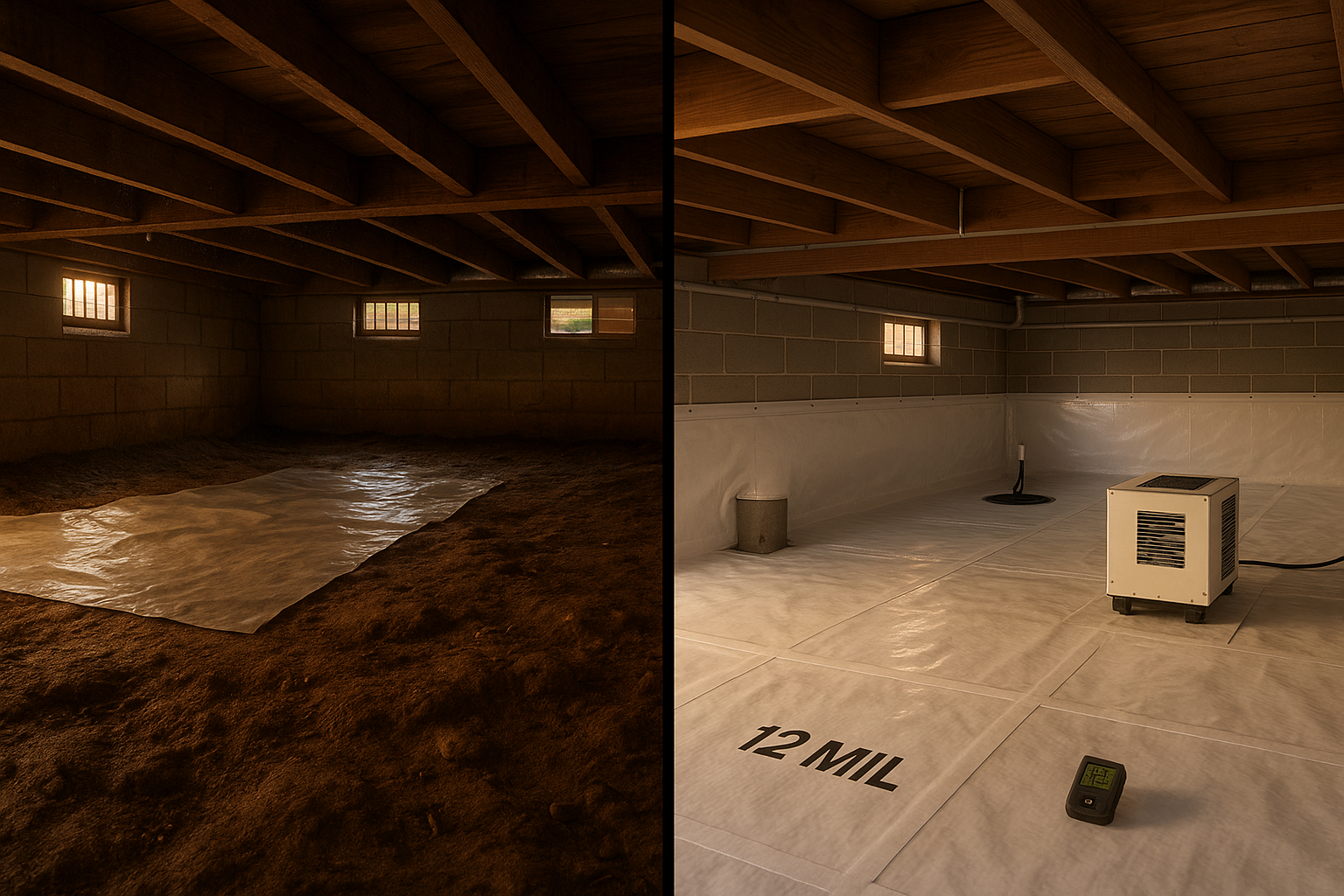
A crawl space vapor barrier—some folks call it a crawl space moisture barrier—is a thick plastic sheet that gets installed over the dirt floor. Most good ones are reinforced polyethylene vapor barrier, 12 mil to 20 mil thick. You also run it up the foundation walls a bit and wrap it around piers. The job of the barrier is to stop ground moisture from rising up into the crawl space air. That moisture is invisible most of the time, but it’s what causes that musty odor from crawl space, rusty ducts, and rot in the subfloor. In Indiana, we get plenty of that moisture because the ground holds water for a long time.
Vapor Barrier vs Full Encapsulation
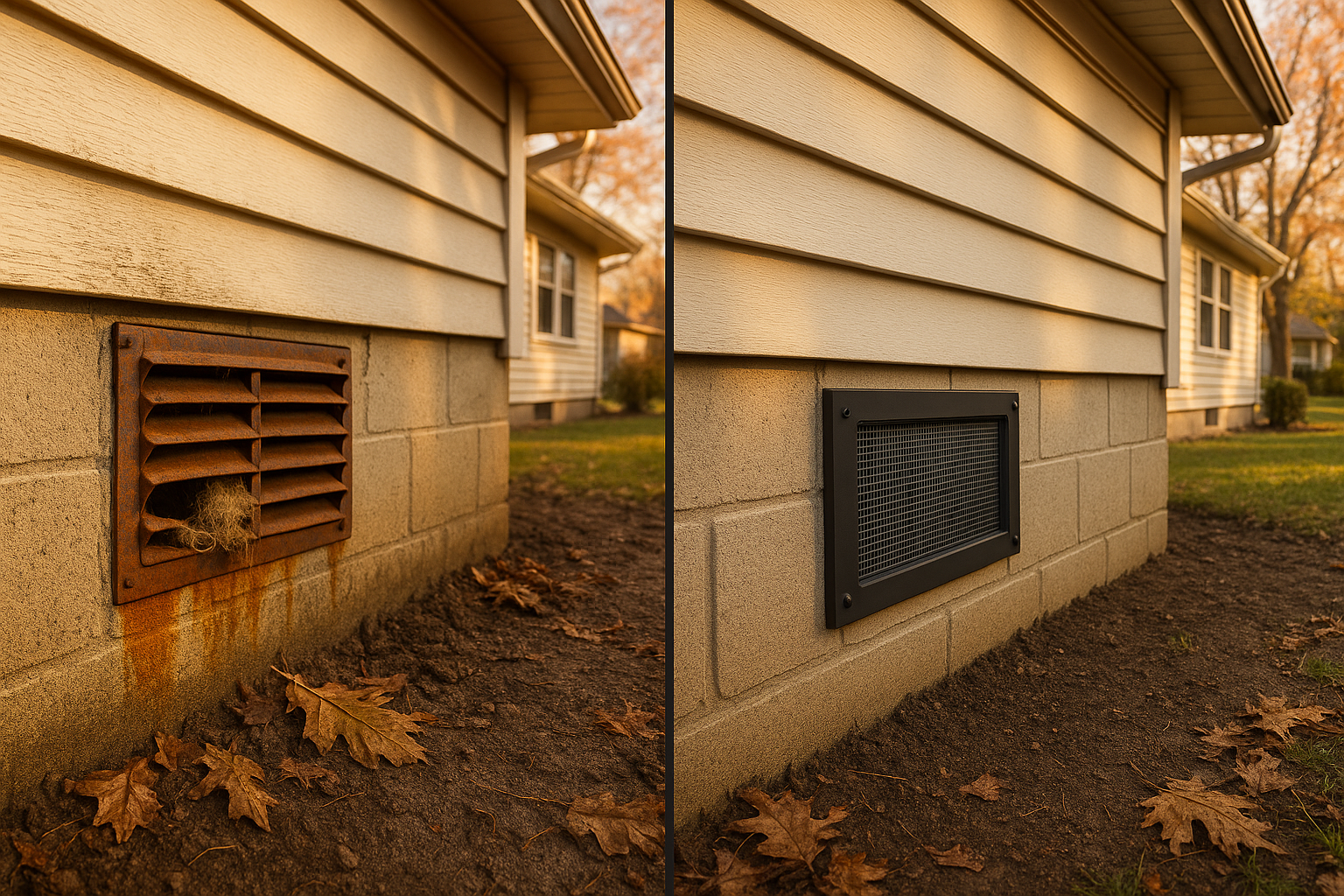
So what’s the difference? A vapor barrier focuses on covering the ground. It’s the most basic fix. Full encapsulation takes it several steps further. With encapsulation, you also seal the foundation walls, close off the foundation vents, add a drainage matting under the liner, and usually install a crawl space dehumidifier. The result is a sealed crawl space that’s almost like a mini basement.
Which one should you get? If your main problem is damp soil and musty air, a proper vapor barrier with taped seams and good wall attachment will make a huge difference. But if you have standing water, open vents, or you want to store things down there, full encapsulation might be better. (I wrote a whole post about whether encapsulation is worth it in Indiana—check it out if you’re on the fence: is crawl space encapsulation worth it in Indiana?)
Why Indianapolis Crawl Spaces Get So Damp
This part matters. Our clay soil drains slowly—that clay soil drainage problem is real. Add humid summers and heavy spring storms, and you’ve got a recipe for moisture. Homes near the White River, Fall Creek, or Pleasant Run sit in floodplains with high water tables. Older neighborhoods like Irvington, Fountain Square, or the near east side often have low-clearance crawls with no drainage at all. And if your downspouts dump water next to the foundation, all that water ends up under the house.
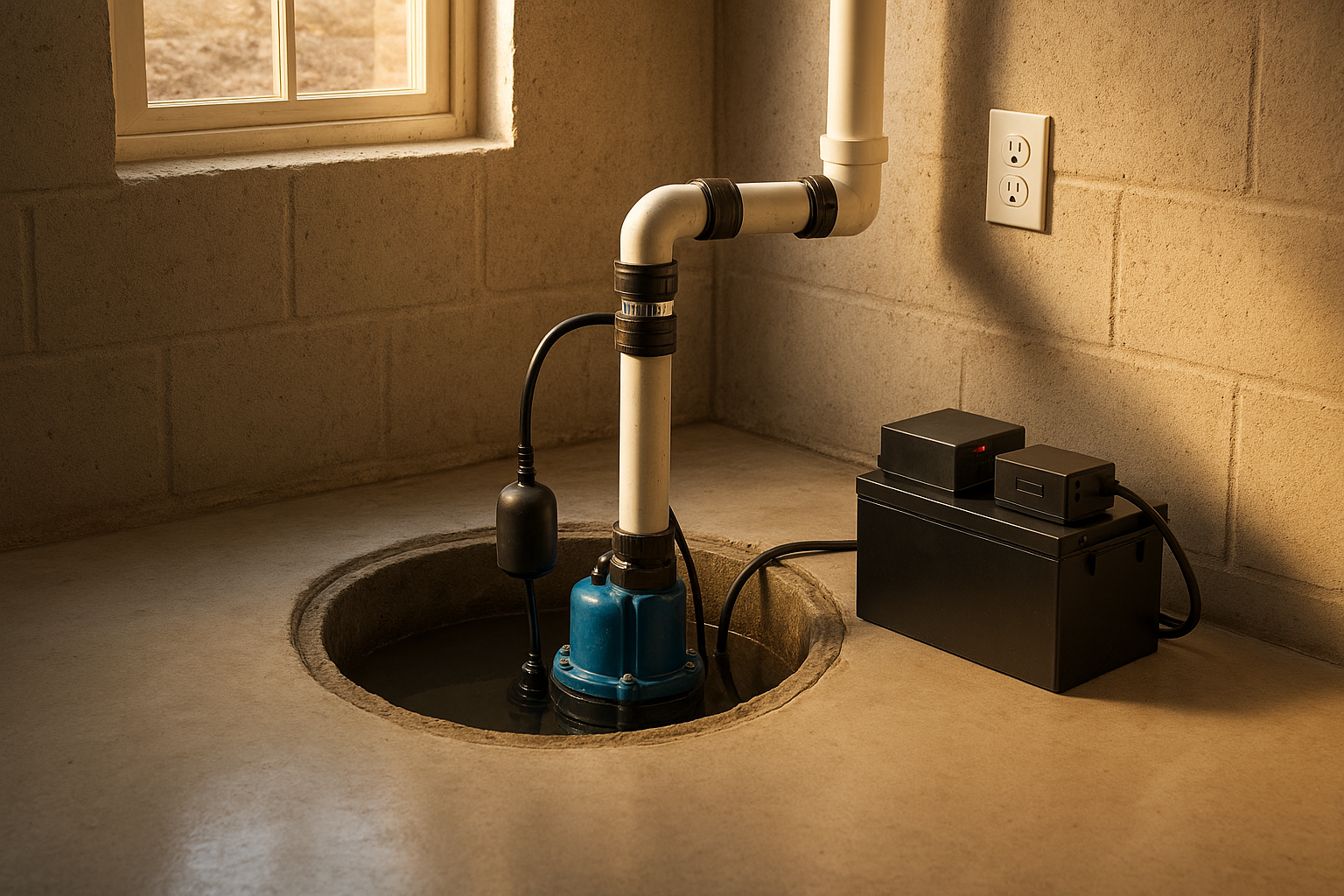
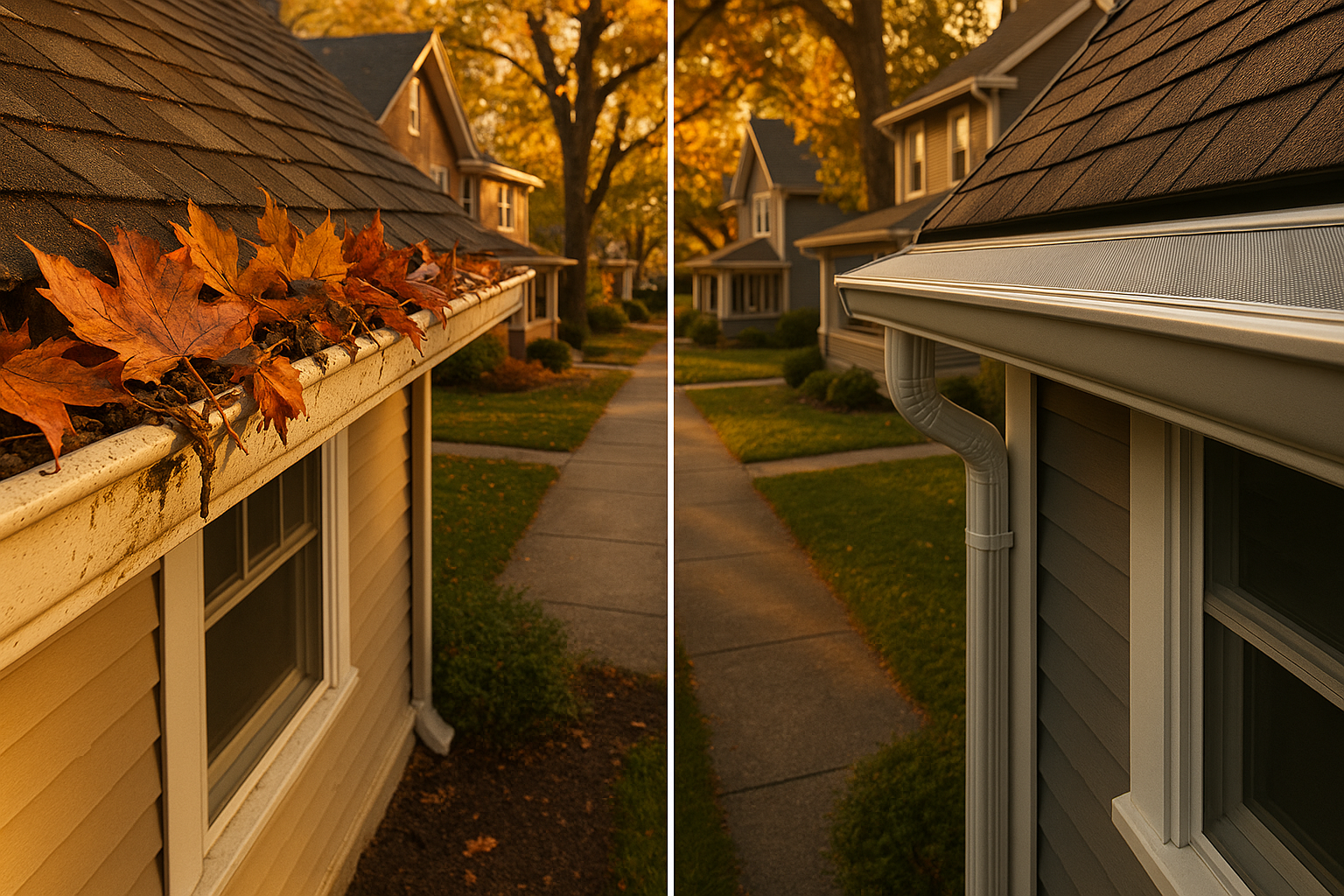
A lot of times, a vapor barrier won’t solve the problem by itself. You have to fix the water outside first. That means grading the yard away from the foundation, extending downspout extensions, and checking window wells. I’ve written about yard grading and window well drainage—these are the first things to look at if your crawl stays wet. Check out yard grading to move water away from your foundation and window well drainage and covers. If you’ve got heavy water, a French drain crawl space system or a sump pump in crawl space might be needed before any plastic goes down.
The Details That Make or Break Your Barrier
If you get the water work done, then the vapor barrier can do its job. But the installation details matter a lot. Seams need to overlap 6 to 12 inches and get sealed with compatible seam tape. The edges at the wall should get butyl tape and termination bar—not just a few nails. Around piers, you’ll want careful cuts and sealing so the liner doesn’t rip.
Also, leave a small termite inspection gap at the top of the wall so termite inspectors can still do their job. Some pest control companies want that gap, and it helps with radon considerations crawl space too—though a vapor barrier is not a radon mitigation system. If you’ve got high radon, talk to a radon pro separately.
Don’t forget about access. Crawl space pads or boards over the liner where people will crawl will prevent punctures. And if your subfloor already shows signs of moisture damage—like soft spots, peeling paint on floor joists, or buckling hardwood above—it’s worth checking that out too. Here are signs of subfloor water damage.
Common Worries People Have
“Won’t the plastic just trap moisture and make mold worse?” Only if you have bulk water coming in. That’s why drainage comes first. On dry soil, a vapor barrier reduces humidity because it blocks the source—that’s mold prevention in crawl space.
“My crawl looks dry—do I need this?” Even dry-looking soil gives off water vapor. You might not see it, but your subfloor moisture levels and air quality feel it.
“Will this mess up termite inspections?” Not if you leave the gap and coordinate with your pest pro. Many pest companies are fine with it as long as they can see the foundation.
“Do I have to close the vents and add a dehumidifier?” Not for a basic barrier. But if you’re moving toward full encapsulation, yes—that’s what creates a sealed crawl space and helps with energy efficiency crawl space benefits.
“What about building codes Indianapolis?” A good installer will know local requirements and pull permits if needed. Most crawl space liner work doesn’t need a permit, but it’s worth asking.
DIY or Hire a Pro?
You can buy a 12 mil vapor barrier at a big box store and lay it over the dirt. That helps some. But I’ve seen a lot of DIY installs that pull apart at the seams, bunch up around piers, or get punctured the first time someone crawls under to fix a pipe. DIY vs professional installation is a real choice, but a pro will know how to handle drainage, what mil to use, and how to make the whole thing last 15-20 years. Plus, you get a written scope and warranty. For a few hundred extra, it’s usually worth it.
Get a Straight Answer for Your Crawl
If you’re tired of the musty smell, cold floors, or just want to know what’s going on under your house, start with a moisture assessment. We’ll come out, take readings, look at your drainage, and give you a written plan with material specs and a clear price. No pressure—just facts. Schedule your crawl space assessment here.
Ready for a free estimate?
Send us the list, and we'll quote a flat price before we schedule — no pressure, no obligation.