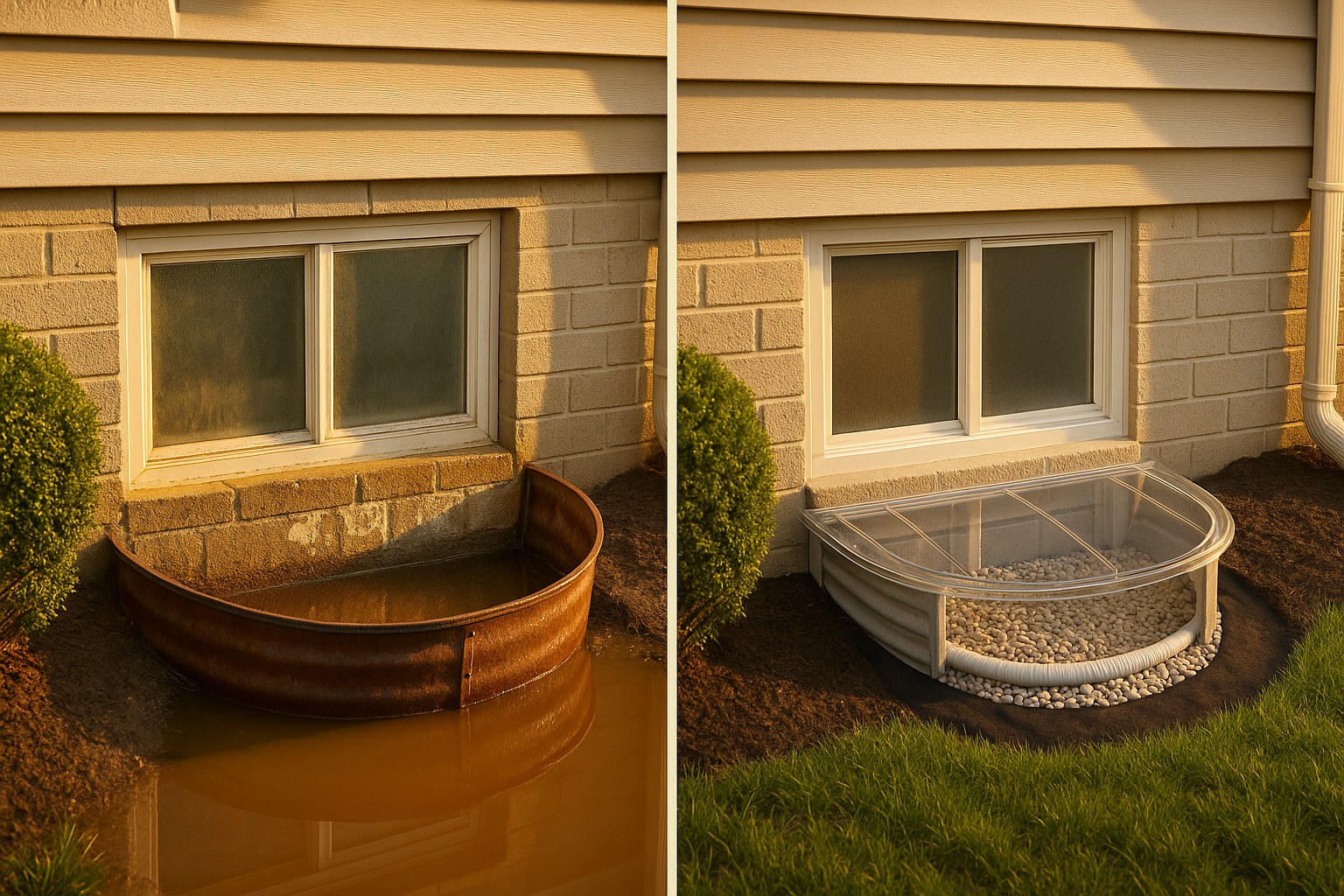
Last fall I got a call from a guy in Broad Ripple. His window well had turned into a tiny lake after every storm. Water sat there for days, seeping through the window frame and puddling on the basement floor. He'd already replaced the window once. The real problem? No window well drainage. That's a story I hear all over Indianapolis—from Zionsville to Greenwood. And it's usually fixable without tearing apart your whole yard.
Why Window Wells Flood in Indianapolis
Around here, the soil is heavy clay. That stuff holds water like a sponge. When we get one of those late-summer downpours or a spring storm burst, the ground can't absorb it fast enough. Water pools in low spots—including your window wells. Add in our freeze-thaw cycles from late fall to early spring, and standing water turns to ice. Ice expands, pushes against the well liner and window frame, and eventually cracks something. Then the next rain just pours through. It's not a matter of if, it's when. And if your yard slopes toward the house, or your downspouts dump roof water right next to the well, you're making basement window well flooding even more likely. That's why grading and gutter extensions matter just as much as the drain itself. Here's a deeper look at yard grading to move water away.
Signs You Need Window Well Drainage
Standing water or ice in the well is the obvious one. But you might also see rusted or bowing well liners, a fogged-up basement window, musty smells near that wall, or white powdery stains (efflorescence) on the block just below the window. A damp sill plate is another red flag. If any of that sounds familiar, the water isn't going away on its own. You need a drain. And if you've already seen water inside, check out what to do first after a basement flood.
How a Window Well Drain Actually Works
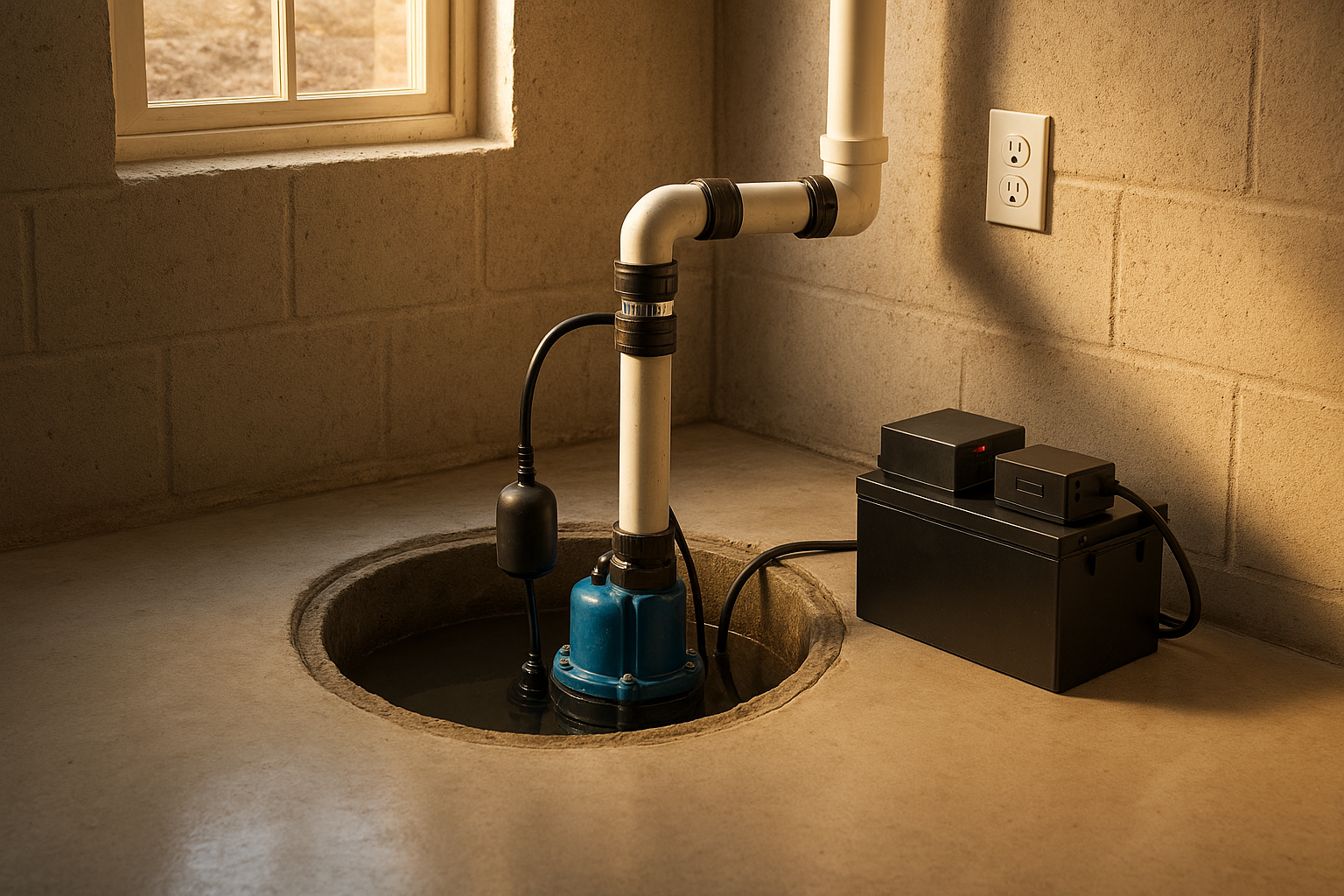
I get asked this all the time. A proper window well drain is a vertical pipe—usually 4-inch perforated drain tile with a fabric sock—set into the well. The pipe goes down through the gravel and ties into either your perimeter footing drain or straight to the sump crock. That's the 'connect window well to sump pump' part. Washed pea gravel fills the bottom of the well, usually 6 to 10 inches deep. That's the right pea gravel depth in window well to give water somewhere to sit while it slowly drains down. Geotextile fabric keeps the clay soil from mixing into the gravel and clogging everything. If you have an egress window, the drainage is even more important—that window is your emergency exit, and you don't want water or rust jamming it shut. The whole point is simple: water shouldn't press against your window. It should go down and away. That's what window well drainage is—giving the water a clear path out before it finds its own way inside.
Options for Fixing Window Well Drainage
First, we check if you even have a drain. Some older homes around here never got one. Others have a drain that's clogged with clay, mulch, or tree roots. Sometimes a simple cleaning and fresh gravel is all you need. Other times, we install a new vertical drain—a retrofit window well drain for older homes is very doable. The tie-in choices—connecting to the perimeter drain or running a dedicated line to the sump crock—depend on what's accessible. If your sump pump is ancient or undersized, that's part of the conversation too. We also look at the well cover. A clear, well-fitted cover sheds rainwater and leaves, but it doesn't replace drainage. You still need a path for water that sneaks in around the edges or seeps up from the ground. In clay soil drainage Indianapolis is slow, you really need both. And if you're dealing with short downspouts, extending them away from the foundation is a cheap fix that prevents a lot of window well flooding.
Will the Drain Freeze in Winter?
This is a common worry. The short answer: a properly installed window well drain with slope and a working sump pump or footing drain won't freeze solid because water keeps moving through it. If you get a sustained hard freeze with no water flow, the top few inches of the pipe might ice over, but that's why we also add a cover and make sure the well is sloped so water doesn't pool. You can add a layer of foam board insulation around the well liner for extra freeze-thaw protection for window wells. But the real trick is keeping water out of the well in the first place—which is exactly what the drain does.
Maintenance That Takes Five Minutes
Once the drain is in, you don't have to think about it much. But a quick seasonal check makes a huge difference. In the fall, pull leaves and debris out of the well to clear window well clogs before they start. In the spring, make sure the cover still fits and the downspout extensions are connected. Every few months, pour a gallon of water into the well and watch it drain. If it puddles and takes forever to go down, you've got a clog. That's your cue to call someone. A simple window well maintenance checklist: clear debris, check cover, verify downspout, water test. Done.
When the Well Isn't the Whole Problem
Sometimes a window well drain fixes the immediate seepage, but the yard or roof is still dumping too much water. That's when you have to step back. Maybe the grade slopes toward the house, or the gutters are overflowing. Maybe the sump pump itself is weak and can't keep up. If you ignore those bigger issues, you'll be back to the same spot next spring. We always check those during a window well assessment. And if water has already damaged the interior, you might need drywall repair after water damage or help with swollen doors and trim.
What a Window Well Drainage Retrofit Looks Like
For most homes, a retrofit from HandyPros is a one-day exterior job. We dig down next to the window well, install the drain pipe and gravel, tie into the sump or footing drain, and put everything back tidy. You don't need to tear up the whole yard. In fact, if we're doing multiple wells, doing them together usually saves time and mess. The cost to install a window well drain in Indianapolis varies based on how deep we have to dig, how far away the sump crock is, and what the soil conditions look like. We document what we find with photos and give you a clear line-item scope before any work starts. No jargon, no upselling. Just what's actually broken and how we'll fix it.
Ready to Get Rid of That Pond?
If water is sitting in your window well, don't wait for the next freeze-thaw cycle. It's a small problem today that turns into a big one by spring. We serve Indianapolis and all the surrounding suburbs—Carmel, Fishers, Zionsville, Westfield, Noblesville, Greenwood, Brownsburg, Avon, Plainfield, Lawrence. Give us a call or request a window well drainage assessment online. We'll come out, find the root cause, and give you honest options. You don't have to live with a basement that smells like a wet basement.
Ready for a free estimate?
Send us the list, and we'll quote a flat price before we schedule — no pressure, no obligation.