A few years back, I got a call from a guy in Fishers. His front door wouldn't latch after a big thunderstorm. He'd been forcing it shut with his shoulder for a week, and the jamb was starting to crack. When we pulled the hinge pins, the door had swollen a full quarter inch on the strike side. That's the thing about swollen door repair—it's not usually a quick sand-and-paint job. You've got to figure out where the moisture came from first, or you'll be doing it again next summer.
Why Your Door Swells (And Sticks After Rain)
Wood is like a sponge. It soaks up moisture from the air and from direct water contact. In Indianapolis, our summers get humid—dew points in the mid-60s are normal. That means even interior doors can swell. Exterior doors get hit with rain, splashback from the stoop, and wind-driven moisture. When the door slab absorbs water, it expands. If the edges weren't sealed properly, that expansion happens unevenly. The door rubs against the jamb or the threshold. That's your classic door sticks after rain scenario.
But not every sticking door is a swollen door. That's an important distinction. A door won't close humidity can also happen because the frame itself shifted, or because the hinges sagged. Wood door swelling is a uniform thickness increase across the slab. Warping is different—that's when the door twists or bows permanently. You can usually see warping by sighting down the edge. Swelling is more subtle; the door just feels fat. Sometimes the problem is the frame racking out of square, which makes the door bind even if the slab is fine.
Diagnose Before You Do Anything
Before you grab a plane or sandpaper, do a little detective work. Rub a piece of painter's tape on the door edge and close it. Where the tape transfers to the jamb, that's your rub point. A paper slip test works too: close the door on a dollar bill around the perimeter. If it slides freely everywhere except one spot, you know where the pressure is. Also check the hinge screws. Loose screws let the door sag, which mimics a swollen door. Tighten them—if the top hinge is loose, replace one screw with a longer one that bites into the stud. That often solves a sticky door without any wood removal.
Look at the strike plate. Is the latch hitting it square? If the door has swelled, the latch might hit too low or too high. A small file adjustment or moving the strike plate up a hair can buy you time. Don't forget the threshold. Sometimes the threshold is set too high for the swollen door bottom. A threshold adjustment might be all you need. If you have a moisture meter for doors, check the edges. Anything above 12% moisture content in wood is getting into trouble territory.
Immediate Relief: Dehumidifier, Hinge Screws, Strike Plate
If the door is just barely sticking and you can't get to a permanent fix today, run a dehumidifier in the room. Getting indoor relative humidity down to 35–50% will shrink the door a little within a day or two. That's the "dehumidifier for sticky doors" trick. It won't fix a door that's been saturated by rain, but it can help with general humidity-related sticking. Tightening hinge screws and adjusting the strike plate are cheap, reversible fixes. Try those first before you start shaving wood.
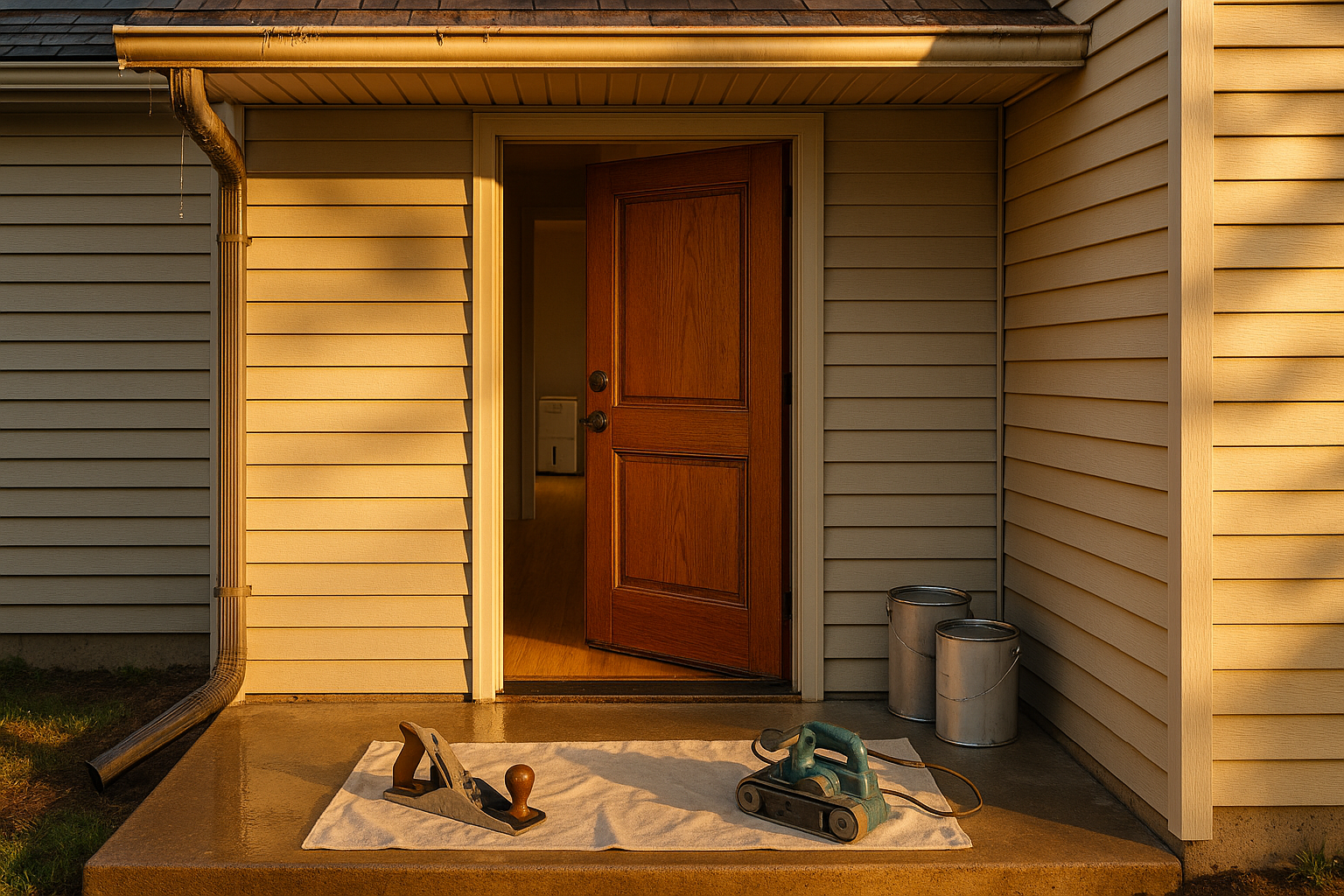
When the door still rubs after all that, then you can think about planing. But don't just plane anywhere—only remove material where it's actually binding. Take off the minimum. I've seen too many homeowners carve a big wedge out of the bottom and then the door looks stupid and lets drafts in. Use a sharp plane or a belt sander with fine grit. Go slow. Then reseal the edges. All six sides—top, bottom, hinge edge, strike edge, face, and back. For exterior doors, use an exterior-grade primer and finish. For interior doors, a good oil-based primer on the raw wood edge works. That's the "seal door edges" step, and it's non-negotiable. If you skip it, the door will soak up moisture again and swell right back.
When NOT to Plane the Door
There are a few times when planing is a bad idea. If there's an active leak—like a gutter overflowing right onto the door or a threshold that isn't sealed—fix that first. Planing a door that's still getting wet is a band-aid. If the door is fire-rated, like a garage-to-house door, field trimming might not be allowed. Those doors have labels and code requirements. Check before you cut. Same goes for pre-1978 homes with possible lead paint. Sanding or planing can create lead dust. That's a health risk and a legal issue. Call a pro who knows the rules.
If the sticking is caused by foundation movement or a sagging header, planing the door might help temporarily, but the real fix is framing. That's a bigger job. And if the door is warped, not just swollen, planing won't fix the twist. You'll end up with a door that's thinner in spots but still warped. Replacement is often smarter.
Indianapolis Moisture Sources: Gutters, Grading, and Clay Soil
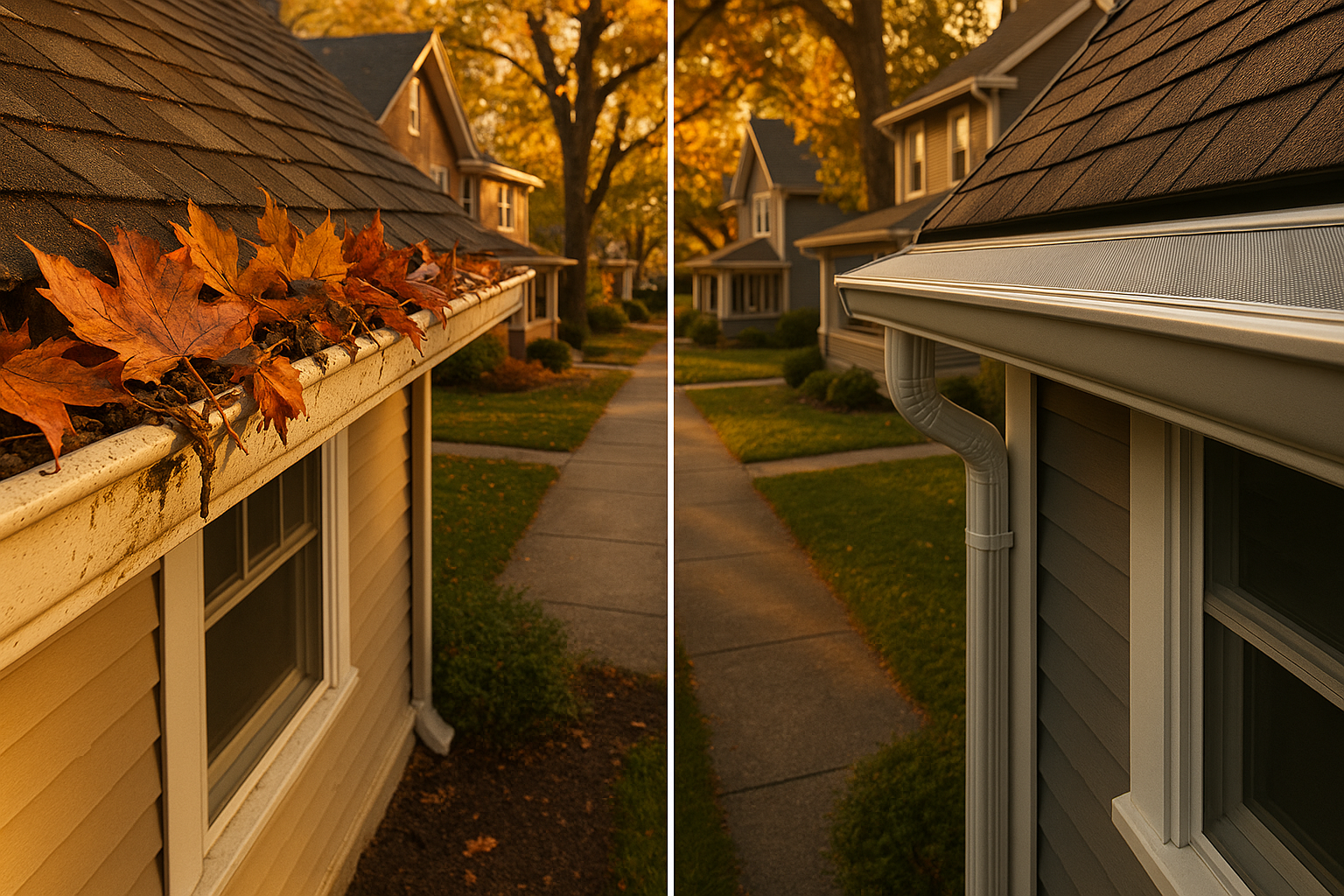
Around here, we see a lot of exterior door swelling in the spring and fall. Fall is leaf season. Clogged gutters overflow right onto the door threshold. The downspout dumps water at the stoop, and the splashback wets the bottom of the door. In summer, thunderstorms bring wind-driven rain, especially on west- and south-facing entries. Short overhangs on many Indy homes don't help. And our clay soil holds water. If the ground slopes toward the house, water can pool at the door. That's why we always check grading and downspout extensions as part of a swollen door repair. Sometimes the door isn't the problem—the water management is. You can read more about yard grading to move water away from your foundation and gutters, downspouts, and basement flooding.
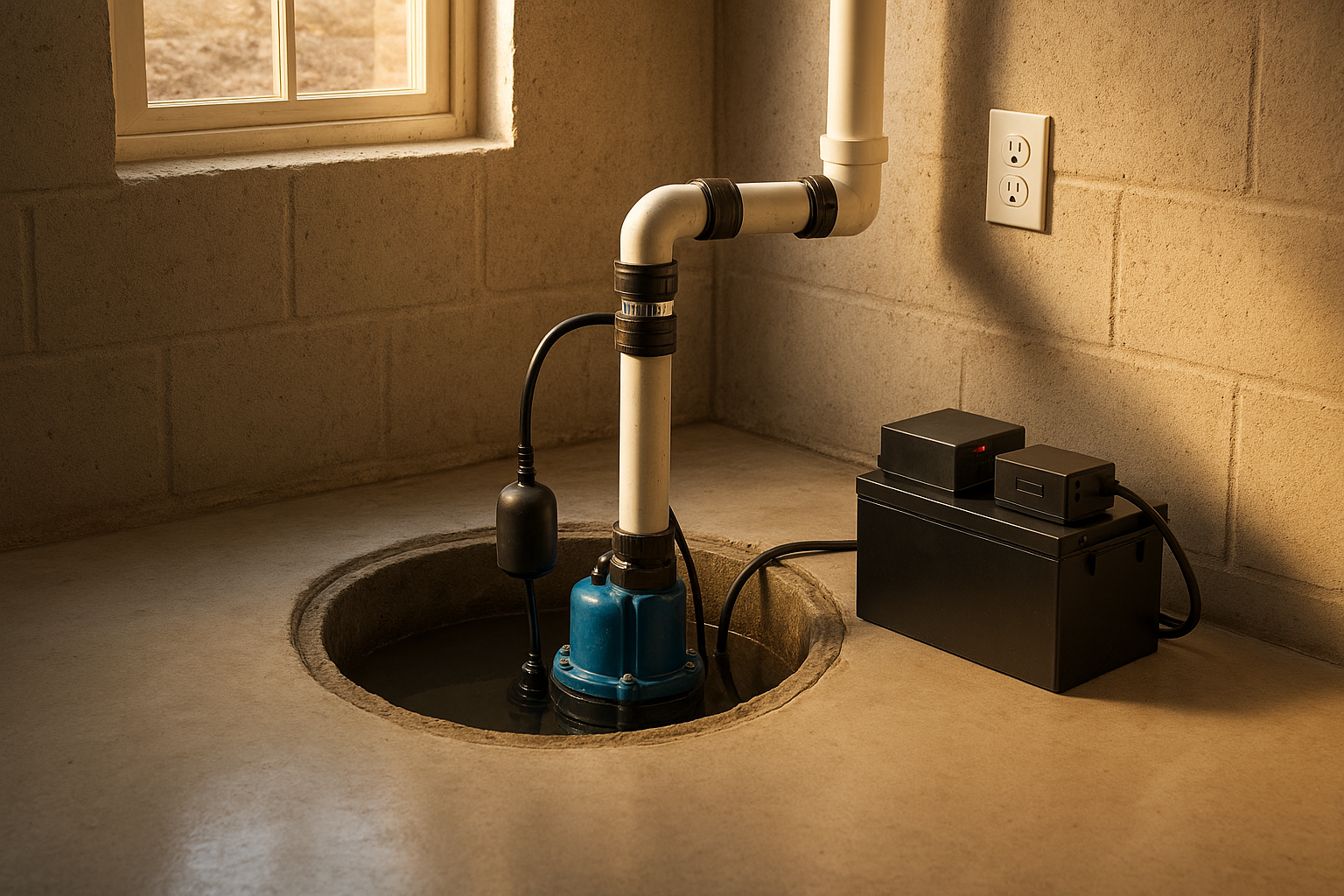
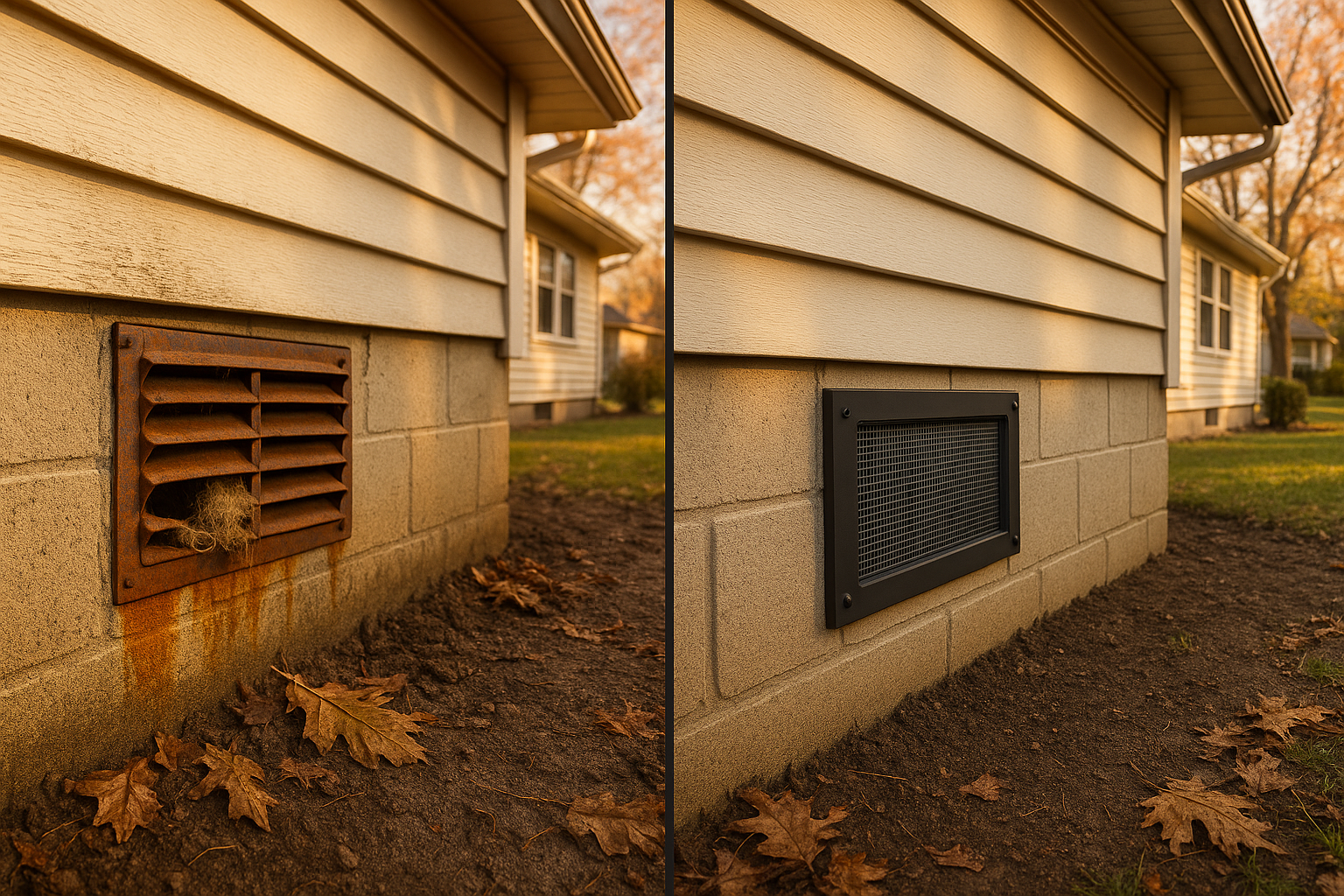
Basements and crawl spaces in Indy run humid in summer, too. That pushes interior relative humidity above 55%, which makes interior doors stick. If you've got a sticky door in the hallway near the basement stairs, check the basement humidity. A dehumidifier down there can help the whole house. And if you've had water intrusion before, you might have other issues—like water stains on the ceiling or drywall damage. Swollen doors are often just the first visible sign.
Prevent Future Swelling: Seal Edges and Manage Humidity
The best swollen door repair is the one you don't need. Here's what works in our climate:
- Keep paint or varnish intact on all door edges, including the top and bottom. Most door manufacturers void their warranty if the bottom edge isn't sealed.
- Replace weatherstripping when it's compressed or torn. Good weatherstripping keeps rain and humid air out.
- Install or refresh the door sweep. A worn sweep lets water blow under the door.
- Keep gutters and downspouts clear. Extend downspouts at least 4 feet from the foundation.
- Make sure the soil around your stoop slopes away. You don't want water puddling at the threshold.
- Run a dehumidifier in the basement or crawl space if it gets above 55% relative humidity in summer.
- Avoid wet-mopping near exterior doors. That just adds moisture to the air and the slab.
If you do all that, your door will stay much happier. And when the next big rain comes, you won't be shoulder-checking the frame.
What Does HandyPros Do? Our Swollen Door Repair Process
We don't just show up and start planing. Here's our typical approach in Indianapolis, Carmel, Fishers, Zionsville, Westfield, Noblesville, Greenwood, Brownsburg, Avon, Plainfield, and Lawrence:
- Inspect the door and frame. We check for rub points, measure moisture, and look at hinges, strike plate, weatherstripping, and threshold.
- Look for the moisture source. Clogged gutters? Downspout dumping at the door? High indoor humidity? We'll point it out, even if it means you need another contractor.
- Confirm code and safety. Fire-rated doors, lead paint, structural issues—we check before we cut.
- Write a clear scope. We tell you what we'll do, what materials we'll use, and what it costs. No upsells or surprises.
- Do the work. Tighten hinges, adjust strike plate, plane only where needed, seal edges, replace weatherstripping if necessary. Most single-door tune-ups take 1–3 hours, depending on drying time.
- Verify the fit. The door should close smoothly and latch correctly before we leave.
Typical costs for swollen door repair in Indianapolis run from $125–$300 for basic hinge and strike adjustments, up to $225–$450 for light planing and edge sealing. Exterior refinishing or threshold work varies depending on condition. We use corrosion-resistant screws, quality weatherstripping, and exterior-grade sealers. For tough cases, we'll recommend an oil-based or shellac primer on raw edges to really block moisture.
When Replacement Makes More Sense than Repair
Sometimes the door is too far gone. If the slab is delaminated, severely water-damaged, or warped beyond a quarter inch, planing won't save it. If the door has been repeatedly saturated and there's no practical way to keep water away from it, replacement is smarter. And if you've got an interior MDF door that keeps swelling—MDF soaks up moisture like crazy and never really returns to shape—you might be better off swapping it for a solid wood or composite door.
If you're in the Indy area and your door is sticking, don't keep forcing it. That only breaks the jamb or the hinges. Give HandyPros a call. We'll do a quick moisture-and-fit assessment, tell you exactly what's needed, and if it's simple we can often handle it same visit. Request a clear written quote and schedule through our quote form. We'll treat your home like our own—and we won't sell you something you don't need.
Ready for a free estimate?
Send us the list, and we'll quote a flat price before we schedule — no pressure, no obligation.